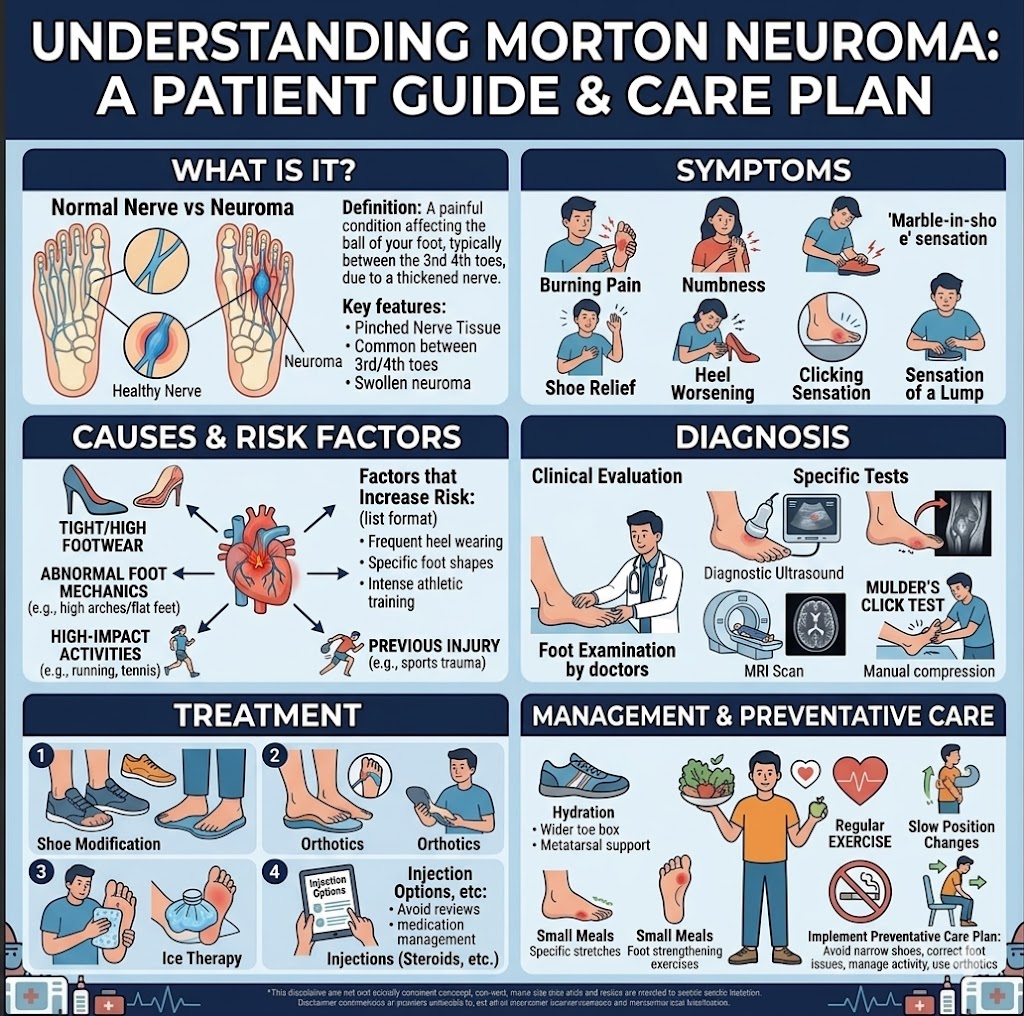
Morton's Neuroma is a painful condition affecting a nerve in the ball of your foot, usually between the third and fourth toes. This nerve becomes irritated, damaged, and often enlarged, leading to sharp or burning pain, tingling, or numbness. The exact cause isn't fully understood but is linked to repeated pressure, often worsened by high heels or narrow shoes. Simple changes like wider shoes and supportive inserts often help, with injections or surgery as further options.
Understanding the Condition
Morton's Neuroma: Understanding Your Foot Pain
Understanding the Condition
Common Symptoms
Pain in the Ball of the Foot: Sharp, shooting, or burning pain in the padded area of your foot, typically behind the third and fourth toes.
Sensation of a Pebble: A feeling like walking on a pebble or bunched-up sock inside your shoe.
Worsening Pain with Activity: Pain intensifies with walking, running, or activities that put pressure on the ball of your foot.
Toe Discomfort: Pins and needles, tingling, or numbness in the two toes near the affected nerve.
Clicking Sensation: Some experience a clicking sensation in the front of the foot when moving toes.
Relief with Rest: Symptoms often subside with rest or by removing your shoes.
Persistent Foot Pain: Don't ignore foot pain lasting over a few days, especially burning pain in the ball of your foot not improving with footwear or activity changes.
Consultation Guide
Which Specialist to Meet
Start with your primary care doctor, who may refer you to a podiatrist (a foot and ankle specialist) or an orthopedic surgeon specializing in foot and ankle conditions.
Preparations Before Your Visit
Be ready to describe your symptoms (when they started, what makes them worse or better, and any triggers), your typical footwear, and any past treatments. The doctor will likely perform a physical examination of your foot.
Book a doctor visit near me
Consultation Guide
Morton's Neuroma is a painful condition affecting a nerve in the ball of your foot, usually between the third and fourth toes. This nerve becomes irritated, damaged, and often enlarged, leading to sharp or burning pain, tingling, or numbness. The exact cause isn't fully understood but is linked to repeated pressure, often worsened by high heels or narrow shoes. Simple changes like wider shoes and supportive inserts often help, with injections or surgery as further options.
Nerve Removal (Neurectomy): Surgical removal of the enlarged nerve portion. A definitive treatment, but may cause permanent toe numbness or stump neuroma. Weeks to months for full recovery. (Duration: Permanent solution; full recovery takes weeks to months, with potential for lasting numbness.)
Diagnostic Procedures
A quick X-ray images your foot bones to rule out issues like fractures or arthritis, though it doesn't show the neuroma directly.
What to Expect
You'll be asked to remove shoes and socks. You'll stand or lie as a technician positions your foot for various views. The process is brief, painless, and takes only a few minutes.
Ultrasound (Sonography)
This diagnostic tool uses sound waves to create real-time images of soft tissues, like nerves. It can visualize the enlarged nerve of Morton's Neuroma, helping confirm diagnosis without radiation.
What to Expect
Gel is applied to your foot, and a handheld device is moved over the area. Images appear on a screen. The procedure is non-invasive and takes about 15-30 minutes.
Magnetic Resonance Imaging (MRI)
Uses strong magnets and radio waves for detailed images of soft tissues, bones, and nerves. Used when other tests are inconclusive or to rule out complex conditions.
What to Expect
Lie on a table that slides into a large, often noisy, machine; remaining still is essential. The scan can take 30-60 minutes. Inform your doctor if you are claustrophobic.
Treatment Options
Corticosteroid Injections: Anti-inflammatory medication injected directly into the painful area to reduce swelling and nerve irritation. Often combined with a local anesthetic. (Duration: Relief lasts weeks to months; injections are typically limited to a few per year.)
Alcohol Sclerosing Injections: A series of diluted alcohol injections to gradually shrink the nerve, reducing its size and pain. Multiple sessions over weeks/months. (Duration: Requires multiple sessions over several weeks or months for full effect.)
Radiofrequency Ablation: Uses heat to disrupt nerve pain signals. Relief lasts several months to over a year; may need repetition. (Duration: Relief can last several months to over a year; may need to be repeated.)
Surgical Procedures
Nerve Decompression: Surgery to relieve nerve pressure by cutting surrounding tissues. The nerve remains intact. Permanent solution; weeks of recovery and rehabilitation. (Duration: Permanent solution; recovery involves weeks of limited weight-bearing and rehabilitation.)
Address Foot Conditions: Seek treatment for existing foot deformities like bunions or flatfeet, which can increase neuroma risk.
Healthy Weight Management: Maintain a healthy body weight to reduce stress and pressure on your feet, helping prevent nerve irritation.
Prompt Medical Attention: Listen to your body. Do not ignore persistent foot pain. Regular follow-ups with a specialist are important for monitoring and managing foot health.
Prevention & Long-Term Wellbeing
Home Care and Lifestyle Adjustments
Supportive Footwear: Wear low-heeled, wide-toed shoes with good arch support. Avoid narrow or high-heeled styles. (Duration: Ongoing)
Shoe Inserts (Orthotics): Use orthotics (pads/supports) to properly align foot bones and relieve nerve pressure. (Duration: Ongoing)
Rest, Ice, and Over-the-Counter Pain Relief: Rest your foot, apply ice (15-20 min daily) to reduce inflammation, and use non-prescription pain relievers as needed. (Duration: As needed; ice daily; pain relievers short-term)
Prevention
Optimal Footwear: Always wear shoes with low heels, wide toe boxes, and good arch support. Avoid narrow, pointed, or high-heeled styles.
Supportive Inserts: Use orthotics, especially for high-impact activities or if you have foot deformities, to properly support your foot structure.
Activity Moderation: Wear appropriate athletic shoes for sports. Gradually increase activity intensity and ensure adequate rest for your feet.
Tags & Topics
Notice an error or need an update?
Help us keep medical information accurate. Report incorrect info or suggest an edit.


