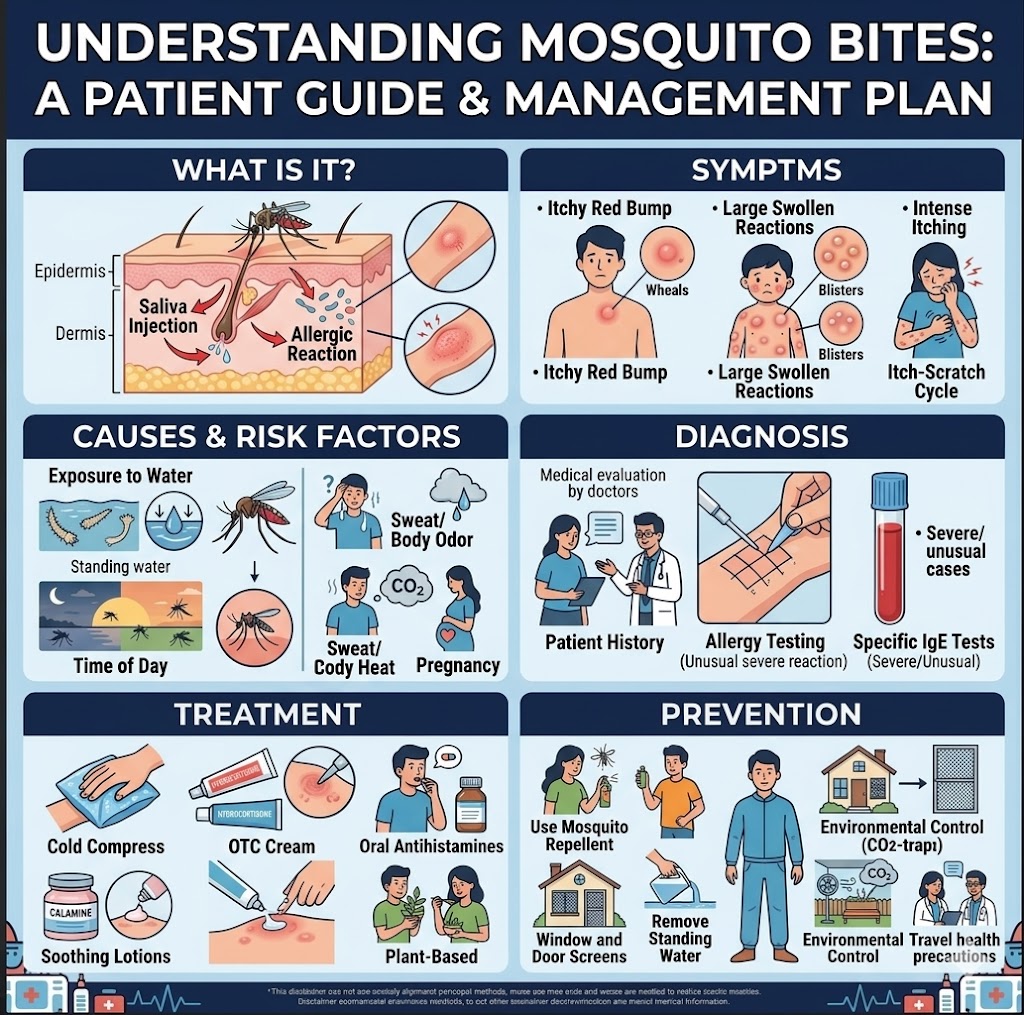
Mosquito bites result in itchy bumps on the skin after mosquitoes feed on your blood. Most bites are harmless and clear up within a few days without specific treatment. However, some individuals, especially children, can experience a more severe local reaction with significant swelling, soreness, and inflammation, sometimes called "skeeter syndrome." More importantly, mosquitoes can carry and spread serious viruses or parasites, leading to illnesses such as West Nile virus, Zika virus, malaria, yellow fever, dengue fever, and certain types of brain infections.
Understanding the Condition
Common Symptoms
Immediate Reaction: An itchy, red, and inflamed bump that appears within minutes after being bitten.
Delayed Reaction: A painful, swollen spot that looks like a hive and forms within 24 hours of the bite.
Minor Blisters: Small fluid-filled blisters can sometimes develop at the bite site.
Severe Local Reaction (Skeeter Syndrome): This involves a large, significantly swollen and red area, a widespread hive-like rash, and swelling around the eyes. Children are generally more prone to these severe reactions.
Warning Signs of Illness: Seek medical attention if mosquito bites are accompanied by a high fever, severe headache, widespread body aches, persistent rash, or other signs of infection (such as increasing redness, warmth, pus, or pain at the bite site).
Consultation Guide
Which Specialist to Meet
For typical mosquito bites, a general practitioner or family doctor is usually sufficient. If you experience severe allergic reactions or suspect a mosquito-borne illness due to symptoms like high fever, headache, or body aches, you may be referred to an allergist or an infectious disease specialist.
Preparations Before Your Visit
Before your appointment, make a list of your symptoms, noting when they started and how severe they are. Include any recent travel history, especially to areas where mosquito-borne diseases are common. Also, list all medications you are currently taking, including over-the-counter drugs and supplements, and mention any known allergies.
Book a doctor visit near me
For typical mosquito bites, diagnosis is primarily based on a visual examination of the skin and a discussion of your symptoms. The doctor will assess the appearance of the bites and your overall health.
During the examination, your doctor will look at the affected skin areas and ask about your recent activities, where and when the bites occurred, and any associated symptoms like itching, pain, or swelling. This process is non-invasive and painless.
Oral Antihistamines: For more severe itching or widespread allergic reactions, oral medications that block histamine can be prescribed or purchased over-the-counter to reduce symptoms. (Duration: Take as directed, typically once or twice daily for a few days, or as long as symptoms persist.)
Stronger Topical Corticosteroids: If standard creams are not effective for severe inflammation, a prescription-strength corticosteroid cream might be recommended. (Duration: Apply thinly to affected areas as prescribed, usually once or twice daily for a short period.)
Antibiotics: If a mosquito bite becomes infected due to excessive scratching (signs include increasing redness, warmth, pus, or pain), oral or topical antibiotics may be prescribed to clear the bacterial infection. (Duration: Typically a 5-10 day course, depending on the severity of the infection.)
Disease-Specific Medications: For diagnosed mosquito-borne illnesses (e.g., malaria, severe viral infections), specific antiviral or antiparasitic medications are prescribed to target the pathogen and manage symptoms. (Duration: Duration varies greatly depending on the specific illness and its severity, ranging from several days to months.)
Monitor Bite Sites for Infection: Keep an eye on any mosquito bites for signs of secondary infection, such as increasing redness, warmth, pain, swelling, or the presence of pus. Seek medical attention if these symptoms develop.
Watch for Symptoms of Illness: If you have been bitten in an area known for mosquito-borne diseases, or if you develop fever, severe headache, body aches, joint pain, rash, or fatigue in the days or weeks following bites, seek prompt medical evaluation. Early diagnosis and treatment are crucial for these conditions.
Diagnostic Procedures
What to Expect
Blood Tests (for suspected mosquito-borne diseases)
If there is concern about a mosquito-borne illness (e.g., if you have traveled to a high-risk area and developed fever, headache, or rash), specific blood tests may be ordered. These tests aim to detect the presence of viruses (like West Nile or Zika) or parasites (like those causing malaria) in your bloodstream.
What to Expect
A healthcare professional will draw a small sample of blood, usually from a vein in your arm. You might feel a brief pinch or sting. The blood sample is then sent to a laboratory for analysis. Results typically take a few days, depending on the specific test being performed.
Treatment Options
Mosquito Bites: Understanding, Treatment, and Prevention
Understanding the Condition
Mosquito bites result in itchy bumps on the skin after mosquitoes feed on your blood. Most bites are harmless and clear up within a few days without specific treatment. However, some individuals, especially children, can experience a more severe local reaction with significant swelling, soreness, and inflammation, sometimes called "skeeter syndrome." More importantly, mosquitoes can carry and spread serious viruses or parasites, leading to illnesses such as West Nile virus, Zika virus, malaria, yellow fever, dengue fever, and certain types of brain infections.
Cold Compress or Ice Pack: Applying a cold compress or ice pack wrapped in a cloth to the bite can help reduce swelling and itching. (Duration: Apply for 10-20 minutes several times a day as needed.)
Topical Anti-itch Creams: Over-the-counter creams containing ingredients like calamine or a mild corticosteroid can soothe itching and reduce inflammation. (Duration: Apply as directed, typically 3-4 times daily for a few days.)
Oatmeal Bath: For widespread itching, soaking in a bath with colloidal oatmeal can provide significant relief. (Duration: Soak for 15-20 minutes once or twice daily.)
Medications
Prevention & Long-Term Wellbeing
Prevention
Use Insect Repellent: Apply repellents containing active ingredients such as Icaridin (picaridin), Oil of lemon eucalyptus, Para-menthane-diol (PMD), or 2-Undecanone to exposed skin and clothing when outdoors, especially during peak mosquito activity (dawn and dusk). Always follow product instructions.
Wear Protective Clothing: When spending time outdoors, especially in mosquito-prone areas, wear long-sleeved shirts, long pants, and socks to minimize exposed skin.
Limit Outdoor Exposure: Mosquitoes are most active during specific times of day, typically at dawn and dusk. Try to reduce outdoor activities during these hours if possible.
Maintain Screens and Netting: Ensure that window and door screens are in good repair to prevent mosquitoes from entering your home. Use mosquito netting over cribs, strollers, or when sleeping outdoors.
Eliminate Standing Water: Mosquitoes breed in stagnant water. Regularly empty or cover containers that can collect water (e.g., buckets, bird baths, pet water dishes), clean gutters, and maintain swimming pools to remove breeding sites around your home.
Avoid Scented Products: Mosquitoes are attracted to certain smells. Opt for unscented personal care products like lotions, soaps, and perfumes.
Long-Term Monitoring
Tags & Topics
Notice an error or need an update?
Help us keep medical information accurate. Report incorrect info or suggest an edit.


