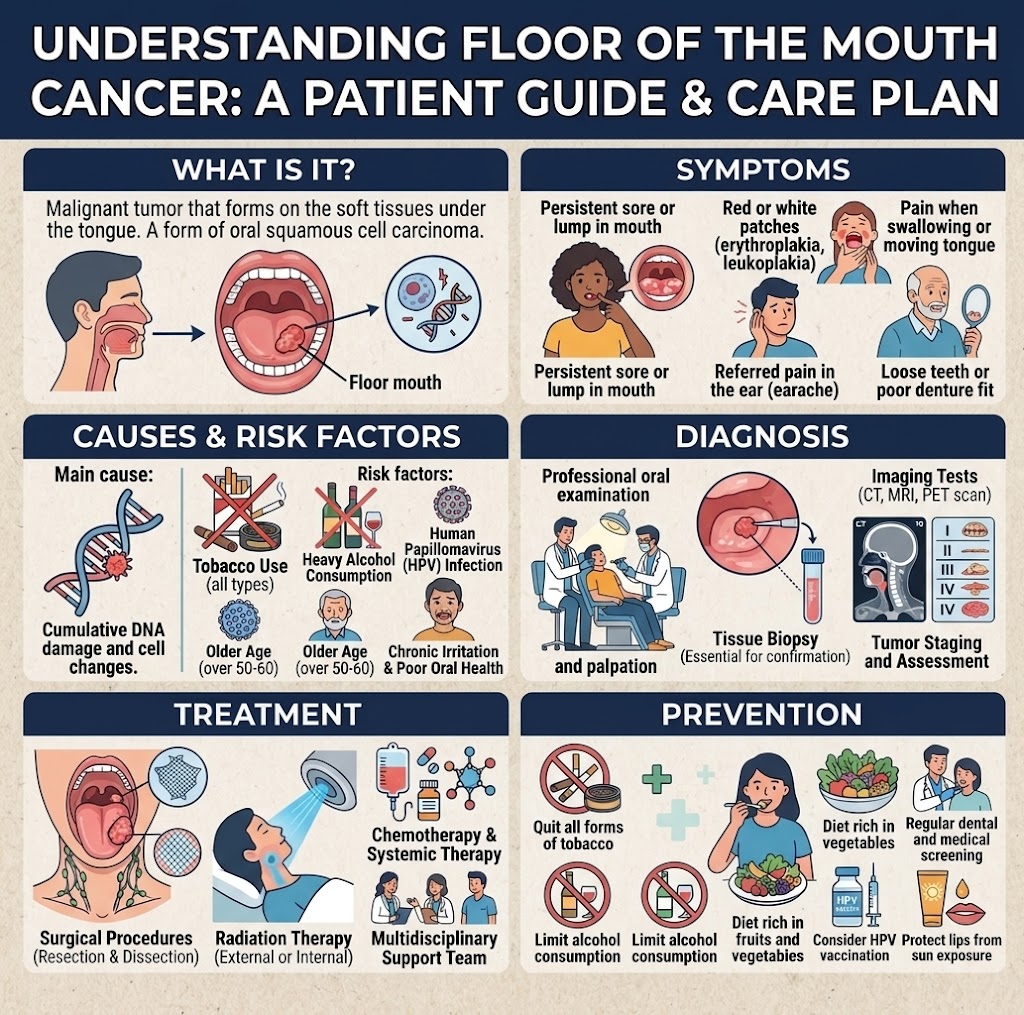
Mouth cancer, also known as oral cancer, starts as an uncontrolled growth of cells in any part of the mouth. This can include the lips, the inner lining of the cheeks, the roof of the mouth, or the floor of the mouth. It's considered a type of head and neck cancer. Most mouth cancers begin in flat, thin cells called squamous cells that line the mouth and lips, and are often referred to as squamous cell carcinomas.This cancer develops when changes occur in the DNA of cells in the mouth or on the lips. DNA contains the instructions that tell cells how to grow, multiply, and die. In cancer cells, these instructions are altered, causing them to grow and multiply uncontrollably and live longer than healthy cells. This overgrowth can form a mass called a tumor, which can invade and damage healthy surrounding tissues. Over time, cancer cells can spread to other parts of the body, a process known as metastasis.
Understanding the Condition
Understanding Mouth Cancer: A Clear Guide for Everyone
Understanding the Condition
Mouth cancer, also known as oral cancer, starts as an uncontrolled growth of cells in any part of the mouth. This can include the lips, the inner lining of the cheeks, the roof of the mouth, or the floor of the mouth. It's considered a type of head and neck cancer. Most mouth cancers begin in flat, thin cells called squamous cells that line the mouth and lips, and are often referred to as squamous cell carcinomas.This cancer develops when changes occur in the DNA of cells in the mouth or on the lips. DNA contains the instructions that tell cells how to grow, multiply, and die. In cancer cells, these instructions are altered, causing them to grow and multiply uncontrollably and live longer than healthy cells. This overgrowth can form a mass called a tumor, which can invade and damage healthy surrounding tissues. Over time, cancer cells can spread to other parts of the body, a process known as metastasis.
Common Symptoms
Persistent Mouth or Lip Sore: A sore on the lip or inside the mouth that doesn't heal within two weeks.
Unusual Patches: White or reddish patches appearing on the inside of the mouth.
Loose Teeth: Teeth that become loose without a clear dental reason.
Lump or Growth: A new growth, lump, or thickening inside the mouth.
Mouth Pain: Ongoing discomfort or pain in the mouth.
Difficulty Swallowing: Pain or trouble when swallowing, chewing, or opening the mouth.
Ear Pain: Unexplained ear pain.
Consultation Guide
Which Specialist to Meet
If you notice any concerning symptoms that last longer than two weeks, consult a general physician, a dentist, or another healthcare professional. They can perform an initial examination and refer you to specialists like an oral surgeon, an ear, nose, and throat (ENT) specialist, or an oncologist (cancer specialist) if needed.
Preparations Before Your Visit
Before your visit, make a list of your symptoms, including when they started and how they've progressed. Be prepared to discuss your medical history, any medications you're taking, and your lifestyle habits, such as tobacco and alcohol use. Also, note down any questions you have for your doctor.
Book a doctor visit near me
Integrative Medicine: Combines conventional medicine with evidence-based complementary therapies to manage symptoms and improve quality of life during treatment. (Duration: Ongoing, as needed, throughout treatment and recovery.)
Consultation Guide
Avoid All Tobacco Products: Tobacco use in any form (cigarettes, cigars, pipes, chewing tobacco, snuff) is a major risk factor. Quitting tobacco or never starting significantly lowers your risk of mouth cancer.
Moderate Alcohol Consumption: Heavy and frequent alcohol consumption increases risk. If you choose to drink, do so in moderation (up to one drink per day for women, up to two for men). Combining alcohol and tobacco greatly increases risk.
Sun Protection for Lips: Protect your lips from ultraviolet (UV) light from the sun and tanning lamps. Use sunscreen lip balm, wear a broad-brimmed hat, and seek shade, especially during peak sun hours.
HPV Vaccination: The Human Papillomavirus (HPV) is a sexually transmitted virus linked to some mouth cancers. Discuss with your healthcare team whether the HPV vaccine is appropriate for you, as it can reduce the risk of HPV-related cancers.
Regular Dental Check-ups: Dentists and other healthcare professionals can perform routine mouth cancer screenings during your appointments, helping to detect early signs of the disease.
Long-Term Monitoring & Support
Immune System Care: If your immune system is weakened by medicines (e.g., after organ transplant) or conditions like HIV, you might be at higher risk. Follow your doctor's advice to manage your immune health.
Diagnostic Procedures
A quick imaging test using radiation to create pictures of internal structures, especially bones, to detect abnormalities.
What to Expect
You will position yourself as instructed while a machine takes images. It's painless and brief. Metal objects must be removed.
CT Scan (Computerized Tomography Scan)
Uses X-rays and computer processing for detailed cross-sectional images of bones, blood vessels, and soft tissues.
What to Expect
You lie on a table sliding into a scanner. A contrast dye may be used. Remain still for several minutes.
Removes a small tissue or cell sample with a thin needle for lab analysis to check for cancer.
What to Expect
The area will be numbed. A doctor inserts a needle (possibly guided by imaging). You might feel pressure. Takes 15-30 minutes.
PET Scan (Positron Emission Tomography Scan)
An imaging test using a radioactive tracer to highlight metabolic activity in tissues, detecting disease like cancer early.
What to Expect
A tracer is injected; after a wait, you lie still in a scanner for approximately 30 minutes while it detects tracer emissions, showing active areas.
Home Enteral Nutrition (Tube Feeding): Provides liquid nutrition directly to the stomach or small intestine via a feeding tube when eating normally is difficult, with home care team support. (Duration: Short-term or long-term, depending on eating ability.)
Complementary Therapies
Treatment Options
Surgical Procedures
Transoral Robotic Surgery (TORS): Minimally invasive surgery using robotic tools guided through the mouth for precise tumor removal in hard-to-reach areas, often leading to quicker recovery. (Duration: Varies; typically a single procedure followed by recovery.)
Tracheostomy: Surgical creation of a temporary or permanent opening in the windpipe to aid breathing, often necessary after extensive mouth or throat surgery. (Duration: Temporary (weeks to months) or permanent, based on breathing needs.)
External Beam Radiation Therapy: High-energy beams aimed from outside the body to destroy cancer cells, preventing their growth while protecting healthy tissue. (Duration: Typically 5 days a week for several weeks (e.g., 5-7 weeks).)
Brachytherapy (Internal Radiation): Places a small radioactive implant directly into or near the tumor, delivering high-dose radiation precisely to the cancer. (Duration: Single high-dose treatment or multiple lower-dose treatments over days/weeks.)
Chemotherapy: Uses powerful drugs to kill fast-growing cancer cells throughout the body, often combined with other treatments. (Duration: Cycles over several months, depending on drugs, cancer type, and response.)
Massage Therapy: Therapist rubs and kneads soft tissues to reduce pain, stress, anxiety, and fatigue, enhancing comfort during treatment. (Duration: Sessions 30-90 minutes, frequency varies.)
Ongoing Medical Follow-up: Regular follow-up appointments with your medical team are crucial after treatment to monitor for recurrence and manage any long-term side effects.
Information and Empowerment: Staying informed about your condition, actively participating in treatment decisions, and partnering with your medical team can empower you to take control of your health.
Prevention & Long-Term Wellbeing
Prevention
Tags & Topics
Notice an error or need an update?
Help us keep medical information accurate. Report incorrect info or suggest an edit.


