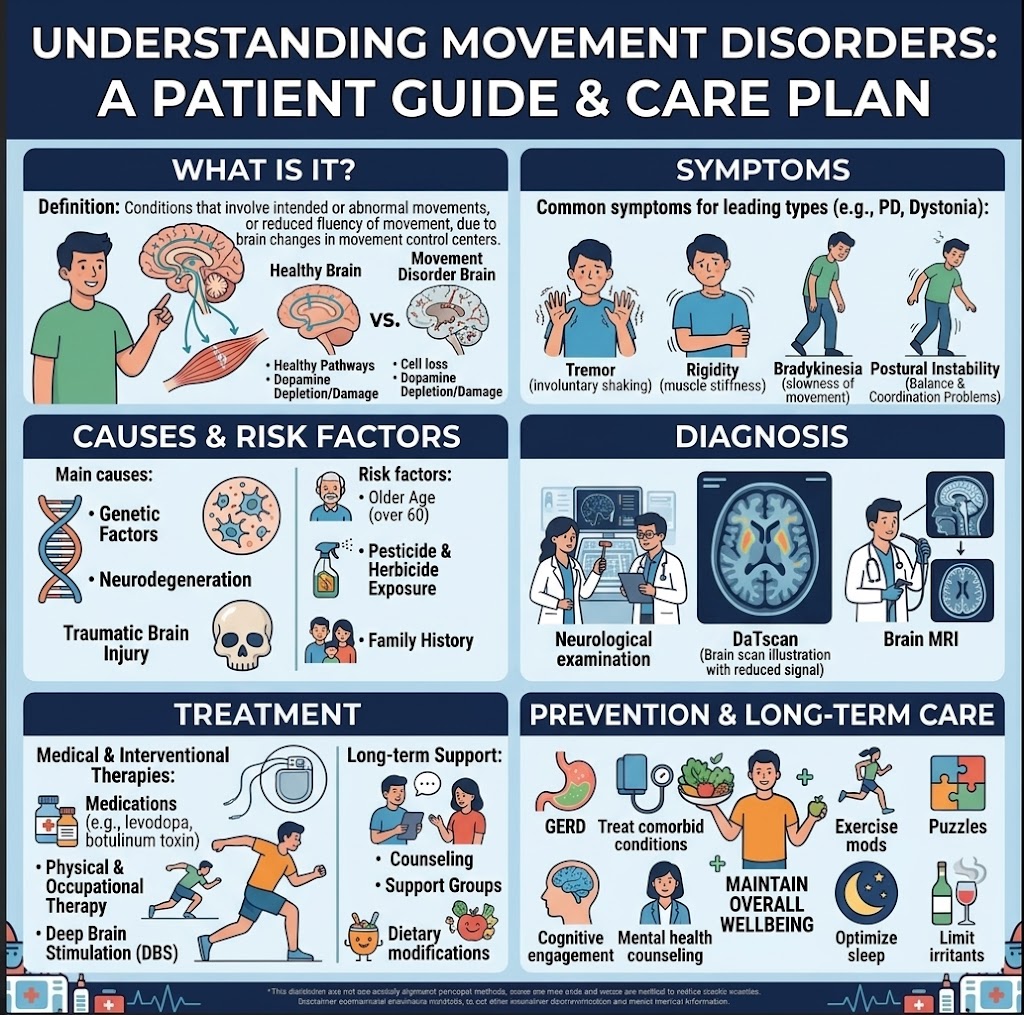
Movement disorders are a group of conditions that impact the nervous system, leading to issues with movement. These conditions can either increase movements, making them seem uncontrolled, or reduce/slow them down. Movements can be voluntary (under a person's control) or involuntary (not controlled). There are many different types of movement disorders, each causing unique symptoms. For instance, dystonia causes muscles to contract uncontrollably, leading to twisting postures. Chorea involves brief, quick, involuntary jerks, while parkinsonism often presents with slowness, stiffness, tremors, or balance problems. While these conditions can significantly affect daily life, various treatments, including medications, therapies, or surgery, are available to help manage symptoms. Treating any underlying condition that causes the movement disorder can also lead to improvement.
Understanding the Condition
Movement Disorders: Understanding Conditions Affecting Movement
Understanding the Condition
Movement disorders are a group of conditions that impact the nervous system, leading to issues with movement. These conditions can either increase movements, making them seem uncontrolled, or reduce/slow them down. Movements can be voluntary (under a person's control) or involuntary (not controlled). There are many different types of movement disorders, each causing unique symptoms. For instance, dystonia causes muscles to contract uncontrollably, leading to twisting postures. Chorea involves brief, quick, involuntary jerks, while parkinsonism often presents with slowness, stiffness, tremors, or balance problems. While these conditions can significantly affect daily life, various treatments, including medications, therapies, or surgery, are available to help manage symptoms. Treating any underlying condition that causes the movement disorder can also lead to improvement.
Common Symptoms
Ataxia: Affects the brain's coordination center, causing clumsy arm and leg movements and a loss of balance. It can also change speech and lead to other symptoms. Causes vary, including genetic conditions, infections, or other treatable issues.
Chorea: Characterized by brief, irregular, somewhat rapid, involuntary movements that repeat. These movements commonly involve the face, mouth, body, arms, and legs, often resembling exaggerated fidgeting. Huntington's disease, a progressive genetic form, also includes thinking difficulties and mental health challenges.
Dystonia: Involves involuntary muscle contractions that result in twisting, unusual postures, or repetitive movements. It can affect the whole body or just one part. Cervical dystonia, common in adults, specifically affects neck muscles, causing the head to pull, tilt, or shake.
Functional Movement Disorder: Presents with symptoms similar to other movement disorders but is not caused by a disease of the nervous system itself. This condition is treatable.
Multiple System Atrophy: A rare, progressive condition affecting multiple brain systems. It can cause movement issues like ataxia or parkinsonism, alongside symptoms such as low blood pressure, bladder problems, and acting out dreams during sleep.
Myoclonus: Defined by very quick, sudden jerks of a muscle or group of muscles.
Parkinson's Disease: Causes tremors, muscle stiffness, slow or reduced movement, and balance loss. Non-movement symptoms include a reduced sense of smell, constipation, acting out dreams, and a decline in thinking skills. It slowly worsens over time.
Before your visit, make a list of all your symptoms, noting when they started, how often they occur, and what makes them better or worse. Include details about your medical history, any medications you are currently taking (prescription, over-the-counter, supplements), and your family's medical history. Writing down any questions you have for the doctor can also be helpful.
Book a doctor visit near me
During the exam, the doctor will review your medical history and perform a series of tests to evaluate your physical and mental status. This may include checking your reflexes, muscle strength, balance, coordination, sensation, memory, speech, and eye movements. The exam can range from a few minutes to over an hour, depending on your symptoms and initial findings. It is generally painless and non-invasive.
Brain Magnetic Resonance Imaging (MRI)
Symptom-Targeted Medicines: Various medications are available to address specific symptoms of movement disorders, such as reducing involuntary movements, easing stiffness, or improving balance. These can help manage tremors, dystonia, or the slowness associated with parkinsonism. (Duration: Often long-term, potentially lifelong, with dosages and types of medication adjusted over time based on symptom response and side effects.)
Medicines for Underlying Causes: If a movement disorder is caused by a specific treatable condition (e.g., certain infections or vitamin deficiencies), medications targeting that underlying cause may be prescribed to alleviate movement symptoms. (Duration: Duration varies significantly depending on the underlying condition, from short-term courses to ongoing management.)
Physical Therapy: Helps improve strength, flexibility, balance, and coordination through targeted exercises and movements. It can enhance mobility and reduce the risk of falls. (Duration: Ongoing, with regular sessions tailored to individual needs and progression, often several times a week initially, then less frequently for maintenance.)
Occupational Therapy: Focuses on adapting daily tasks and environments to maintain independence. This may involve learning new ways to perform activities, using assistive devices, or modifying your home. (Duration: Varies; can involve short-term training for specific tasks or ongoing support to adapt to changing needs.)
Speech Therapy: Addresses speech difficulties, such as slurred speech or low voice volume, and swallowing problems that can occur with some movement disorders. (Duration: Can be short-term for specific issues or ongoing for progressive conditions, with regular practice sessions.)
Deep Brain Stimulation (DBS): Involves surgically implanting electrodes in specific brain areas. These electrodes are connected to a device similar to a pacemaker that sends electrical pulses to regulate abnormal brain activity, helping to control severe symptoms like tremor, stiffness, and slow movement. (Duration: Initial surgery, followed by a period of programming and adjustments. The device is typically left in place long-term, requiring ongoing monitoring and battery replacement.)
Other Targeted Surgeries: Depending on the specific movement disorder and its cause, other surgical options may be considered to relieve symptoms or address underlying issues. (Duration: Varies based on the specific procedure, with recovery periods and potential for long-term symptom management.)
Regular Exercise: Engaging in physical activity tailored to your abilities can improve muscle strength, flexibility, balance, and overall well-being, helping to manage symptoms like stiffness and improve mobility. (Duration: Ongoing, aiming for consistent activity most days of the week.)
Stress Management: Stress can sometimes worsen movement disorder symptoms. Techniques like mindfulness, meditation, yoga, or deep breathing can help reduce stress levels. (Duration: Ongoing practice as part of daily routine.)
Adequate Sleep: Prioritizing sufficient and quality sleep is vital for nervous system health and can help manage fatigue and other non-motor symptoms associated with movement disorders. (Duration: Ongoing, aiming for 7-9 hours per night.)
Avoiding Triggers: For some movement disorders, certain substances (like excessive alcohol or specific medications) or situations can worsen symptoms. Identifying and avoiding these triggers is important. (Duration: Ongoing vigilance.)
Assistive Devices: Using walkers, canes, weighted utensils, or other adaptive equipment can help improve stability, safety, and independence in daily activities. (Duration: As needed, potentially long-term.)
Regular Specialist Follow-ups: Consistent appointments with your neurologist or movement disorder specialist are crucial to monitor symptom progression, adjust treatments, and address any new concerns.
Engage with Support Groups: Connecting with others who have similar conditions can provide emotional support, practical advice, and a sense of community, reducing feelings of isolation.
Adaptive Strategies and Home Modifications: Work with therapists to develop strategies for daily living and consider modifications to your home environment to enhance safety, accessibility, and independence as your condition evolves.
Mental Health Support: Living with a chronic movement disorder can impact mental health. Seeking support from therapists or counselors can help manage stress, anxiety, or depression.
Consultation Guide
Parkinsonism: A general term for slow movement combined with stiffness, tremors, or loss of balance. It has various causes, including Parkinson's disease, certain medications, other degenerative disorders, stroke, or repeated head trauma.
Progressive Supranuclear Palsy: A rare nervous system condition causing difficulties with walking, balance, and eye movements. While it may look like Parkinson's disease, it is a distinct and progressive condition.
Restless Legs Syndrome: Causes uncomfortable aching, itching, or creeping sensations in the legs, especially when relaxing or lying down. These feelings are often relieved by movement.
Tardive Dyskinesia: A neurological condition resulting from long-term use of certain medications for mental health conditions, or some gastrointestinal medicines. It causes involuntary, repetitive movements such as grimacing or eye blinking.
Tourette Syndrome: A neurological condition involving repetitive movements and vocal sounds called tics. Tics are caused by an involuntary urge but result in movements that appear voluntary. It typically begins in childhood or the teenage years.
Tremor: Causes rhythmic shaking of body parts like the hands or head. The most common type is essential tremor.
Consultation Guide
Which Specialist to Meet
A neurological exam, or neuro exam, assesses how well different parts of your nervous system (brain, spinal cord, nerves, and muscles) are functioning. It helps your healthcare team identify nervous system conditions and their potential causes.
Prudent Medication Use: Always discuss the risks and benefits of long-term medication use with your healthcare provider, particularly for medicines known to potentially cause movement disorders as a side effect.
Avoidance of Harmful Substances: Refraining from illicit drug use and excessive alcohol consumption can prevent certain types of movement disorders associated with these substances.
Diagnostic Procedures
If you experience unusual or uncontrollable movements, it's advisable to consult a neurologist. A neurologist is a doctor who specializes in conditions affecting the brain, spinal cord, nerves, and muscles. They can diagnose movement disorders and recommend appropriate treatments. In some cases, a movement disorder specialist, who has advanced training in these specific conditions, may be recommended.
Preparations Before Your Visit
Neurological Examination
What to Expect
A brain MRI is a diagnostic test that produces detailed images of your brain, and sometimes your neck and spine. It uses radio waves and a powerful magnetic field, without radiation, to create cross-sectional 'slices' of the inside of your brain, similar to slices of bread. This test helps identify changes or areas where the brain might not be functioning correctly, assisting in diagnosing conditions like stroke, tumors, or multiple sclerosis.
What to Expect
You will lie on a movable table that slides into a large, tube-shaped machine. The machine is quite loud, so you might be offered earplugs or headphones. It's crucial to remain very still during the scan. Some people may feel a sense of enclosure within the machine. In certain cases, a contrast dye may be injected into a vein to make specific structures or abnormalities more visible. The procedure itself is painless and typically takes 30 to 60 minutes.
Genetic Counseling: If there is a family history of inherited movement disorders, genetic counseling can help assess risk, understand inheritance patterns, and discuss testing options for family planning.
Maintain a Healthy Diet: Ensure your diet provides adequate vitamins and nutrients. If concerns about vitamin deficiencies arise, consult a doctor for testing and appropriate supplementation.
Treatment Options
Medications
Prevention & Long-Term Wellbeing
Lifestyle and Home Remedies
Balanced Diet and Hydration: Eating a nutritious diet rich in fruits, vegetables, and whole grains, along with adequate hydration, supports overall health and nervous system function. Ensuring sufficient intake of specific vitamins (e.g., B vitamins, vitamin E) can be crucial if a deficiency is identified. (Duration: Ongoing as part of a healthy lifestyle.)
Prevention
Head Injury Prevention: Take precautions to prevent head trauma, such as wearing helmets during sports and using seatbelts, as head injuries can contribute to some movement disorders.
Long-Term Monitoring and Support
Tags & Topics
Notice an error or need an update?
Help us keep medical information accurate. Report incorrect info or suggest an edit.


