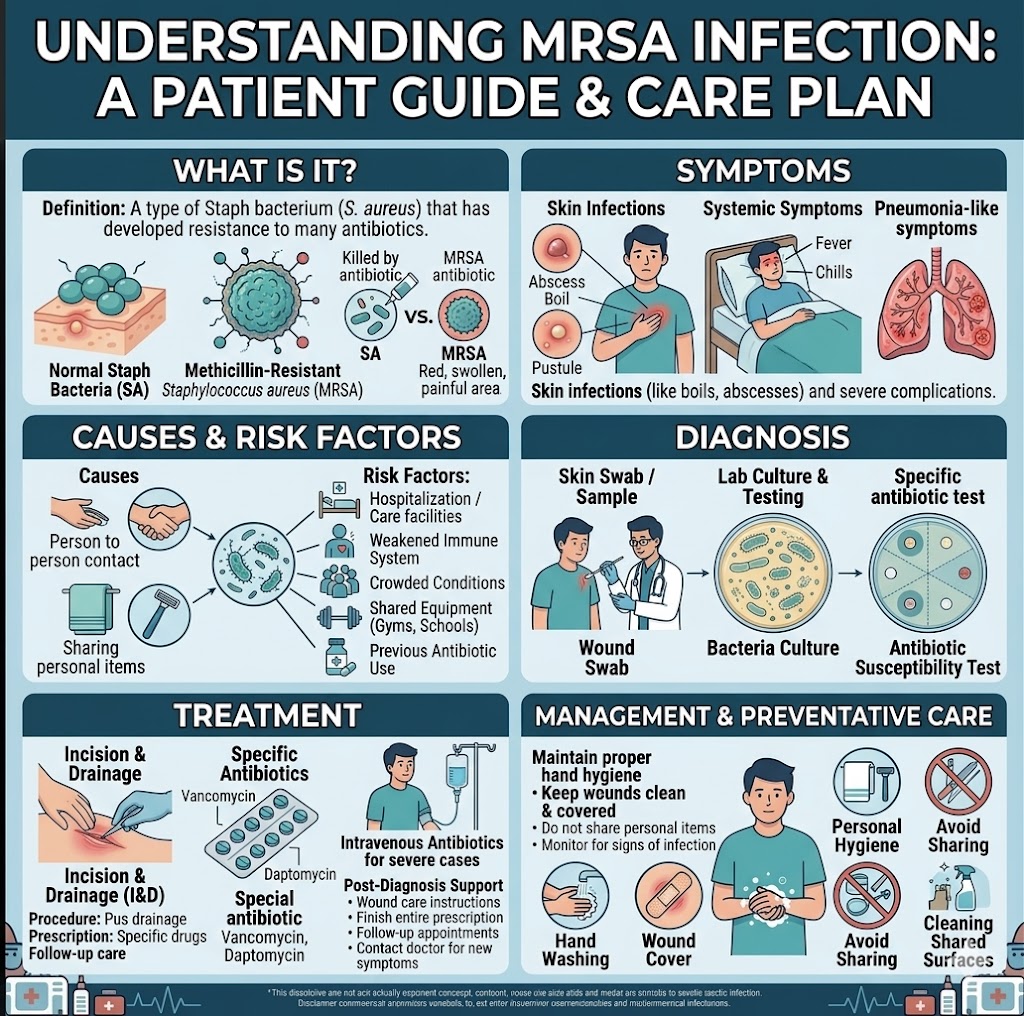
MRSA, or Methicillin-resistant Staphylococcus aureus, is a 'staph' bacteria resistant to many common antibiotics. This resistance makes infections harder to treat, developing from widespread antibiotic use that allows bacteria to evolve. Even when used correctly, antibiotics contribute to drug resistance by not eliminating every germ, allowing surviving bacteria to develop defenses against various medications. MRSA can be acquired in healthcare settings (hospitals, nursing homes), often linked to surgery or medical devices, and can be serious. It also occurs in the wider community, typically spreading via skin-to-skin contact, often as skin infections.
Understanding the Condition
MRSA Infection: Understanding a Resistant Bacteria
Understanding the Condition
Common Symptoms
Skin Infections: MRSA often starts as red, swollen, painful bumps resembling pimples, boils, or even spider bites. These can rapidly become deep, painful abscesses (boils) that are warm to the touch, pus-filled, or leaking fluid. A fever may also be present.
Internal Body Infections: MRSA can cause severe, life-threatening infections internally, affecting bones, joints, surgical wounds, the bloodstream (sepsis), heart valves, and lungs (pneumonia). Symptoms vary greatly by the affected site, but may include persistent fever, chills, localized pain, or breathing difficulties.
Consultation Guide
Which Specialist to Meet
Initially, you should consult your primary care physician or a general practitioner. Depending on the severity and location of the infection, they may refer you to a dermatologist (for skin infections) or an infectious disease specialist (for more complex or internal infections).
Preparations Before Your Visit
Before your visit, list all your symptoms, including when they started and how they've progressed. Include details about any recent hospitalizations, surgeries, or contact with others who have similar skin lesions. Be prepared to discuss your complete medical history, including any underlying health conditions and a list of all current medications. Do not attempt to pop or drain any boils yourself.
Book a doctor visit near me
Diagnostic Procedures
This is the primary method to diagnose MRSA. A healthcare professional takes a sample of fluid or tissue from the suspected infection site (e.g., skin lesion, wound, or nasal passage). This sample is then sent to a lab to grow the bacteria and identify its specific type and antibiotic resistance.
What to Expect
A sterile swab will be gently rubbed over the affected area or inside your nostril. You might feel a brief tickling sensation or slight discomfort, but it is generally quick. If an abscess needs sampling, a small incision may be made to collect pus. Results typically take a few days.
Blood tests are performed if there's concern that the infection has spread beyond the skin and into the bloodstream or other internal organs. They look for signs of systemic infection and can identify MRSA in the blood.
What to Expect
A blood sample will be drawn, usually from a vein in your arm. You might feel a brief pinch or sting as the needle is inserted. The procedure is typically quick, lasting only a few minutes. The blood sample is then sent to the lab for analysis.
Imaging Studies (X-ray, CT Scan, MRI)
For suspected deep or internal infections (e.g., in bones, joints, lungs, or other organs), imaging tests like X-rays, CT scans, or MRIs may be used to determine the extent and precise location of the infection.
What to Expect
The experience varies by test. For an X-ray, you'll briefly position yourself for images. For a CT scan, you'll lie on a table that slides into a large donut-shaped machine. For an MRI, you'll lie on a table that slides into a long, tube-like machine, which can be noisy. You may receive a contrast dye intravenously or orally to enhance image clarity. These tests are non-invasive, though you must remain still for a period, and some people find enclosed spaces uncomfortable.
Treatment Options
MRSA, or Methicillin-resistant Staphylococcus aureus, is a 'staph' bacteria resistant to many common antibiotics. This resistance makes infections harder to treat, developing from widespread antibiotic use that allows bacteria to evolve. Even when used correctly, antibiotics contribute to drug resistance by not eliminating every germ, allowing surviving bacteria to develop defenses against various medications. MRSA can be acquired in healthcare settings (hospitals, nursing homes), often linked to surgery or medical devices, and can be serious. It also occurs in the wider community, typically spreading via skin-to-skin contact, often as skin infections.
Warm Compresses: For small, unopened skin lesions or boils, applying warm compresses several times a day can help reduce swelling and discomfort, and potentially encourage natural drainage. However, never attempt to squeeze or lance a boil yourself. (Duration: 15-20 minutes, 3-4 times daily)
Medications
Antibiotics: Even though MRSA is resistant to many common antibiotics, there are specific classes of antibiotics that are effective. These are chosen based on the MRSA strain and infection severity. They can be prescribed as oral pills for milder infections or administered intravenously for more severe or widespread infections. (Duration: Typically 5-14 days for skin infections; several weeks to months for deep or systemic infections, depending on response.)
Incision and Drainage (I&D): For boils or abscesses filled with pus, a healthcare provider may perform a minor surgical procedure to cut open and drain the pus. This is often necessary even with antibiotics, as draining the infection source significantly aids healing. (Duration: A single procedure, followed by wound care for several days to weeks until healed.)
Surgical Procedures
Debridement and Foreign Body Removal: In cases of deep tissue infections, bone infections, or infections associated with medical devices (like artificial joints or catheters), surgery may be required to remove infected tissue (debridement) or to remove and potentially replace infected devices. This is crucial for eliminating infection sources that antibiotics alone cannot reach. (Duration: Dependent on the complexity of the surgery and extent of infection; recovery can range from weeks to months.)
Practice Smart Antibiotic Use: Only take antibiotics when prescribed by a doctor for bacterial infections, and complete the entire course of medication as directed, even if you start feeling better. Never save antibiotics for later use or share them with others. This helps minimize the development of antibiotic resistance.
Maintain General Hygiene: Shower or bathe regularly, especially after exercise or activities where skin-to-skin contact is common. Keep skin healthy and moisturized to prevent cracks and breaks in the skin barrier.
Monitor Skin for Changes: Regularly check your skin, and your children's skin, for any new or worsening red bumps, sores, or areas of warmth and pain. Promptly report any suspicious lesions or signs of infection to a healthcare professional, especially if accompanied by fever.
Manage Chronic Conditions: If you have underlying health conditions that weaken your immune system (e.g., diabetes, kidney disease), work with your doctor to manage them effectively, as this can reduce your risk of infections, including MRSA.
Prevention & Long-Term Wellbeing
Prevention
Hand Hygiene: Wash hands frequently and thoroughly with soap and water for at least 20 seconds, especially after using the bathroom, before eating, and after touching potentially contaminated surfaces. Use alcohol-based hand sanitizer if soap and water are not available.
Wound Care: Keep all cuts, scrapes, and other skin wounds clean and covered with a sterile, dry bandage until healed. Change bandages regularly and dispose of used bandages properly. Avoid touching open wounds with unwashed hands.
Avoid Sharing Personal Items: Do not share personal items such as towels, razors, clothing, athletic equipment, or other items that come into contact with bare skin. Clean and sanitize shared equipment, especially in gyms or athletic facilities.
Tags & Topics
Notice an error or need an update?
Help us keep medical information accurate. Report incorrect info or suggest an edit.


