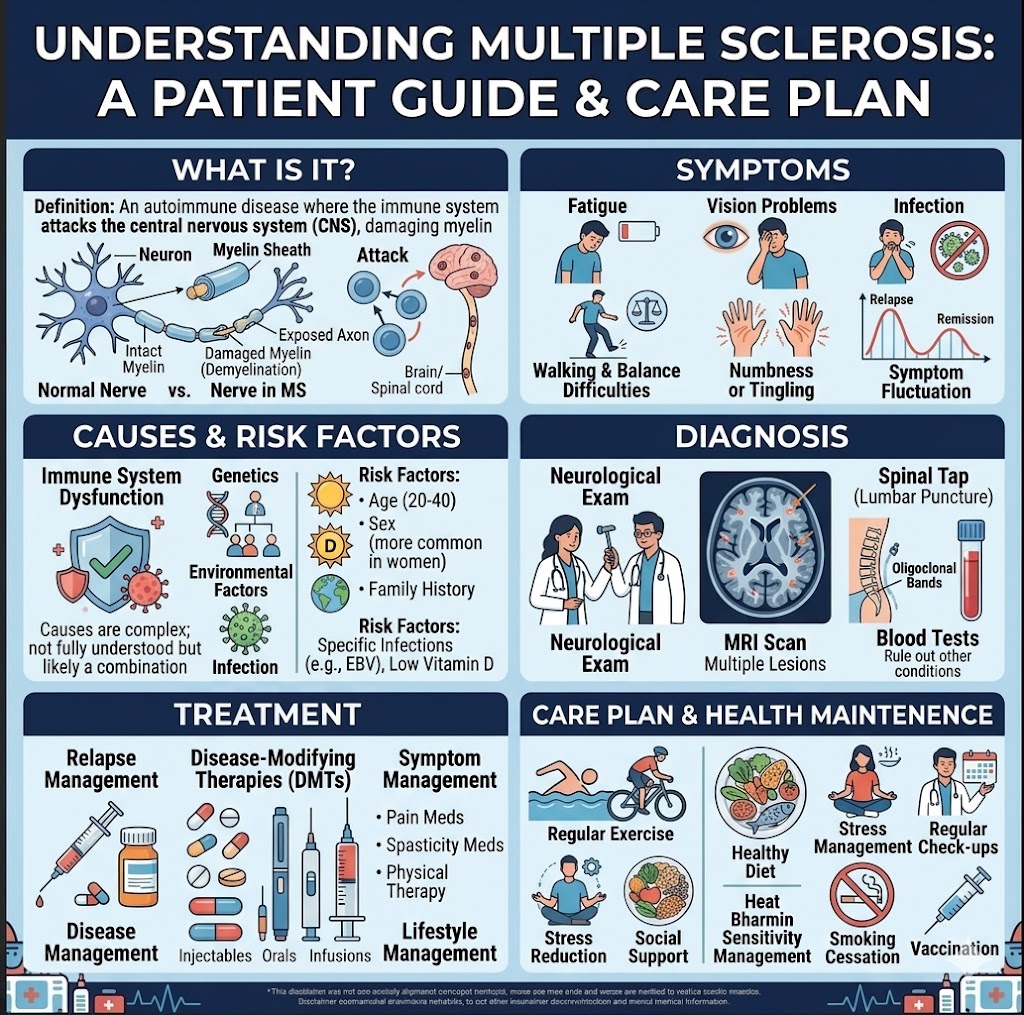
Multiple Sclerosis (MS) is a chronic disease where the body's immune system mistakenly attacks the protective covering around nerves in the brain and spinal cord, called myelin. Myelin is vital for fast and clear communication between the brain and the rest of the body, much like insulation on an electrical wire. When myelin is damaged, these signals can slow down, get distorted, or be blocked entirely, leading to a wide range of symptoms. Over time, this damage can become permanent. Symptoms vary greatly from person to person depending on which nerves are affected and the extent of the damage. While there is currently no cure for MS, various treatments can help manage symptoms, reduce attacks, and slow the disease's progression.
Understanding the Condition
Understanding Multiple Sclerosis (MS)
Understanding the Condition
Multiple Sclerosis (MS) is a chronic disease where the body's immune system mistakenly attacks the protective covering around nerves in the brain and spinal cord, called myelin. Myelin is vital for fast and clear communication between the brain and the rest of the body, much like insulation on an electrical wire. When myelin is damaged, these signals can slow down, get distorted, or be blocked entirely, leading to a wide range of symptoms. Over time, this damage can become permanent. Symptoms vary greatly from person to person depending on which nerves are affected and the extent of the damage. While there is currently no cure for MS, various treatments can help manage symptoms, reduce attacks, and slow the disease's progression.
Common Symptoms
Numbness or Tingling: Sensations of pins and needles or loss of feeling in parts of the body.
Electric Shock Sensations (Lhermitte Sign): A brief, electric shock-like feeling that runs down the spine and into the limbs, often triggered by bending the neck forward.
Trouble with Movement and Coordination: Difficulty walking, loss of balance, clumsiness, or muscle weakness that can range from mild to severe, potentially affecting the ability to walk.
Vision Problems: Partial or complete vision loss (usually in one eye at a time, often with pain during eye movement), double vision, or blurry vision.
Dizziness and Vertigo: A false sensation of spinning or feeling like your surroundings are moving.
Speech Difficulties: Slurred speech.
Cognitive Changes: Problems with memory, thinking clearly, or understanding information.
Mood Changes: Depression, anxiety, or unpredictable mood swings.
Bladder, Bowel, and Sexual Problems: Difficulties with bladder control, constipation, or sexual dysfunction.
Consultation Guide
Which Specialist to Meet
If you experience symptoms suggestive of MS, start by consulting your primary care doctor. They can assess your symptoms and, if needed, refer you to a neurologist, a doctor specializing in conditions of the brain and nervous system.
Preparations Before Your Visit
Before your appointment, make a list of all your symptoms, including when they started, how often they occur, and how they affect your daily life. Also, note down your complete medical history, including any other health conditions you have and medications you take. Prepare a list of questions you want to ask your doctor.
Book a doctor visit near me
Treatments for Acute Attacks (Relapses): During a sudden worsening of symptoms (a relapse or flare-up), short courses of high-dose corticosteroids may be prescribed to reduce inflammation and speed up recovery. (Duration: Usually given for a few days to weeks.)
Symptom Management Medications: Various medications are prescribed to alleviate specific MS symptoms such as muscle stiffness and spasms, fatigue, pain, bladder problems, and depression. (Duration: Taken as needed or on an ongoing basis, depending on the symptom and medication.)
Rehabilitation Therapies: This includes physical therapy (to improve strength, balance, and walking), occupational therapy (to adapt daily tasks), speech therapy (for speech and swallowing issues), and cognitive rehabilitation (for memory and thinking challenges). (Duration: Can range from short-term intensive programs to ongoing, as-needed sessions.)
Regular Medical Check-ups: Consistent follow-up with your neurologist and healthcare team is crucial to monitor disease activity, adjust treatments, and manage symptoms effectively.
Adhere to Treatment Plan: Taking prescribed medications as directed is vital for slowing disease progression and managing symptoms.
Stay Physically Active: Regular, tailored exercise can improve strength, balance, mood, and reduce fatigue. Consult a physical therapist for safe and effective routines.
Stress Management: Techniques like mindfulness, meditation, or yoga can help manage stress, which can sometimes trigger or worsen symptoms.
Stay Informed: Learning about MS and engaging with your healthcare team empowers you to make informed decisions about your health.
Consultation Guide
An MRI uses powerful magnets and radio waves to create detailed images of your brain and spinal cord. It can reveal areas of nerve damage (lesions) caused by MS, helping confirm a diagnosis and monitor disease activity.
Avoid Smoking: Smoking is a known risk factor for MS and can worsen disease progression. Quitting smoking is strongly recommended.
Manage Weight: Maintaining a healthy weight, especially avoiding obesity in childhood and adulthood, may reduce MS risk.
Manage Other Autoimmune Conditions: If you have other autoimmune diseases, diligent management may reduce overall immune system dysregulation.
Long-Term Monitoring and Management
Diagnostic Procedures
This is a physical examination performed by a doctor to assess the function of your brain, spinal cord, and nerves. It helps evaluate your reflexes, muscle strength, balance, coordination, sensation, and cognitive abilities.
What to Expect
The doctor will check your reflexes, muscle strength, balance, sensation, and eye movements. This exam is non-invasive and generally takes a few minutes to an hour.
Brain and Spinal Cord Magnetic Resonance Imaging (MRI)
What to Expect
You will lie still on a movable table that slides into a tube-shaped machine. It's noisy, so earplugs or headphones may be offered. In some cases, a special dye might be injected into a vein to highlight specific areas. The procedure is painless and typically lasts from 30 minutes to an hour or more.
Lumbar Puncture (Spinal Tap)
This procedure involves collecting a small sample of cerebrospinal fluid (CSF) from your lower back, which surrounds your brain and spinal cord. In MS, this fluid can show specific changes, such as increased immune proteins or immune cells, which can help support the diagnosis.
What to Expect
You will typically lie on your side or sit and lean forward. The doctor will numb the area on your lower back, and a thin needle is then carefully inserted between two vertebrae to collect CSF. You might feel some pressure. The procedure usually takes about 30-45 minutes. Afterwards, you may be advised to lie flat for a few hours to reduce the risk of headache.
Treatment Options
Medications
Disease-Modifying Therapies (DMTs): These medications aim to reduce the frequency and severity of MS attacks, slow down the progression of disability, and limit new damage to the nervous system. They work by targeting the immune system and can be given as infusions (into a vein), self-injections, or oral tablets. (Duration: Typically taken long-term, often for many years, under close medical supervision.)
Prioritize Mental Health: MS can impact mood. Seek support for depression, anxiety, or mood swings through counseling, support groups, or medication if needed.
Prevention & Long-Term Wellbeing
Lifestyle Adjustments
Supportive Lifestyle: A healthy lifestyle, including regular, moderate exercise tailored to individual abilities, a balanced diet rich in fruits and vegetables, stress management techniques, and avoiding smoking, can significantly support overall well-being. (Duration: Ongoing, as part of daily life.)
Prevention and Risk Reduction
Maintain Vitamin D Levels: Research suggests adequate vitamin D, through safe sun exposure and supplements, may lower MS risk or reduce disease activity. Consult your doctor for recommended doses.
Healthy Diet: A balanced diet provides essential nutrients and supports overall health, though no specific 'MS diet' is universally proven.
Tags & Topics
Notice an error or need an update?
Help us keep medical information accurate. Report incorrect info or suggest an edit.


