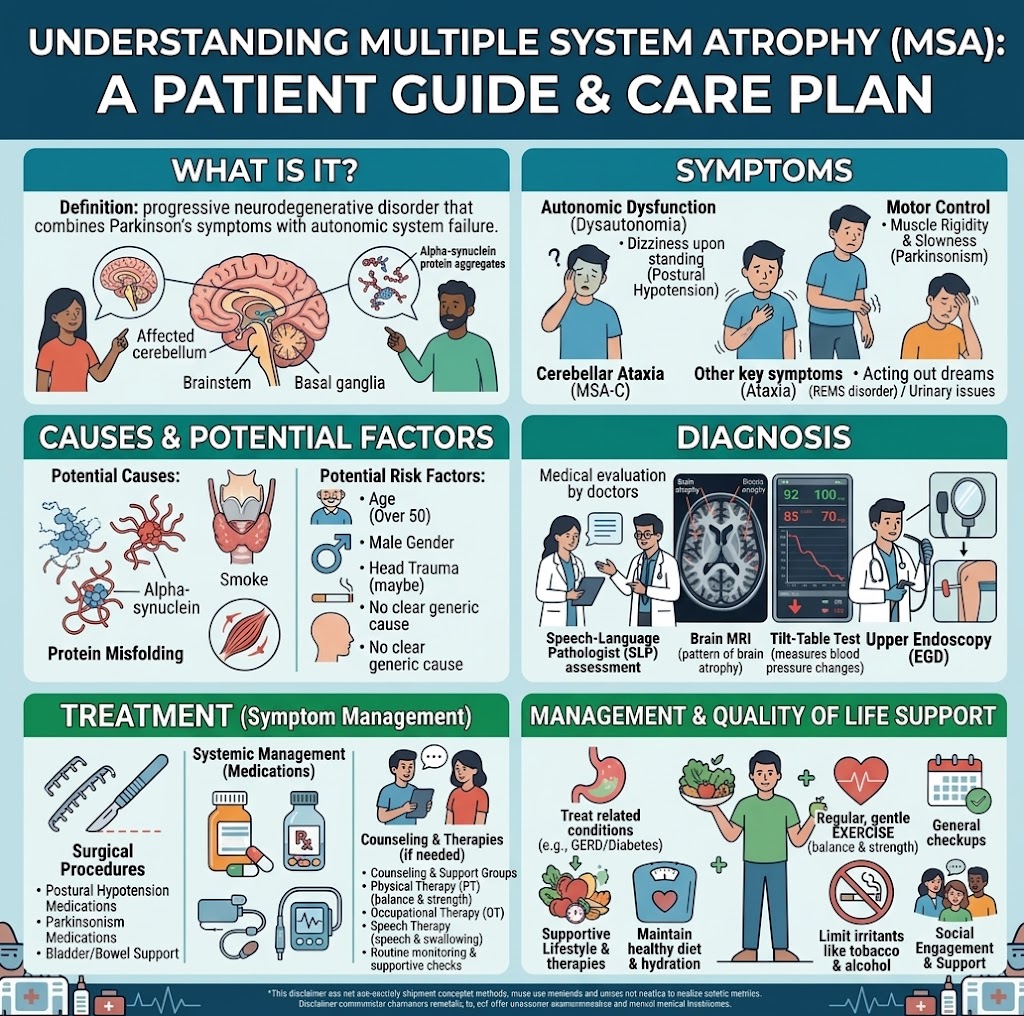
Multiple System Atrophy (MSA) is a rare, progressive neurological disorder affecting movement, balance, and automatic bodily functions like blood pressure and bladder control. It causes stiffness, slow movement, coordination issues, and speech changes. Often mistaken for Parkinson's disease, MSA has no cure, but treatments manage symptoms. It worsens over time, severely impacting daily life and typically shortening life expectancy due to complications such as breathing problems or infections.
Understanding the Condition
Multiple System Atrophy (MSA): Understanding a Progressive Neurological Condition
Understanding the Condition
Multiple System Atrophy (MSA) is a rare, progressive neurological disorder affecting movement, balance, and automatic bodily functions like blood pressure and bladder control. It causes stiffness, slow movement, coordination issues, and speech changes. Often mistaken for Parkinson's disease, MSA has no cure, but treatments manage symptoms. It worsens over time, severely impacting daily life and typically shortening life expectancy due to complications such as breathing problems or infections.
Common Symptoms
General Onset: Symptoms usually begin in adulthood (50s-60s) and worsen progressively.
Parkinsonian Type (MSA-P): This is the most common type, with symptoms resembling Parkinson's disease, including stiff muscles, slow movement (bradykinesia), poor balance and posture (increasing fall risk), tremors (shaking) at rest or during movement, and slurred, slow, or soft speech (dysarthria).
Cerebellar Type (MSA-C): This type primarily impacts coordination, leading to poor muscle coordination (ataxia) affecting walking and precise movements, difficulty with hand-eye coordination, slurred speech, and trouble swallowing.
Automatic Body Function Issues: Common in both types, these affect involuntary functions such as blood pressure (dizziness or fainting when standing due to orthostatic hypotension), bladder control (urgency or incontinence), bowel issues (constipation), breathing difficulties (especially during sleep), and erectile dysfunction in men.
Consultation Guide
Which Specialist to Meet
It is crucial to consult a neurologist specializing in movement disorders. Other specialists may include a cardiologist for heart-related symptoms, a urologist for bladder issues, a gastroenterologist for digestive problems, and physical, occupational, and speech-language therapists for rehabilitation.
Preparations Before Your Visit
Before your visit, prepare a detailed list of all your symptoms (when they started, how often they occur). Bring a complete list of all medications, supplements, and vitamins you are taking. Be ready to discuss your medical history and any family history of neurological conditions, and write down any questions you have for the doctor.
Book a doctor visit near me
An ECG is a quick, non-invasive test that records the electrical signals of your heart. It helps assess heart rate and rhythm, identifying any abnormalities that could be contributing to symptoms like fainting or dizziness, or monitoring overall heart health.
To Raise Blood Pressure: Oral medications may be prescribed to help increase blood pressure, especially when standing, to reduce dizziness and fainting. (Duration: Ongoing, as prescribed, for symptom management.)
To Improve Bladder Control: Medications can help manage an overactive bladder, urgency, or incontinence. (Duration: Ongoing, as prescribed, for symptom management.)
For Parkinsonian Symptoms: Some medications typically used for Parkinson's disease may offer temporary relief for stiffness, slowness, and tremors, though often less effectively for MSA. (Duration: Ongoing, as prescribed, with effectiveness often monitored.)
For Erectile Dysfunction: Medications can help manage this complication. (Duration: As needed, for symptom management.)
Physical Therapy: Focuses on maintaining movement, balance, and flexibility through exercises, gait training, and strategies to prevent falls. (Duration: Regular, ongoing sessions, adapted as symptoms change.)
Occupational Therapy: Helps individuals adapt to daily activities, suggesting assistive devices and strategies to maintain independence in tasks like dressing, eating, and hygiene. (Duration: Regular, ongoing sessions, adapted as symptoms change.)
Speech and Swallowing Therapy: Addresses speech difficulties (dysarthria) and swallowing problems (dysphagia), offering exercises to strengthen muscles and strategies to make eating and communication safer and easier. (Duration: Regular, ongoing sessions, adapted as symptoms change.)
Pacemaker Implantation: A small device surgically placed under the skin near the collarbone, with wires leading to the heart, to regulate a slow or irregular heartbeat. This can help manage symptoms like fainting caused by heart rhythm issues. (Duration: Permanent device; battery typically replaced every 5-10 years through a minor procedure.)
Assistive Devices: Using walkers, canes, or wheelchairs can improve mobility and reduce fall risk as symptoms progress. (Duration: As needed, for long-term support.)
Breathing Support: Devices like CPAP (Continuous Positive Airway Pressure) may be used for sleep-related breathing difficulties. (Duration: Ongoing, typically nightly.)
Regular Medical Follow-ups: Consistent follow-up with neurologists and other specialists is vital to monitor symptom progression, adjust treatments, and manage complications effectively.
Blood Pressure Monitoring: Daily home blood pressure monitoring, especially when standing, is crucial to detect and manage orthostatic hypotension, helping to prevent falls and fainting.
Breathing and Swallowing Safety: Regular assessment for breathing difficulties, particularly during sleep, and ongoing monitoring of swallowing ability are essential to prevent complications like sleep apnea, choking, and aspiration pneumonia.
Skin Care: For individuals with limited mobility, diligent skin checks and frequent repositioning are crucial to prevent pressure sores.
Diagnostic Procedures
Brain Magnetic Resonance Imaging (MRI)
An MRI uses powerful magnets and radio waves to create detailed images of the brain and surrounding areas. This helps doctors look for specific changes, such as brain shrinkage (atrophy) in certain areas, characteristic of MSA or to rule out other conditions.
What to Expect
You will lie on a movable table that slides into a large, tube-shaped machine. The machine makes loud knocking and humming noises, so earplugs or headphones are usually provided. You must lie very still during the scan, which can take 30 to 60 minutes. While some people may feel a bit enclosed, the test is painless and does not use radiation.
Electrocardiogram (ECG or EKG)
What to Expect
Small sticky patches called electrodes will be placed on your chest, and sometimes on your arms and legs. Wires connect these patches to a machine that records your heart's electrical activity. You will lie still for a few minutes while the recording is made. The test is painless and quick.
This common test measures the pressure in your arteries as your heart pumps blood. For MSA patients, it's vital to check for orthostatic hypotension (a significant drop in blood pressure upon standing) and other blood pressure irregularities that are common in the condition.
What to Expect
A healthcare professional will wrap an inflatable cuff around your arm. The cuff will inflate, briefly squeezing your arm tightly, then slowly deflate. A reading is taken while you are seated and often again after you stand up for a few minutes to check for changes in blood pressure. The entire process is quick and usually painless, though the squeeze can be slightly uncomfortable.
This test monitors your heart rate and blood pressure as your body position changes from lying down to standing. It's particularly useful for diagnosing orthostatic hypotension and understanding why a person might be experiencing fainting spells or dizziness.
What to Expect
You will lie flat on a special table with straps to keep you secure. Electrodes will be attached to your chest to monitor your heart, and a blood pressure cuff will be placed on your arm. After a period of lying flat, the table will slowly tilt you upwards to an almost standing position. Your heart rate and blood pressure will be continuously monitored during this time. You might experience dizziness or faintness during the test, which typically resolves when the table is returned to a flat position.
Treatment Options
Medications
Prevention & Long-Term Wellbeing
Lifestyle Adjustments and Assistive Devices
Dietary Adjustments: Increasing salt and fluid intake can help manage low blood pressure. A high-fiber diet can help with constipation. (Duration: Ongoing, daily.)
Long-Term Monitoring and Management
Lifestyle and Support Strategies
Supervised Exercise: Engaging in a tailored exercise program, guided by a physical therapist, helps maintain muscle strength, flexibility, and balance for as long as possible.
Nutrition and Hydration: Maintaining a balanced diet and adequate fluid intake supports overall health and helps manage issues like constipation and blood pressure fluctuations.
Home Safety: Modifying living spaces by installing grab bars, removing tripping hazards, and using non-slip mats can significantly reduce the risk of falls at home.
Emotional Support: Joining support groups, seeking counseling, or connecting with social workers can help individuals and caregivers cope with the emotional challenges of living with a progressive condition.
Future Care Planning: Discussing and documenting preferences for future medical care and support can empower individuals and provide clarity for families.
Tags & Topics
Notice an error or need an update?
Help us keep medical information accurate. Report incorrect info or suggest an edit.


