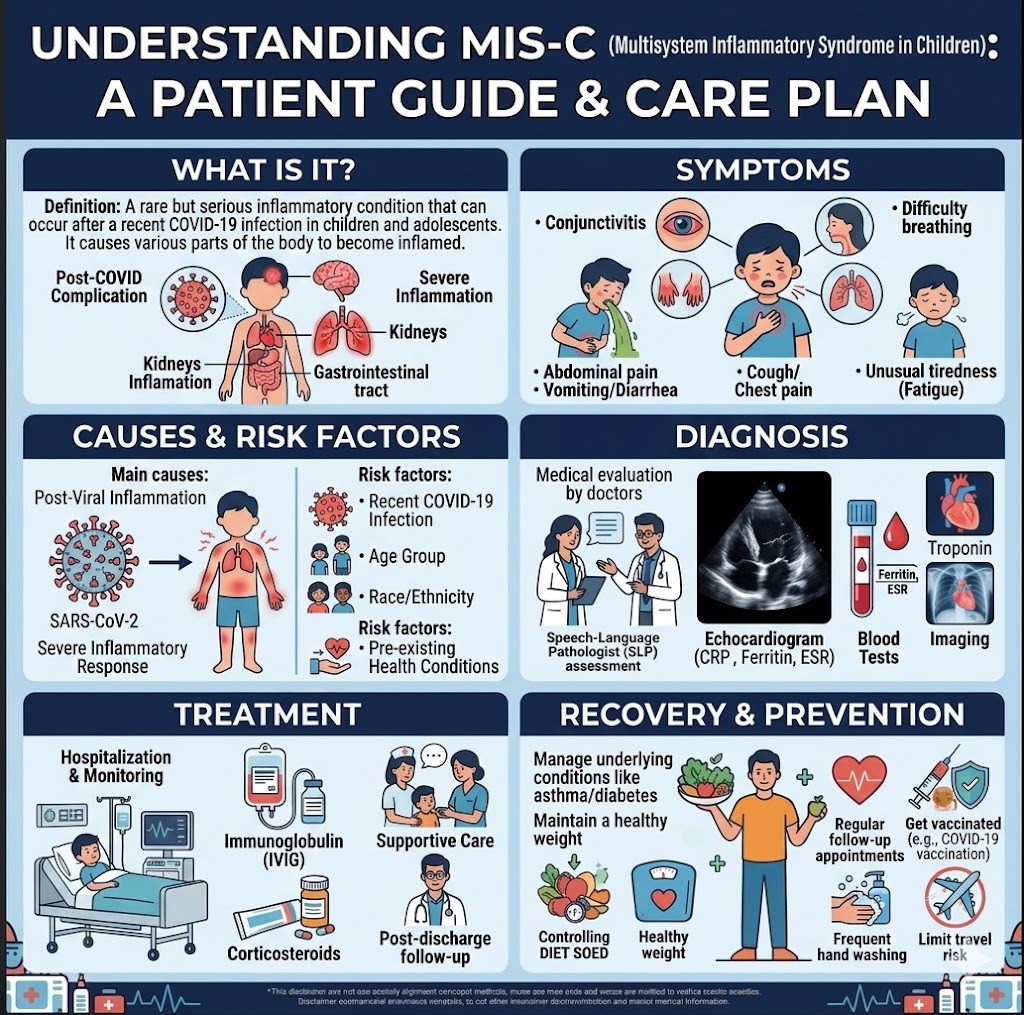
Multisystem Inflammatory Syndrome in Children (MIS-C) is a rare but serious condition where various organs and tissues in the body become inflamed (swollen and irritated). It is strongly linked to a recent COVID-19 infection, typically appearing within two months, even if the initial COVID-19 symptoms were mild or absent. While most children experience mild COVID-19, some can become severely ill, requiring hospitalization. MIS-C requires urgent medical care as it can lead to life-threatening complications or, rarely, death. A similar condition, MIS-A, can affect adults.
Understanding the Condition
Multisystem Inflammatory Syndrome in Children (MIS-C) and COVID-19 in Kids: A Parent's Guide
Understanding the Condition
Multisystem Inflammatory Syndrome in Children (MIS-C) is a rare but serious condition where various organs and tissues in the body become inflamed (swollen and irritated). It is strongly linked to a recent COVID-19 infection, typically appearing within two months, even if the initial COVID-19 symptoms were mild or absent. While most children experience mild COVID-19, some can become severely ill, requiring hospitalization. MIS-C requires urgent medical care as it can lead to life-threatening complications or, rarely, death. A similar condition, MIS-A, can affect adults.
Common Symptoms
Persistent Fever: A high body temperature that doesn't go away.
Before the visit, prepare a detailed list of your child's symptoms and when they started. Note any recent illness, including possible exposure to or diagnosis of COVID-19 within the last two months. Bring your child's medical history and a list of any medications they are taking.
Book a doctor visit near me
Hospitalization and Monitoring: Intensive hospital care with close monitoring of vital signs and organ function to manage symptoms and complications. (Duration: Typically several days to weeks, depending on the severity of the condition and recovery progress.)
Intravenous Fluids and Oxygen Support: Fluids given directly into a vein for hydration; oxygen therapy for breathing support if lungs are affected. (Duration: As needed, typically throughout the acute phase of illness.)
Watch for Lingering Symptoms: Report any unusual fatigue, shortness of breath, or decreased exercise tolerance to your doctor.
Diagnostic Procedures
Widespread Body Inflammation: Blood tests show high levels of inflammation throughout the body.
Heart Problems: Signs of heart issues, such as changes in heart function.
Red, Bloodshot Eyes: Eyes appear unusually red or irritated.
Redness or Swelling of Lips and Tongue: The lips and tongue may look swollen or bright red.
Redness or Swelling of Hands or Feet: Swelling and discoloration in the hands or feet.
Stomach Pain, Vomiting, or Diarrhea: Digestive upset including abdominal discomfort, throwing up, or loose stools.
Blood Clotting Problems: Issues with how blood clots, which can be dangerous.
Consultation Guide
Which Specialist to Meet
Begin with your child's pediatrician. If MIS-C is suspected or confirmed, a team of specialists may be involved, including pediatric infectious disease doctors, cardiologists, and critical care specialists, given the condition's impact on multiple body systems.
Preparations Before Your Visit
This imaging test uses a small amount of radiation to create pictures of the heart, lungs, blood vessels, and bones in the chest, helping to identify lung issues or heart enlargement.
What to Expect
Your child will briefly stand or lie down while a technician positions them. They'll need to hold their breath for a few seconds. The process is quick and generally painless.
CT Scan (Computerized Tomography)
A CT scan uses X-rays from different angles to create detailed cross-sectional images of bones, blood vessels, and soft tissues, offering more detail than standard X-rays for assessing internal organs.
What to Expect
Your child lies on a moving table that slides into a large machine. They must remain very still. In some cases, a contrast dye might be given intravenously to enhance image clarity.
This test uses sound waves to create live, moving pictures of the heart, showing its structure and how blood flows through its chambers and valves, essential for detecting heart problems.
What to Expect
A gel is applied to the chest, and a handheld device (transducer) is moved over the skin. It’s painless, and images appear on a monitor. The test usually takes 30-60 minutes.
Using high-frequency sound waves, ultrasound creates real-time images of internal organs and soft tissues without radiation, often used to examine abdominal organs or blood vessels.
What to Expect
Gel is applied to the skin over the area being examined, and a transducer is moved across the skin. It’s non-invasive and painless, similar to an echocardiogram.
Treatment Options
Medications
Anti-inflammatory Medications: Drugs to reduce widespread inflammation impacting organs and tissues. (Duration: Usually for the acute phase (days to weeks), with potential tapering over longer periods as directed by a doctor.)
Immune-Modulating Therapies: Treatments like intravenous antibodies to calm an overactive immune response. (Duration: Typically given over several days in the hospital.)
Heart Support Medications: Medications to improve heart function and maintain stable blood pressure when the heart is affected. (Duration: As needed, during the acute illness and potentially for a short period during recovery.)
Blood Clot Prevention: Medications to lower the risk of dangerous blood clot formation. (Duration: During the acute phase and sometimes for a period after discharge, based on risk.)
Extracorporeal Membrane Oxygenation (ECMO): A life-support system for severe heart/lung failure, where a machine oxygenates blood outside the body, allowing organs to rest. (Duration: Short-term, days to weeks, until the heart and lungs recover enough to function on their own.)
Prevention & Long-Term Wellbeing
Prevention of COVID-19 and MIS-C
COVID-19 Vaccination: Vaccinate your child (age 6 months+) to reduce risk of severe illness, hospitalization, and MIS-C.
Maintain Hand Hygiene: Wash hands often with soap and water for 20 seconds, or use 60%+ alcohol hand sanitizer.
Avoid Close Contact with Sick Individuals: Keep distance from people coughing, sneezing, or showing illness signs.
Practice Physical Distancing: Maintain space from others in public indoor areas, especially where airflow is poor.
Wear Face Masks: Wear a well-fitting mask in public indoor places when COVID-19 community levels are high.
Avoid Touching Face: Remind your child to avoid touching their eyes, nose, and mouth to prevent germ transfer.
Cover Coughs and Sneezes: Use a tissue or elbow; dispose of tissue and wash hands immediately.
Clean and Disinfect Surfaces: Regularly clean high-touch surfaces in your home, like doorknobs and remotes.
Long-Term Monitoring After MIS-C
Regular Medical Follow-up: Ongoing check-ups, especially with a cardiologist, are crucial to monitor heart health and overall recovery.
Support Healthy Lifestyle Choices: Encourage balanced nutrition, sufficient rest, and gradual, age-appropriate physical activity for recovery.
Tags & Topics
Notice an error or need an update?
Help us keep medical information accurate. Report incorrect info or suggest an edit.


