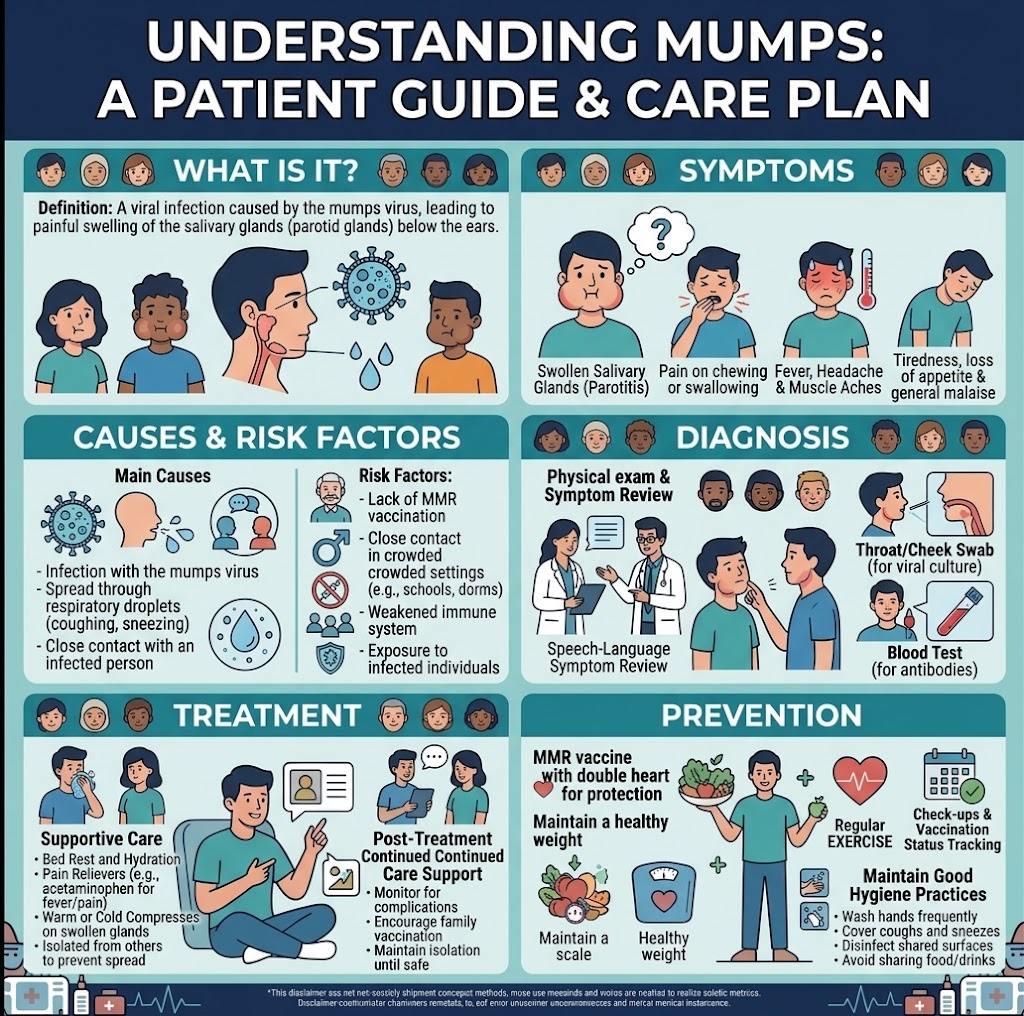
Mumps is a contagious illness caused by a virus. It primarily affects the salivary glands located near the ears, known as parotid glands, causing them to swell and become painful. While once common, widespread vaccination has significantly reduced mumps cases in many countries. However, outbreaks can still occur, particularly among unvaccinated individuals. Those who are vaccinated and contract mumps typically experience milder symptoms and fewer complications. There is no specific cure, so treatment focuses on managing symptoms and providing comfort.
Understanding the Condition
Mumps: Understanding, Symptoms, and Care
Understanding the Condition
Mumps is a contagious illness caused by a virus. It primarily affects the salivary glands located near the ears, known as parotid glands, causing them to swell and become painful. While once common, widespread vaccination has significantly reduced mumps cases in many countries. However, outbreaks can still occur, particularly among unvaccinated individuals. Those who are vaccinated and contract mumps typically experience milder symptoms and fewer complications. There is no specific cure, so treatment focuses on managing symptoms and providing comfort.
Common Symptoms
Fever: An elevated body temperature, often one of the first signs.
Headache: Pain in the head that can range from mild to severe.
Muscle Aches: Generalized body discomfort and pain in muscles.
Tiredness: Unusual fatigue or lack of energy.
Loss of Appetite: Reduced desire to eat or feeling unwell before meals.
Pain While Chewing or Swallowing: Discomfort or pain when moving the jaw or consuming food and drink.
Tender Salivary Glands: Pain or sensitivity to touch in the areas where the salivary glands are located, typically below the ears.
Swelling in Temples or Cheeks: Noticeable enlargement on one or both sides of the face, typically around the jawline and below the ears. This is a hallmark symptom.
Consultation Guide
Which Specialist to Meet
For initial symptoms of mumps, you should consult a primary care provider, such as a family doctor or pediatrician for children. If complications arise, your doctor may refer you to a specialist like an infectious disease expert, a neurologist for conditions affecting the brain, or a urologist for testicular involvement.
Preparations Before Your Visit
If you suspect you or your child has mumps, contact the clinic before your visit. This allows the staff to take precautions to prevent the virus from spreading to other patients. Be prepared to discuss your symptoms, when they started, and your vaccination history. Mention any recent exposure to someone with mumps, and be ready to provide details about the timing and nature of that exposure.
Book a doctor visit near me
Your doctor will conduct a thorough physical examination, carefully checking for the characteristic swelling and tenderness of the salivary glands, particularly the parotid glands on your face and neck. They will also assess other reported symptoms like fever, headache, and muscle aches, and inquire about your recent health history and any potential exposure to the mumps virus.
Rest: Adequate rest is crucial for your body to fight off the infection and recover. Avoid strenuous activities and get plenty of sleep. (Duration: Throughout the duration of symptoms, typically 1 to 2 weeks.)
Hydration: Drink plenty of fluids, such as water, unsweetened juices, and clear broths, to prevent dehydration, especially if you have a fever. Avoid acidic drinks that might irritate swollen glands. (Duration: Throughout the duration of symptoms.)
Pain and Swelling Relief (Compresses): Apply warm or cool compresses to the swollen glands on your face and neck to help alleviate discomfort and reduce swelling. Choose whichever temperature provides more relief. (Duration: As needed, for the duration of swelling.)
No Specific Antiviral Medication: There is currently no specific antiviral medication available to treat the mumps virus itself. Treatment focuses entirely on supportive care and managing symptoms until the body clears the infection naturally. (Duration: Not applicable.)
Watch for Complications: While most mumps cases resolve without issues, some individuals may develop complications. These can include inflammation of the lining of the brain and spinal cord (meningitis), brain inflammation (encephalitis), testicles (orchitis in males, potentially affecting fertility), ovaries (oophoritis in females), pancreas (pancreatitis), or, rarely, permanent hearing loss. Seek immediate medical attention if new, severe symptoms develop, such as a stiff neck, severe headache, confusion, seizures, severe abdominal pain, or sudden changes in hearing.
Consultation Guide
A healthcare provider will gently rub a sterile cotton swab inside your mouth to collect saliva or across the back of your throat. The process is quick and may cause a brief tickling sensation or minor gag reflex but is not typically painful. The collected sample is then sealed and sent for analysis.
A healthcare professional will draw a small sample of blood, usually from a vein in your arm. This involves a quick needle prick, which might cause a brief pinch or sting. The blood is collected into a tube and sent for analysis. This test may be performed in conjunction with a swab test for a more comprehensive diagnosis.
Diagnostic Procedures
What to Expect
During the physical exam, the doctor will visually inspect your face and neck and gently touch (palpate) the areas where the salivary glands are located to check for swelling, tenderness, and firmness. They may also look inside your mouth and throat. This is a quick and generally painless part of the diagnostic process, often sufficient to strongly suspect mumps.
Laboratory Tests (Swab Test)
A swab test involves collecting a sample of saliva or cells from the back of your throat or inside your cheek. This sample is then sent to a specialized laboratory to detect the genetic material (RNA) of the mumps virus. Detecting the virus's RNA directly confirms an active infection.
What to Expect
Laboratory Tests (Blood Test)
A blood test can help confirm a mumps infection by checking for specific antibodies produced by your immune system in response to the virus. The presence of certain types of antibodies (e.g., IgM) can indicate a recent or active infection, while other antibodies (e.g., IgG) might suggest a past infection or immunity from vaccination.
What to Expect
Treatment Options
Medications (Over-the-Counter)
Pain and Fever Reducers: Over-the-counter non-aspirin pain relievers can help manage fever, headache, and muscle aches. It's important to avoid aspirin for children and teenagers due to the risk of Reye's syndrome. (Duration: As directed, usually for the duration of fever and pain (typically 3-7 days).)
Follow-Up with Healthcare Provider: If any complications arise during or after a mumps infection, follow your doctor's instructions for follow-up appointments and specific treatments. Your healthcare provider will guide you on monitoring your health and managing any ongoing effects or concerns.
Prevention & Long-Term Wellbeing
Soft Food Diet: Eat soft foods that are easy to chew and swallow, such as mashed potatoes, soups, yogurt, and scrambled eggs, to minimize pain in your swollen glands. (Duration: While chewing and swallowing are painful.)
Prevention
Vaccination (MMR Vaccine): The most effective way to prevent mumps is through vaccination with the measles, mumps, and rubella (MMR) vaccine. It is typically given in two doses: the first dose between 12 and 15 months of age, and the second dose between 4 and 6 years of age. Ensuring full vaccination offers significant, long-lasting protection against the virus and reduces the severity of illness if contracted.
Isolation During Infection: If you or your child contracts mumps, it's essential to stay home from school, work, or public places for at least five days after the swelling of the salivary glands begins. This helps prevent the highly contagious virus from spreading to others, especially those who are unvaccinated or vulnerable.
Hand Hygiene: Practice frequent and thorough hand washing with soap and water for at least 20 seconds, especially after coughing, sneezing, or touching contaminated surfaces. Avoid touching your face to reduce the risk of infection and transmission.
Long-Term Wellbeing and Monitoring
Tags & Topics
Notice an error or need an update?
Help us keep medical information accurate. Report incorrect info or suggest an edit.


