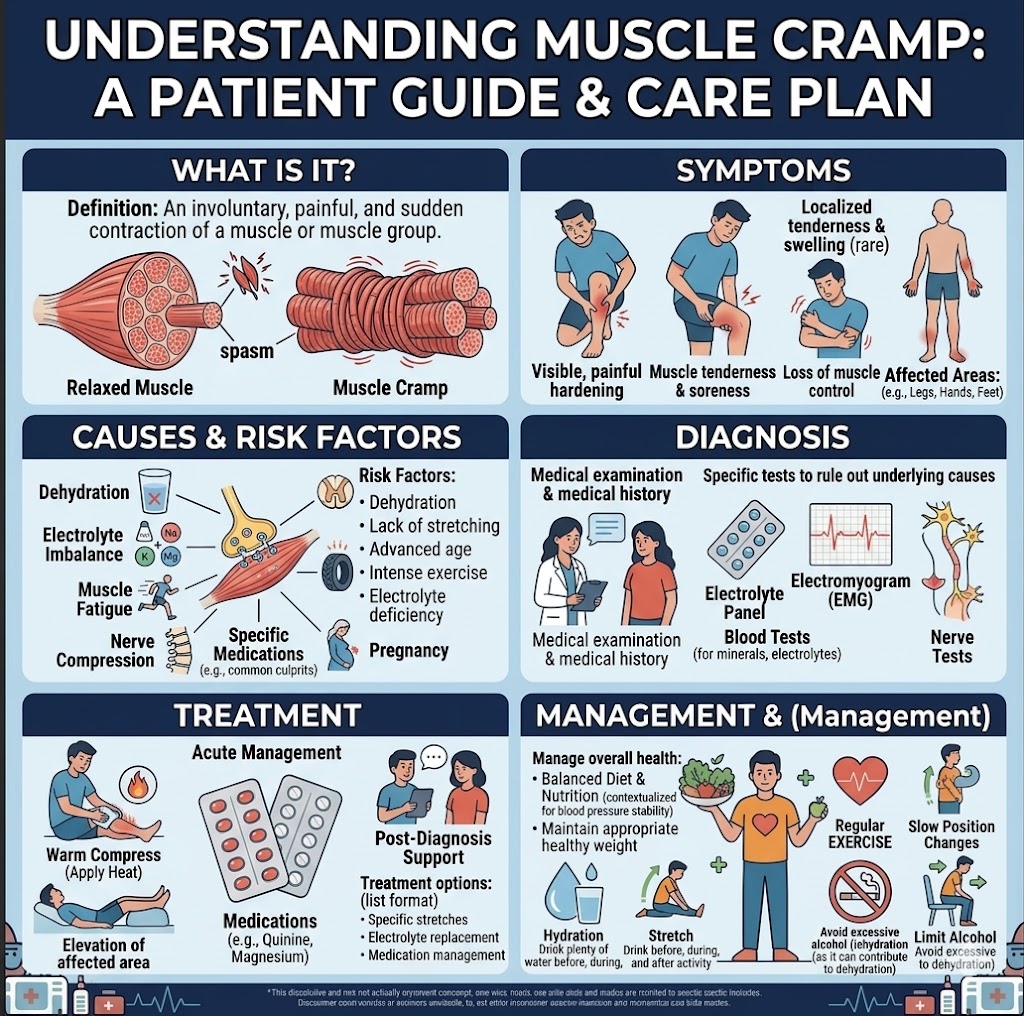
A muscle cramp is a sudden, uncontrolled tightening of one or more muscles, often called a 'charley horse.' These involuntary contractions can be very painful and commonly occur after strenuous activity, especially in hot conditions. Certain medications and underlying health conditions can also contribute. While usually harmless, muscle cramps can often be managed with simple self-care techniques.
Understanding the Condition
Muscle Cramps: Understanding, Symptoms, and Management
Understanding the Condition
Common Symptoms
Common Muscle Cramp Symptoms: Muscle cramps most frequently affect the leg muscles, particularly the calf. They typically last from a few seconds to several minutes. After the cramp subsides, the affected area might feel sore for hours or even a few days.
Before your appointment, prepare by:* Keeping a detailed diary of your cramps, noting when they occur, their duration, severity, and any associated symptoms.* Listing all current medications, supplements, and any recent changes to them.* Gathering your medical history, including any chronic conditions or past surgeries.* Being ready to describe your typical diet and hydration habits.
Book a doctor visit near me
Consultation Guide
When to See a Doctor for Muscle Cramps: While most cramps resolve on their own, seek medical attention if they:* Cause severe discomfort or debilitating pain.* Are accompanied by leg swelling, redness, or changes in skin color.* Occur with noticeable muscle weakness.* Happen very frequently or disrupt daily life.* Do not improve with consistent self-care measures.
Consultation Guide
Which Specialist to Meet
For persistent or severe muscle cramps, begin by consulting your primary care physician. Depending on the suspected cause, they may refer you to a specialist such as a sports medicine doctor (for activity-related cramps), a neurologist (for nerve-related issues), or a vascular specialist (if poor blood flow is suspected).
Preparations Before Your Visit
The ABI test compares blood pressure in your ankles to blood pressure in your arms. A significant difference can indicate reduced blood flow to your legs, a condition called peripheral artery disease (PAD), which can cause cramping during exercise.
Intervention for Underlying Conditions (e.g., Vascular or Spinal Surgery): Though rare for muscle cramps alone, if severe cramps stem from advanced conditions like peripheral artery disease or significant spinal nerve compression, surgery might address the root cause by improving blood flow or decompressing nerves. (Duration: One-time procedure, with recovery varying from weeks to months)
Diagnostic Procedures
Blood Tests for Mineral Levels
These tests measure the levels of essential minerals in your blood, such as potassium, calcium, and magnesium. Imbalances in these electrolytes can contribute to muscle cramps.
What to Expect
A healthcare professional will draw a small sample of blood, usually from a vein in your arm. The process is quick, typically taking only a few minutes, and you might feel a brief pinch or sting. Minimal preparation is usually needed.
Ankle-Brachial Index (ABI)
What to Expect
You will lie flat on an exam table. Blood pressure cuffs will be placed on both your arms and both your ankles. A doctor or technician will use an ultrasound device (Doppler) to listen to blood flow while inflating and deflating the cuffs. The test is non-invasive, painless, and takes about 15-30 minutes.
Electromyography (EMG) and Nerve Conduction Study (NCS)
These tests evaluate the electrical activity of muscles and the speed at which electrical signals travel through nerves. They can help identify nerve damage or compression that might be causing muscle weakness or cramping.
What to Expect
During an NCS, electrode patches are placed on your skin, and brief, mild electrical pulses stimulate the nerves (you might feel tingling). For an EMG, a thin needle is inserted into muscles to record electrical activity. You may feel some discomfort during needle insertion. The procedure takes 30-90 minutes.
Magnetic Resonance Imaging (MRI)
An MRI uses powerful magnets and radio waves to create detailed images of soft tissues, bones, and nerves. For leg cramps, it can visualize the spine and surrounding nerves to detect compression or other structural issues.
What to Expect
You will lie still on a movable table that slides into a large, tunnel-like machine. The machine can be noisy, so earplugs may be offered. The scan is painless and non-invasive, though some people find the enclosed space uncomfortable. It typically lasts 30-60 minutes or more.
Treatment Options
A muscle cramp is a sudden, uncontrolled tightening of one or more muscles, often called a 'charley horse.' These involuntary contractions can be very painful and commonly occur after strenuous activity, especially in hot conditions. Certain medications and underlying health conditions can also contribute. While usually harmless, muscle cramps can often be managed with simple self-care techniques.
Stretching and Massage: Gently stretch and massage the affected muscle to relax it and improve blood flow. (Duration: As needed, for a few minutes)
Heat or Cold Application: Apply warmth (heating pad, warm bath) to relax muscles or cold (ice pack) to reduce pain and inflammation after the cramp subsides. (Duration: 15-20 minutes, as needed)
Hydration and Electrolyte Balance: Drink ample water and non-caffeinated fluids daily; consider electrolyte drinks during strenuous activity. (Duration: Ongoing daily practice)
Medications
Over-the-Counter Pain Relievers: Non-prescription pain relievers can help manage post-cramp soreness. (Duration: As needed, for short periods)
Prescription Muscle Relaxants: For severe or frequent cramps, a doctor may prescribe muscle relaxants to reduce spasms; these are typically used for a limited time due to potential side effects. (Duration: Short-term, as prescribed by a doctor)
Therapies
Physical Therapy: A physical therapist can design exercises to improve flexibility, strength, and posture, preventing cramps related to poor conditioning or nerve issues. (Duration: Several weeks to months, depending on individual needs)
Surgical Procedures
Review Medications: Regularly discuss your medications with your doctor, as some drugs, particularly diuretics for high blood pressure, can lead to mineral imbalances contributing to cramps. Adjustments might be possible if appropriate.
Maintain a Healthy Weight: Achieving and maintaining a healthy weight reduces strain on muscles and the circulatory system, potentially lowering the risk of muscle cramps.
Prevention & Long-Term Wellbeing
Prevention
Daily Hydration: Drink plenty of water daily, especially around physical activity, avoiding excessive caffeine and alcohol to maintain optimal muscle function.
Regular Stretching Routine: Integrate gentle stretches before and after exercise, and prior to sleep. For calf stretch: hold support, one leg back (knee straight, heel flat), bend front knee until you feel a calf stretch. Hold for 30-60 seconds per leg.
Light Exercise Before Bedtime: A few minutes of light activity, such as riding a stationary bicycle, before going to bed can help reduce the likelihood of nocturnal leg cramps.
Gradual Conditioning: Increase exercise intensity and duration slowly, allowing muscles to adapt and strengthen over time, reducing fatigue and cramp risk.
Long-Term Monitoring
Manage Underlying Health Conditions: Work closely with your healthcare provider to effectively manage any chronic conditions (e.g., diabetes, kidney disease, thyroid disorders, or issues affecting nerves or circulation) that increase cramp susceptibility.
Tags & Topics
Notice an error or need an update?
Help us keep medical information accurate. Report incorrect info or suggest an edit.


