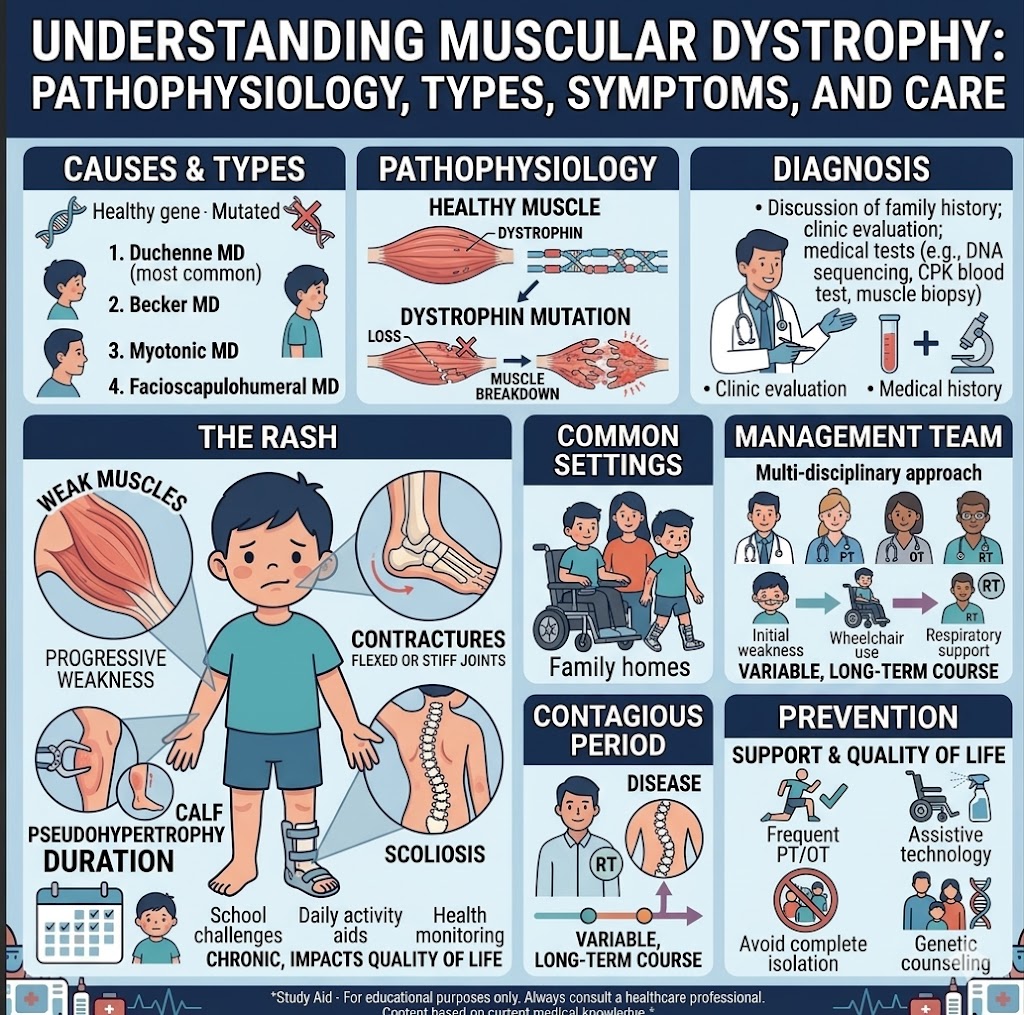
Muscular dystrophy (MD) is a group of genetic conditions causing progressive muscle weakness and loss of muscle mass. These conditions result from gene changes affecting proteins vital for healthy muscles. MD manifests in various types, often beginning in childhood, particularly in boys, though some types emerge in adulthood. While not curable, treatments can manage symptoms and slow progression.
Understanding the Condition
Muscular Dystrophy: Understanding Progressive Muscle Weakness
Understanding the Condition
Muscular dystrophy (MD) is a group of genetic conditions causing progressive muscle weakness and loss of muscle mass. These conditions result from gene changes affecting proteins vital for healthy muscles. MD manifests in various types, often beginning in childhood, particularly in boys, though some types emerge in adulthood. While not curable, treatments can manage symptoms and slow progression.
Common Symptoms
General Progressive Muscle Weakness: The primary symptom of muscular dystrophy is progressive muscle weakness, making everyday tasks increasingly difficult. The specific type determines affected muscles, progression rate, and age of onset.
Duchenne Muscular Dystrophy (DMD): Most common, typically affects boys in early childhood. Symptoms include frequent falls, difficulty rising, trouble running/jumping, waddling gait, toe walking, enlarged calves (due to tissue replacement), muscle pain/stiffness, and sometimes learning difficulties.
Becker Muscular Dystrophy (BMD): Similar to Duchenne but milder and slower progressing. Symptoms usually start in teens or early adulthood, possibly later.
When to Seek Medical Advice: Consult a doctor if you or your child show signs of muscle weakness, such as developmental delays, unusual clumsiness, or frequent falls.
Consultation Guide
Which Specialist to Meet
Be ready to discuss symptom onset, impact on daily life, and family medical history. For specific tests like ultrasound, ask about fasting, bladder requirements, or medication adjustments. Wear loose clothing. Inquire about any specific preparations from the clinic.
Book a doctor visit near me
Symptom-Specific Management: Medications address specific issues like heart problems, breathing difficulties, or muscle cramps, tailored by specialists. (Duration: As needed, ongoing.)
Physical Therapy: Exercises and stretches maintain muscle flexibility, strength, prevent joint contractures, and improve mobility and balance. (Duration: Ongoing, often lifelong.)
Occupational Therapy: Helps adapt daily activities, recommends assistive devices and home modifications to maintain independence. (Duration: Ongoing, as needed.)
Respiratory Therapy: Manages breathing challenges through exercises, cough assistance, and non-invasive ventilation if necessary. (Duration: As needed, with ongoing monitoring.)
Diagnostic Procedures
Start with your primary care doctor or pediatrician, who can refer you to a neurologist (nerve and muscle specialist), medical geneticist (genetic conditions), or genetic counselor (genetic risk and testing).
Preparations Before Your Visit
Electromyography (EMG) and Nerve Conduction Study (NCS)
EMG assesses muscle and nerve health by measuring electrical activity. NCS evaluates the speed and strength of nerve signals. Both tests help distinguish between nerve and muscle disorders.
What to Expect
For EMG, fine needle electrodes are inserted into muscles to record electrical signals. For NCS, surface electrodes apply mild electrical impulses to nerves. You may feel slight discomfort or tingling. The procedure lasts 30-90 minutes, with minimal risks like minor bruising.
Analyzes DNA for specific gene mutations causing muscular dystrophy. It confirms diagnosis, identifies MD type, and informs family planning. Results require professional interpretation. Genome or exome sequencing may be used for complex cases.
What to Expect
Involves a blood sample or cheek swab, carrying very low physical risk. A discussion with a genetic counselor before testing is vital to understand results and implications. Prenatal tests have a small risk of pregnancy loss.
Ultrasound (Sonography)
Uses sound waves to create real-time images of muscles and soft tissues. It can reveal muscle changes, like fatty infiltration or atrophy, characteristic of MD. It's a safe procedure with no known risks, but limited for areas with air, bone, or deep structures.
What to Expect
A gel is applied to the skin, and a handheld device (transducer) is moved over the area. It's generally painless. Depending on the scan, fasting or a full bladder might be required. The procedure typically takes 15-45 minutes.
Genetic Counseling: Consult with a genetic counselor to understand inheritance patterns, reproductive risks, and genetic testing implications.
Treatment Options
Medications
Corticosteroids: These can slow muscle damage, preserve strength, and prolong mobility in some MD types, also reducing inflammation. (Duration: Long-term, as prescribed.)
Contracture Release: Surgery to lengthen tight tendons or muscles, improving joint flexibility and reducing pain from contractures. (Duration: One-time, with recovery and post-op therapy.)
Scoliosis Correction: Surgery for severe spinal curvature to improve posture and breathing. (Duration: One-time, with recovery and rehabilitation.)
Cardiac Device Implantation: Pacemakers or defibrillators may be implanted for significant heart rhythm issues. (Duration: One-time implantation, with device monitoring.)
Mobility Aids: Braces, walkers, and wheelchairs support mobility and independence. (Duration: As needed, long-term.)
Prevention & Long-Term Wellbeing
Nutritional Guidance: Dietary advice to maintain healthy weight and manage swallowing difficulties. (Duration: Ongoing.)
Daily Living & Self-Care
Balanced Diet: Consume nutrient-rich foods to support health. Adapt textures for swallowing difficulties as advised by a dietitian.
Gentle Exercise: Engage in approved low-impact activities like swimming or stretching to maintain flexibility and strength without overexertion.
Adequate Rest: Prioritize sufficient sleep and rest periods to manage fatigue and support physical well-being.
Regular Specialist Check-ups: Consistent follow-ups with a multidisciplinary team (neurologist, cardiologist, pulmonologist, etc.) are essential for monitoring progression and managing complications.
Preventative Screenings: Regularly screen for heart issues, breathing problems, scoliosis, and bone density changes.
Immunizations: Stay current on vaccinations, especially for respiratory infections, to protect against severe illness.
Emotional Support: Utilize support groups or counseling for emotional well-being and coping strategies for individuals and families.
Tags & Topics
Notice an error or need an update?
Help us keep medical information accurate. Report incorrect info or suggest an edit.


