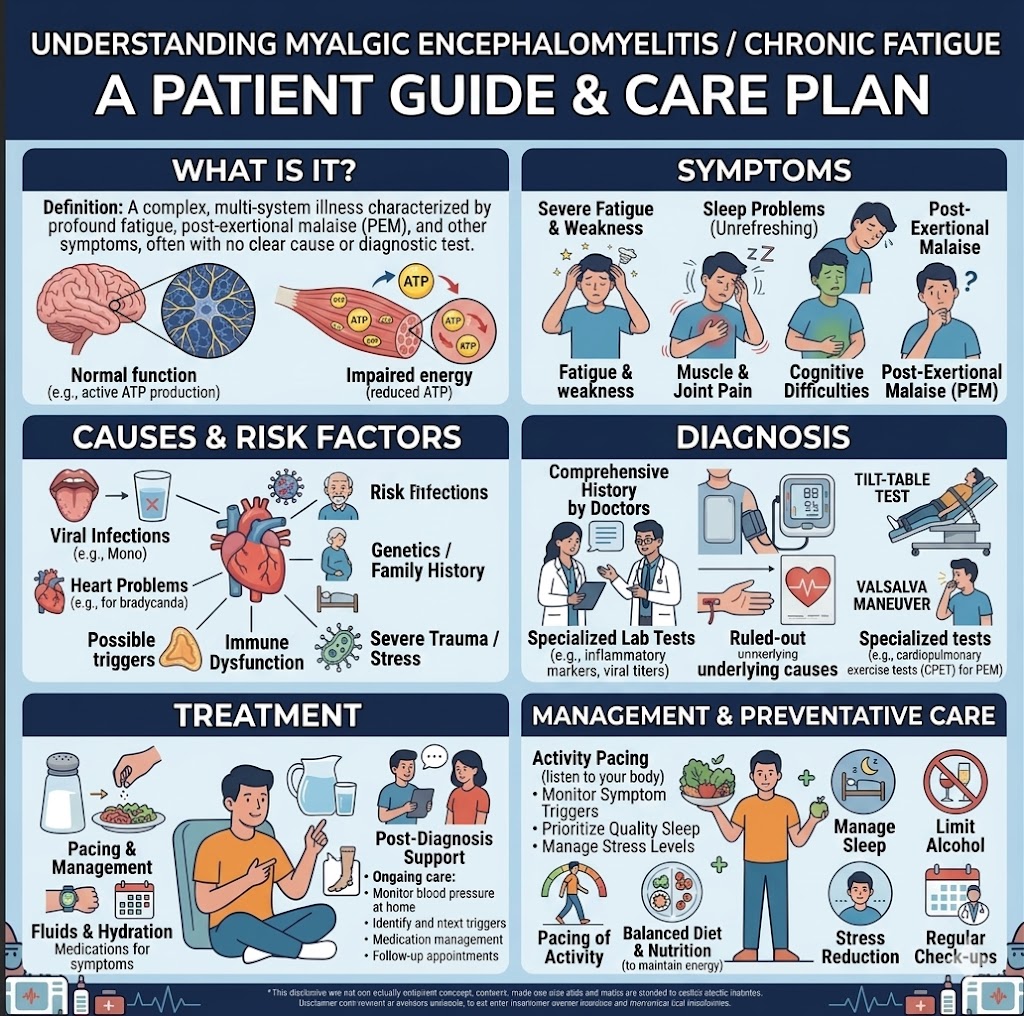
Myalgic encephalomyelitis/chronic fatigue syndrome (ME/CFS) is a complex and serious long-term illness that affects many body systems. It is characterized by severe, debilitating fatigue lasting at least six months that significantly worsens with physical or mental activity and does not improve with rest. The exact cause is unknown, but it is believed to be triggered by a combination of factors. Diagnosis involves ruling out other conditions, and treatment focuses on managing symptoms.
Understanding the Condition
Myalgic Encephalomyelitis/Chronic Fatigue Syndrome (ME/CFS): Understanding a Complex Illness
Understanding the Condition
Myalgic encephalomyelitis/chronic fatigue syndrome (ME/CFS) is a complex and serious long-term illness that affects many body systems. It is characterized by severe, debilitating fatigue lasting at least six months that significantly worsens with physical or mental activity and does not improve with rest. The exact cause is unknown, but it is believed to be triggered by a combination of factors. Diagnosis involves ruling out other conditions, and treatment focuses on managing symptoms.
Common Symptoms
Extreme Exhaustion After Activity (Post-Exertional Malaise): Feeling profoundly tired and unwell for days or even weeks after even minor physical or mental exertion that would have been easy before the illness.
Problems with Thinking and Memory: Difficulty concentrating, remembering things, finding the right words, or processing information quickly, often referred to as 'brain fog'.
Dizziness and Lightheadedness: Feeling dizzy, lightheaded, or faint, especially when changing positions, such as standing up from lying down or sitting.
Before your visit, keep a detailed record of your symptoms, including when they started, their severity, what makes them better or worse, and how they affect your daily activities. Note any recent illnesses, medications, supplements, or significant life events (e.g., stress, injury, surgery). Prepare a list of questions you have for the doctor.
Book a doctor visit near me
Blood tests to assess the health and function of your liver and kidneys, as issues with these organs can cause fatigue and other symptoms.
Pacing Activities: Learning to balance rest and activity to avoid overexertion and worsening symptoms. This involves carefully planning daily activities and taking frequent breaks. (Duration: Ongoing, as a long-term self-management strategy)
Gentle Movement and Exercise: Engaging in very light and carefully structured physical activity, such as gentle stretching or short walks, within your energy limits, to prevent deconditioning without triggering post-exertional malaise. (Duration: Ongoing, adjusted based on energy levels and symptom tolerance)
Stress Reduction Techniques: Practicing relaxation methods like deep breathing, meditation, or mindfulness to help manage stress, which can worsen ME/CFS symptoms. (Duration: Ongoing, as part of daily routine)
Medication (Prescription for Symptom Management)
Pain Relief Medications: Medications to help manage muscle and joint pain, which can be a significant symptom. (Duration: As prescribed by a doctor; duration varies based on symptom severity)
Massage Therapy: A therapy where a trained professional rubs and kneads soft tissues (muscles, tendons, ligaments, skin) to reduce muscle tension, ease pain, improve relaxation, and reduce stress. (Duration: Often recommended for regular sessions (e.g., weekly or bi-weekly) for sustained benefit, then as needed to manage symptoms)
Regular Medical Check-ups: Ongoing visits with your doctor to monitor symptoms, adjust treatment plans, and screen for any new or worsening health issues.
Symptom Tracking: Maintaining a detailed symptom diary to help identify patterns, triggers, and the effectiveness of different management strategies.
Consultation Guide
Muscle and Joint Pain: Aches or pain in muscles and/or joints that is not caused by injury or inflammation.
Unrefreshing Sleep: Waking up feeling as tired as when you went to bed, regardless of how much sleep you got.
Headaches, Sore Throat, and Tender Lymph Nodes: Frequent headaches, a persistent sore throat, or tender (painful to the touch) lymph nodes in the neck or armpits.
A small amount of blood will be drawn from a vein, typically in your arm, using a sterile needle. This is a quick procedure and may cause a brief pinch or discomfort.
These blood tests measure levels of thyroid hormones to determine if your thyroid gland is overactive or underactive, which can cause fatigue.
Diagnostic Procedures
Complete Blood Count (CBC)
A blood test to check for signs of anemia, infection, or other general health issues.
What to Expect
Thyroid Function Tests
What to Expect
Similar to a CBC, a blood sample will be taken from a vein in your arm. No special preparation is usually needed, but your doctor will advise if fasting is required.
Erythrocyte Sedimentation Rate (ESR) and C-Reactive Protein (CRP)
Blood tests that measure inflammation in the body, which can indicate various underlying conditions.
What to Expect
A blood sample will be drawn from a vein in your arm. These tests are often part of a standard blood panel.
Vitamin D and B12 Levels
Blood tests to check for deficiencies in these essential vitamins, as low levels can contribute to fatigue.
What to Expect
A blood sample will be taken from a vein in your arm. Your doctor will inform you if any specific preparation, such as fasting, is necessary.
Liver and Kidney Function Tests
What to Expect
A blood sample will be drawn from a vein in your arm. Fasting might be required, so follow your doctor's instructions.
A urine test to check for urinary tract infections, kidney problems, or other metabolic disorders.
What to Expect
You will be asked to provide a urine sample in a sterile container, usually in a private restroom at the clinic. The sample is then analyzed in a lab.
Treatment Options
Increased Sensitivities: Becoming unusually sensitive to light, sound, smells, certain foods, or medications.
Consultation Guide
Which Specialist to Meet
If you experience persistent or excessive fatigue that significantly impacts your daily life, it's important to consult your primary care doctor. They may refer you to specialists such as an internist, neurologist, rheumatologist, or infectious disease specialist to help rule out other conditions and coordinate care.
Preparations Before Your Visit
Sleep Aids: Prescription medications to help improve sleep quality, addressing the issue of unrefreshing sleep. (Duration: As prescribed by a doctor; duration is typically short-term or intermittent, as directed)
Antidepressants or Mood Stabilizers: These may be prescribed to manage associated conditions like depression or anxiety, or to help with sleep and pain, even if depression is not present. (Duration: As prescribed by a doctor; often long-term for chronic management)
Complementary Therapies
Acupuncture: Involves inserting very thin needles into specific points on the body to help balance energy flow, relieve pain, and promote relaxation. Western views suggest it stimulates nerves, muscles, and connective tissue. (Duration: Typically involves multiple sessions (e.g., 6-12) over several weeks or months, with maintenance sessions as needed based on individual response)
Prevention & Long-Term Wellbeing
Lifestyle and Self-Management
Lifestyle Management
Energy Management and Pacing: Strictly managing your energy envelope to avoid 'crashes.' This includes planning activities, delegating tasks, and recognizing early warning signs of overexertion.
Nutritional Support: Maintaining a balanced and nutritious diet tailored to individual needs. Some people find specific dietary adjustments helpful, though evidence varies.
Sleep Hygiene: Establishing a consistent sleep schedule, creating a comfortable sleep environment, and avoiding caffeine or electronics before bed to improve sleep quality.
Emotional Support and Mental Health: Seeking support from family, friends, support groups, or therapists to cope with the emotional challenges and impact of living with a chronic illness.
Long-Term Monitoring
Tags & Topics
Notice an error or need an update?
Help us keep medical information accurate. Report incorrect info or suggest an edit.


