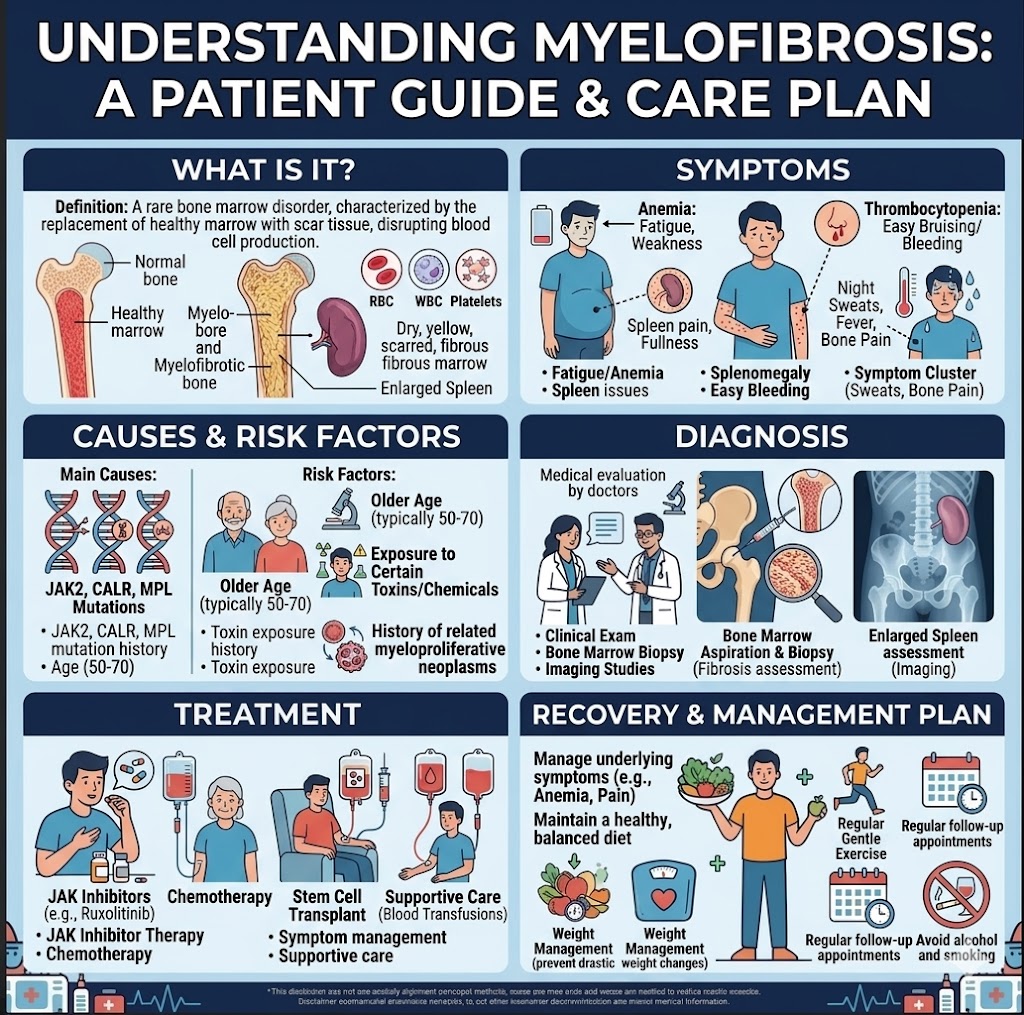
Myelofibrosis is a rare type of bone marrow cancer that disrupts the normal production of blood cells. It causes progressive scarring (fibrosis) in the bone marrow, making it difficult to produce healthy red blood cells, white blood cells, and platelets. It can develop independently (primary myelofibrosis) or evolve from other pre-existing blood disorders (secondary myelofibrosis).
Understanding the Condition
Understanding Myelofibrosis: Causes, Symptoms, Diagnosis, and Treatment
Understanding the Condition
Common Symptoms
Targeted Therapy: Medications that block specific signals (such as JAK proteins) to reduce spleen size, control inflammation, and relieve systemic symptoms. (Duration: Typically prescribed as long-term daily oral therapy, continuing as long as the treatment remains effective and tolerated.)
Consultation Guide
Myelofibrosis is a rare type of bone marrow cancer that disrupts the normal production of blood cells. It causes progressive scarring (fibrosis) in the bone marrow, making it difficult to produce healthy red blood cells, white blood cells, and platelets. It can develop independently (primary myelofibrosis) or evolve from other pre-existing blood disorders (secondary myelofibrosis).
Severe Fatigue and Weakness: A profound lack of energy caused by a drop in oxygen-carrying red blood cells, known as anemia.
Spleen Enlargement and Pain: Feeling full, bloated, or experiencing pain under the left rib cage, caused by the spleen swelling as it tries to filter and produce blood cells.
Early Satiety: Feeling full after consuming only small amounts of food, due to the enlarged spleen pressing on the stomach.
Easy Bruising and Bleeding: Frequent bruising, nosebleeds, or bleeding gums, resulting from low levels of platelets, which are critical for blood clotting.
Drenching Night Sweats and Fever: Waking up covered in sweat and experiencing low-grade fevers as a result of the body's inflammatory response.
Bone and Joint Pain: A persistent, dull ache in the bones or joints caused by increased pressure and inflammation within the marrow.
Consultation Guide
Which Specialist to Meet
A healthcare provider will draw a small sample of blood from a vein in your arm. This is a quick outpatient procedure that takes only a few minutes and may cause a mild, temporary pinch.
Bone Marrow Biopsy and Aspiration
Diagnostic Procedures
You should consult a Hematologist-Oncologist, a specialist who diagnoses and treats cancers of the blood and bone marrow.
Preparations Before Your Visit
Before your appointment, write down all physical changes you have noticed, compile your complete medical history (including prior blood disorders or exposure to chemicals like benzene), list all current medications, and prepare questions about diagnostic tests.
Book a doctor visit near me
Complete Blood Count (CBC)
A routine test to measure the levels of red blood cells, white blood cells, and platelets.
What to Expect
A crucial test to extract and examine bone marrow fluid and solid tissue to evaluate the severity of marrow scarring.
What to Expect
You will lie on your side, and a local anesthetic will be applied to numb the back of your hipbone. A specialized needle is inserted to collect a liquid sample (aspiration) and a small core of bone tissue (biopsy). You will feel pressure and a brief, sharp pulling sensation. The area may feel sore for a few days.
Genetic and Molecular Testing
An analysis of blood or marrow cells to check for specific gene mutations associated with myelofibrosis, such as JAK2, CALR, or MPL.
What to Expect
This test is performed in a laboratory using the blood or bone marrow samples collected during your initial blood draw or biopsy, requiring no additional physical procedures for you.
Abdominal Imaging (Ultrasound or CT Scan)
Visual scans utilized to accurately measure the size of your spleen and liver.
What to Expect
For an ultrasound, a gel is applied to your abdomen, and a hand-held wand is glided over the skin. For a CT scan, you will lie flat on a table that slides into a doughnut-shaped scanner. You may need to drink a contrast liquid or receive an intravenous injection prior to the scan.
Hormone and Stimulating Therapies: Androgen therapy or synthetic protein injections designed to boost red blood cell production and manage severe anemia. (Duration: Administered periodically, with efficacy evaluated by blood tests every few weeks or months.)
Surgical and Specialized Procedures
Allogeneic Stem Cell Transplant: The only potential cure for myelofibrosis, replacing diseased bone marrow with healthy blood stem cells from a compatible donor after intensive chemotherapy or radiation. (Duration: An intense, multi-stage process requiring a 4 to 8-week hospital stay followed by up to a year of close outpatient monitoring.)
Treatment Options
Medications and Systemic Therapies
Chemotherapy: Systemic medications used to lower high blood cell and platelet counts, helping to reduce spleen size and control the disease. (Duration: Administered orally or intravenously in cycles or as ongoing low-dose therapy, determined by your hematologist.)
Radiation Therapy: Targeted, high-energy X-ray beams used to shrink an enlarged spleen or relieve severe bone pain when other treatments are not options. (Duration: Typically delivered in brief, painless daily outpatient sessions over 1 to 2 weeks.)
Blood Transfusions: Intravenous infusions of donor red blood cells or platelets to rapidly raise low blood counts and alleviate severe anemia or bleeding risks. (Duration: An outpatient procedure taking 1 to 4 hours per session, repeated periodically as dictated by blood counts.)
Routine Blood Counts: Attending frequent check-ups to track blood levels, monitor for disease progression, and manage potential treatment side effects.
Early Palliative Care Integration: Working with a supportive care specialist team alongside active treatments to manage pain, nausea, fatigue, and emotional distress.
Infection and Cardiovascular Protection
Prevention & Long-Term Wellbeing
Splenectomy: Surgical removal of the spleen, performed if the organ is severely enlarged, causing intolerable pain, or dangerously lowering blood counts. (Duration: A major surgical procedure requiring 2 to 5 days of hospitalization and 4 to 6 weeks of home recovery.)
Long-Term Monitoring and Medical Care
Infection Prevention: Staying up-to-date with recommended vaccinations (like flu, pneumonia, and shingles) and practicing thorough handwashing to protect against infections due to a compromised immune system.
Cardiovascular Support: Adopting a heart-healthy diet, staying active as tolerated, and avoiding tobacco to reduce the heightened risk of blood clots, stroke, or cardiovascular events.
Tags & Topics
Notice an error or need an update?
Help us keep medical information accurate. Report incorrect info or suggest an edit.


