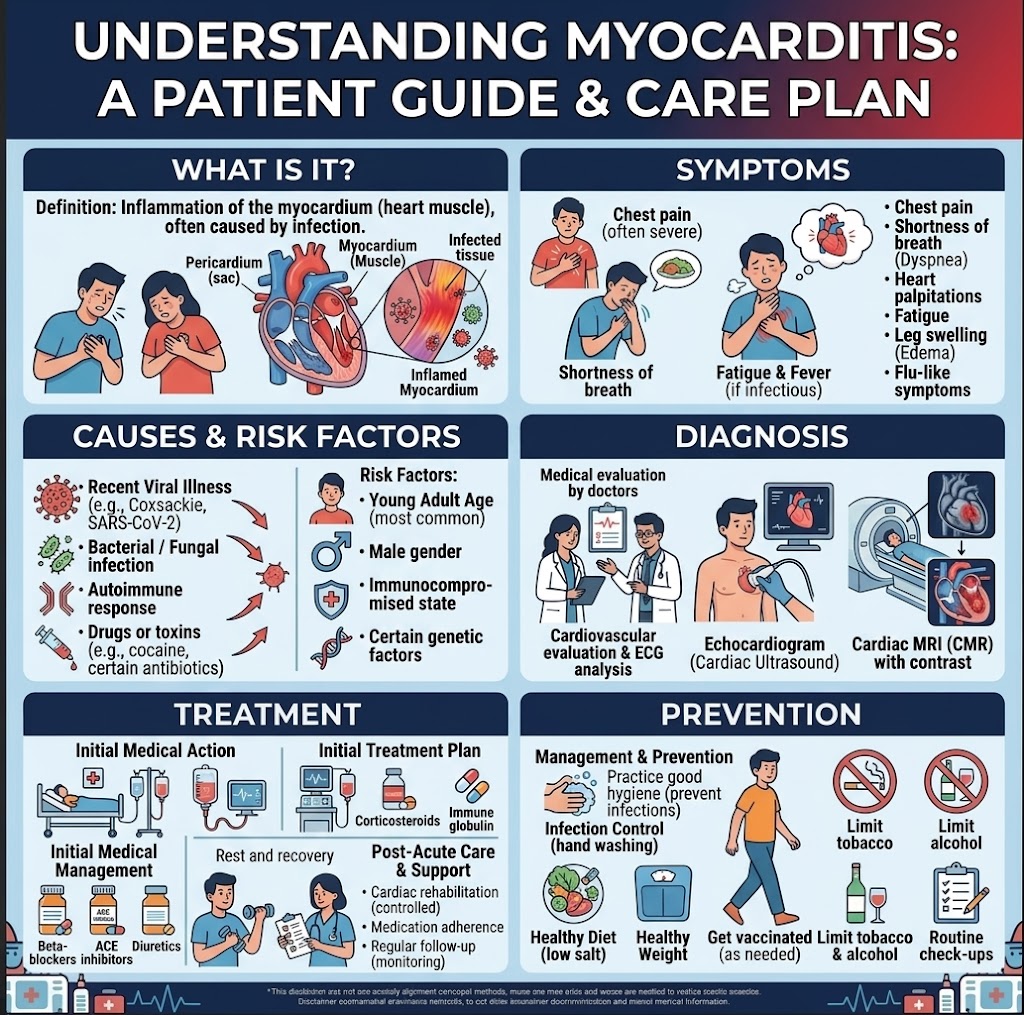
Myocarditis is a condition where the heart muscle (called the myocardium) becomes inflamed. This inflammation can weaken the heart, making it less effective at pumping blood throughout the body. People with myocarditis may experience symptoms like chest pain, shortness of breath, and a fast or irregular heartbeat. While viral infections are a common cause, it can also result from certain medications, exposure to toxins, or other body-wide inflammatory diseases. Severe cases can lead to serious complications such as heart failure, blood clots (potentially causing a stroke or heart attack), or sudden cardiac arrest, but often it resolves without long-term issues. Treatment focuses on managing the inflammation and supporting heart function.
Understanding the Condition
Myocarditis: Understanding Heart Muscle Inflammation
Understanding the Condition
Myocarditis is a condition where the heart muscle (called the myocardium) becomes inflamed. This inflammation can weaken the heart, making it less effective at pumping blood throughout the body. People with myocarditis may experience symptoms like chest pain, shortness of breath, and a fast or irregular heartbeat. While viral infections are a common cause, it can also result from certain medications, exposure to toxins, or other body-wide inflammatory diseases. Severe cases can lead to serious complications such as heart failure, blood clots (potentially causing a stroke or heart attack), or sudden cardiac arrest, but often it resolves without long-term issues. Treatment focuses on managing the inflammation and supporting heart function.
Common Symptoms
Chest Pain: A feeling of discomfort or pain in the chest area.
Swelling: Noticeable swelling in the legs, ankles, or feet due to fluid retention.
Rapid or Irregular Heartbeats (Arrhythmias): Feeling your heart beat too fast, skip beats, or have an uneven rhythm.
Shortness of Breath: Difficulty breathing, which can occur even when resting or during light activity.
Lightheadedness or Fainting: Feeling dizzy or like you might pass out.
Flu-like Symptoms: General symptoms such as headache, body aches, joint pain, fever, or a sore throat.
Warning Sign: Myocarditis symptoms can sometimes mimic a heart attack. If you experience unexplained chest pain and shortness of breath, seek emergency medical help immediately.
Consultation Guide
Which Specialist to Meet
You should initially consult your primary care doctor, who may then refer you to a cardiologist (a heart specialist). In severe or emergency cases, you will be seen by an emergency medicine physician or an intensivist.
Preparations Before Your Visit
Before your visit, make a list of all your symptoms, noting when they started, their severity, and anything that makes them better or worse. Provide a complete personal medical history, including any existing health conditions, all medications (prescription, over-the-counter, supplements), recent infections, and any travel history. Also, be prepared to discuss your family's medical history, especially if there's a history of heart disease. Writing down any questions you have for your doctor can also be helpful.
Book a doctor visit near me
Anti-inflammatory Medications: Used to reduce inflammation in the heart muscle and alleviate symptoms. These can range from over-the-counter pain relievers to prescription anti-inflammatory drugs or corticosteroids. (Duration: Typically for several weeks to months, depending on the severity and response to treatment.)
Dietary Modifications: A low-salt diet may be recommended to help manage fluid retention and reduce the workload on the heart, especially if heart failure symptoms are present. (Duration: Ongoing if heart failure develops or as advised by a doctor.)
Regular Medical Follow-up: Even after initial treatment, ongoing check-ups with your doctor or cardiologist are essential to monitor your heart health, manage any lingering symptoms, and detect potential complications early.
Symptom Awareness: Be vigilant about recognizing any signs of worsening heart function or recurrence of symptoms. Promptly report any new or returning symptoms to your healthcare provider to ensure timely intervention.
Consultation Guide
Heart Transplant: For severe, irreversible heart damage caused by myocarditis that has not responded to other treatments, a failing heart may be replaced with a healthy donor heart. (Duration: A lifelong treatment with extensive post-transplant care required.)
Diagnostic Procedures
Electrocardiogram (ECG or EKG)
This is a quick and painless test that records the electrical signals generated by your heart. It helps determine if your heart is beating too fast, too slow, or irregularly.
What to Expect
Small, sticky patches called electrodes will be placed on your chest and sometimes on your arms or legs. These patches are connected by wires to an ECG machine, which records your heart's electrical activity. You will lie still for a few minutes while the test is performed. It is generally painless and takes only a few minutes.
A chest X-ray uses a small amount of radiation to create images of your heart, lungs, blood vessels, airways, and the bones of your chest and spine. It can help detect fluid around the heart or lungs, or identify if your heart is enlarged.
What to Expect
You will be asked to stand or sit against an X-ray plate, and a technician will position you. You may be asked to hold your breath briefly while the image is taken. The procedure is quick, usually lasting only a few seconds, and is painless.
This non-invasive test uses sound waves to create moving pictures of your heart. It shows how blood flows through the heart chambers and valves, and can reveal problems with your heart's pumping ability or structure.
What to Expect
You will lie on an examination table. A gel will be applied to your chest, and a handheld device called a transducer will be moved over your chest. You may feel slight pressure as the transducer is moved. Sensors may also be attached to your chest to monitor your heart rhythm. The test is generally painless and takes about 30 to 60 minutes.
A Holter monitor is a small, portable device that continuously records your heart's electrical activity over a period of 1 to 2 days or sometimes longer. It's used to detect irregular heartbeats that might not show up during a brief ECG.
What to Expect
Similar to an ECG, several electrodes will be placed on your chest and connected to a small, battery-operated recording device that you wear on your belt or a strap. You will carry on with your normal daily activities, but you may be advised to avoid showering or getting the device wet. After the monitoring period, you will return the device to your doctor for analysis of the recorded data.
Cardiac Catheterization with Biopsy
This is an invasive procedure where a thin, flexible tube (catheter) is inserted into a blood vessel (usually in the groin or wrist) and guided to your heart. It allows doctors to measure pressures in the heart, and crucially, to take a small tissue sample (biopsy) from the heart muscle for laboratory examination to confirm myocarditis.
What to Expect
You will typically receive a local anesthetic to numb the insertion site, and you might be given a mild sedative to help you relax. The doctor will make a small incision and insert the catheter. You may feel some pressure but generally no pain during the insertion. X-ray imaging is used to guide the catheter. If a biopsy is taken, you might feel a brief, mild sensation as the tissue is collected. The procedure usually takes 30 minutes to a few hours, and you will need to lie still for several hours afterward to prevent bleeding from the insertion site.
Treatment Options
Medications
Medications to Support Heart Function: These include various drugs to help the heart pump more effectively, control irregular heart rhythms, or remove excess fluid from the body, thereby reducing strain on the heart. (Duration: Varies; some may be used short-term, while others might be needed long-term, especially if heart damage is significant.)
Blood Thinners: Prescribed in severe cases to prevent the formation of blood clots within the heart, which could lead to a stroke or heart attack. (Duration: Varies; can be short-term during acute inflammation or long-term if there's a persistent risk of clot formation.)
Procedures and Therapies
Prevention & Long-Term Wellbeing
Ventricular Assist Device (VAD): A mechanical pump surgically implanted to help a severely weakened heart pump blood. It can support the heart's function while it recovers or while waiting for a heart transplant. (Duration: Can be temporary (weeks to months, as a 'bridge to transplant' or recovery) or permanent (years, as 'destination therapy').)
Extracorporeal Membrane Oxygenation (ECMO): A life support technique that uses an external machine to take over the work of the heart and lungs, providing oxygen to the blood and removing carbon dioxide. This allows the heart and lungs to rest and heal in critical situations. (Duration: Short-term, typically days to weeks, used in life-threatening cases where conventional support isn't enough.)
Rest: Crucial for allowing the heart muscle to heal and recover. Physical activity may be restricted during recovery. (Duration: Weeks to months, depending on the severity and individual recovery.)
Prevention
Preventing Infections: Many cases of myocarditis are triggered by infections. To reduce your risk, avoid close contact with sick individuals, practice frequent hand-washing with soap and water, and avoid risky behaviors such as unsafe sex or using illicit intravenous drugs.
Staying Up-to-Date on Vaccinations: Ensure you receive recommended vaccinations, including those for influenza (flu), rubella (German measles), and COVID-19, as these diseases can sometimes lead to myocarditis. Discuss the benefits and potential risks of any vaccine with your healthcare provider.
Long-Term Monitoring & Lifestyle
Heart-Healthy Lifestyle: Maintain a balanced diet rich in fruits, vegetables, and whole grains, and low in saturated fats and sodium. Engage in regular physical activity as advised by your doctor, manage stress effectively, and avoid smoking and excessive alcohol consumption.
Tags & Topics
Notice an error or need an update?
Help us keep medical information accurate. Report incorrect info or suggest an edit.


