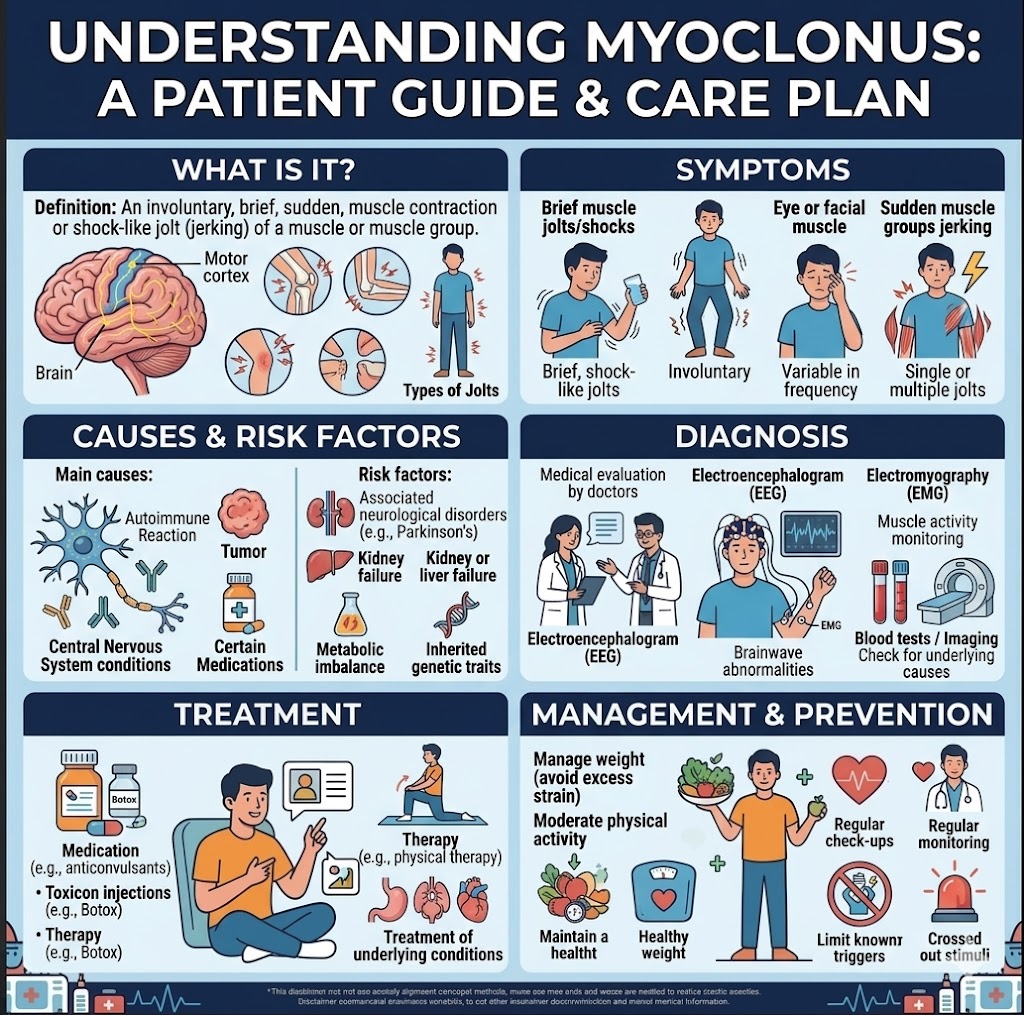
Myoclonus refers to quick, involuntary muscle jerks, twitches, or spasms that you cannot control. These movements can range from minor, harmless occurrences like hiccups or sudden 'sleep starts' just before falling asleep, to more persistent and severe forms. While some types of myoclonus are normal and occur in healthy individuals, others may signal an underlying nervous system disorder, a metabolic issue, or a reaction to certain medications. Treatment aims to address the root cause when identifiable or to reduce the impact of the movements on daily life and overall wellbeing if the cause is unknown or untreatable.
Understanding the Condition
Myoclonus: Understanding Involuntary Muscle Jerks
Understanding the Condition
Common Symptoms
Involuntary Movements: Muscle jerks, shakes, or spasms that happen suddenly and are beyond your control.
Variable Intensity and Frequency: The strength of the jerks and how often they occur can differ significantly.
Localized or Widespread: Movements may affect a single muscle or body part, or they can occur throughout the entire body.
Interference with Daily Activities: In some severe cases, the jerks can be strong enough to make everyday tasks like eating, speaking, or walking difficult.
Consultation Guide
Which Specialist to Meet
If your myoclonus symptoms become frequent, persistent, or interfere with your daily life, it is important to consult a healthcare provider. You may be referred to a neurologist, a specialist in disorders of the brain and nervous system. Depending on the suspected underlying cause, other specialists like an endocrinologist (for metabolic conditions) or a nephrologist (for kidney issues) might also be involved.
Preparations Before Your Visit
Before your appointment, prepare by noting down your symptoms, including when they started, how often they occur, what they feel like, and if anything seems to trigger or worsen them. Make a list of all medications you are currently taking, including over-the-counter drugs and supplements, and mention any existing medical conditions. Be ready to discuss your medical history and any questions you have for your doctor.
Book a doctor visit near me
Muscle Relaxants: Medications to help reduce muscle spasms and involuntary movements. (Duration: Often long-term, with dosage adjusted based on symptom control.)
Anticonvulsants/Sedatives: Medicines that help calm the nervous system and can reduce the frequency and severity of myoclonic jerks. (Duration: Typically long-term, requiring ongoing monitoring and adjustment.)
Botulinum Toxin Injections: For localized myoclonus affecting specific muscles, injections can temporarily weaken or paralyze the overactive muscles. (Duration: Effects usually last for several months, requiring repeat injections.)
Physical Therapy: Exercises and techniques to improve coordination, balance, strength, and overall functional movement if myoclonus impacts physical abilities. (Duration: Varies from weeks to ongoing, depending on individual needs and goals.)
Occupational Therapy: Strategies and tools to help individuals adapt to daily tasks, maintain independence, and improve quality of life despite myoclonus symptoms. (Duration: Short-term or ongoing, based on functional needs.)
Speech Therapy: If myoclonus affects muscles involved in speaking or swallowing, speech therapy can help improve communication and swallowing safety. (Duration: Varies based on the severity of impairment and progress.)
Adequate Rest: Ensuring sufficient and good quality sleep can help manage symptoms and support overall neurological health. (Duration: As advised)
Regular Medical Follow-ups: Consistent appointments with your healthcare team are crucial to monitor symptom progression, assess treatment effectiveness, and adjust therapies as needed over time.
Adherence to Treatment Plans: Faithfully following prescribed medications and engaging in recommended therapies are vital for optimal symptom control and improved quality of life.
Support Networks: Connecting with support groups or individuals facing similar challenges can provide emotional support, practical advice, and coping strategies.
Consultation Guide
Myoclonus refers to quick, involuntary muscle jerks, twitches, or spasms that you cannot control. These movements can range from minor, harmless occurrences like hiccups or sudden 'sleep starts' just before falling asleep, to more persistent and severe forms. While some types of myoclonus are normal and occur in healthy individuals, others may signal an underlying nervous system disorder, a metabolic issue, or a reaction to certain medications. Treatment aims to address the root cause when identifiable or to reduce the impact of the movements on daily life and overall wellbeing if the cause is unknown or untreatable.
For the Nerve Conduction Study part, electrode stickers (surface electrodes) are placed on your skin over the nerves. Mild electrical pulses are delivered, which may feel like a brief tingling sensation, and the nerve's response is measured. For the Needle EMG part, a thin needle electrode is inserted directly into specific muscles. You may be asked to relax the muscle and then contract it slightly. This part may cause brief discomfort or a pinching sensation. The electrical activity is displayed as graphs and sounds. The entire procedure can take 1 to 2 hours. You might be asked to avoid lotions or oils on your skin before the test.
Medication Monitoring: Work closely with your doctor to monitor and adjust any medications that may potentially cause myoclonus as a side effect.
Diagnostic Procedures
Electroencephalogram (EEG)
An EEG is a test that measures the electrical activity of your brain. Brain cells communicate using electrical impulses, and this activity is recorded as wavy lines. This test helps in diagnosing brain conditions, especially epilepsy and other seizure disorders, which can be associated with myoclonus.
What to Expect
During an EEG, small metal discs (electrodes) are attached to your scalp with a sticky paste. You will typically lie quietly with your eyes closed. The technician might ask you to open and close your eyes, breathe deeply, or look at a flashing light to see how your brain activity responds. The test is painless and usually takes about 30 to 60 minutes. Your doctor may advise you to avoid caffeine or certain medications before the test, and to have clean, dry hair.
Electromyography (EMG) and Nerve Conduction Study (NCS)
EMG assesses the health of your muscles and the nerves that control them (motor neurons). It can detect nerve damage, muscle disease, or problems with the signals between nerves and muscles. An EMG often includes a nerve conduction study (NCS), which measures the speed and strength of electrical signals traveling through your nerves.
What to Expect
Treat Underlying Conditions: Prompt diagnosis and consistent management of any underlying medical conditions, such as epilepsy, kidney or liver failure, or metabolic disorders, can help prevent or reduce myoclonus.
Treatment Options
Medications
Deep Brain Stimulation (DBS): For severe myoclonus not controlled by medications, especially when associated with certain movement disorders or epilepsy, DBS involves surgically implanting electrodes into specific brain areas. A small device (like a pacemaker) placed under the skin in the chest sends electrical pulses to these electrodes, helping to regulate abnormal brain activity. (Duration: Electrodes are permanent; the device's battery requires replacement every 3-5 years or is rechargeable.)
Prevention & Long-Term Wellbeing
Lifestyle and Home Management
Stress Management: Techniques such as relaxation exercises, mindfulness, or meditation can help reduce anxiety, which can sometimes worsen myoclonic jerks. (Duration: As advised)
Trigger Avoidance: Identifying and avoiding factors that might exacerbate myoclonus, such as excessive caffeine, certain activities, or lack of sleep. (Duration: As advised)
Prevention and Long-Term Management
Healthy Lifestyle Choices: Maintaining a balanced diet, engaging in regular physical activity as appropriate, and prioritizing good sleep hygiene contribute to overall physical and neurological wellbeing.
Tags & Topics
Notice an error or need an update?
Help us keep medical information accurate. Report incorrect info or suggest an edit.


