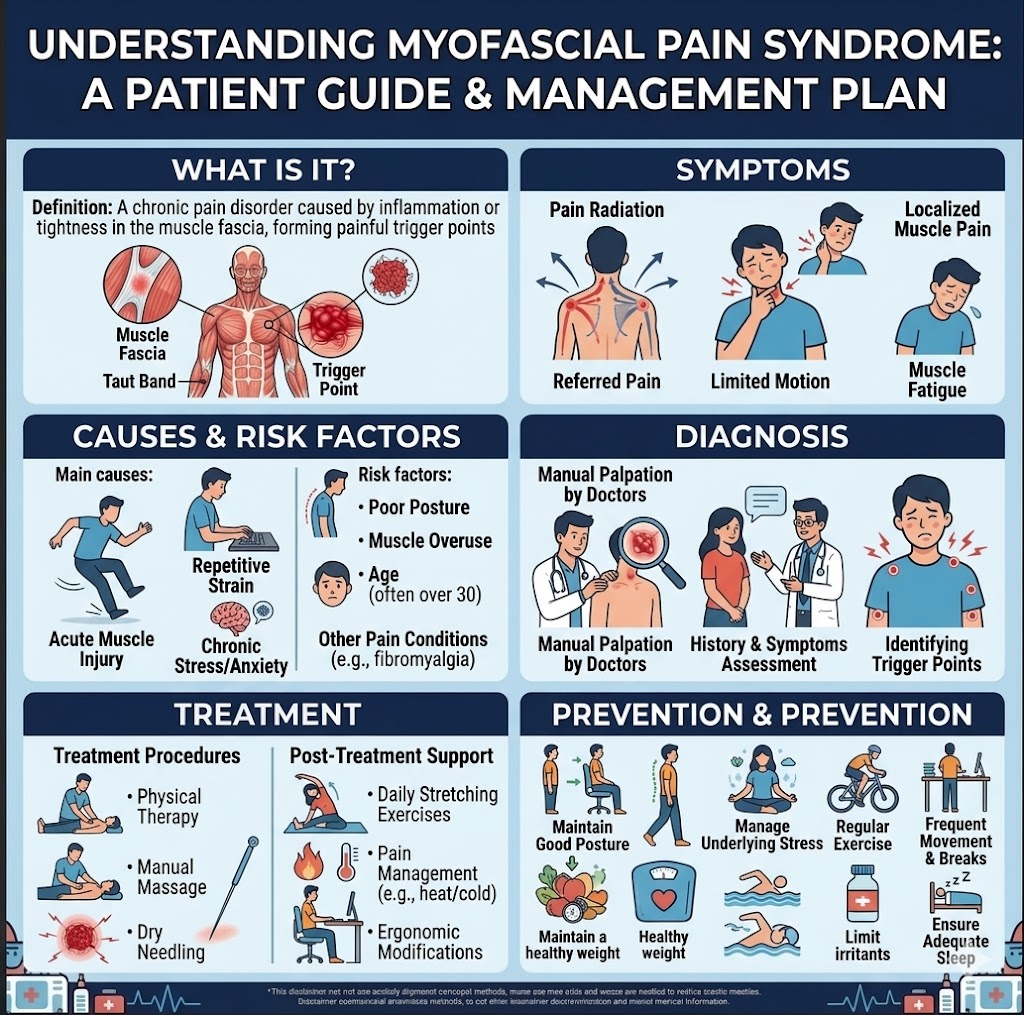
Myofascial pain syndrome is a long-term pain condition affecting specific muscles and the surrounding connective tissue called fascia. It is characterized by tender spots within muscles, known as trigger points. Pressure on these trigger points can cause localized pain or referred pain, which is felt in other parts of the body. Common areas affected include the shoulders, back, face, and can lead to tension headaches. This condition often results from repeated muscle stress, injury, poor posture, or muscle weakness, and unlike everyday muscle soreness, it tends to persist.
Understanding the Condition
Understanding Myofascial Pain Syndrome
Understanding the Condition
Common Symptoms
Deep Muscle Ache: A persistent, deep, aching pain felt within a specific muscle.
Persistent Pain: Muscle pain that does not go away with rest or worsens over time.
Tender Muscle Knot: A noticeable and sensitive knot or tight band of muscle fibers that can be felt under the skin.
Sleep Disturbances: Difficulty falling asleep, staying asleep, or waking up due to muscle pain.
General Malaise: A pervasive feeling of being unwell, fatigued, or generally lacking energy.
Consultation Guide
Which Specialist to Meet
You should start by consulting your primary care doctor. Depending on their assessment, you might be referred to a physical therapist, a pain management specialist, or a rheumatologist (a doctor specializing in joint and muscle conditions).
Preparations Before Your Visit
Before your appointment, it's helpful to keep a detailed pain diary. Note when your pain occurs, what activities make it better or worse, its intensity, and any other symptoms you experience. Prepare a list of all current medications, your full medical history, and any questions you have for your doctor.
Book a doctor visit near me
During the examination, your doctor will ask you to describe your pain and symptoms. They will then gently press on the muscles where you experience pain or tenderness. You should communicate clearly if you feel pain, a muscle twitch, or if the pressure reproduces your typical symptoms. This hands-on assessment helps your doctor identify the exact location of the trigger points and confirm the diagnosis.
Heat and Cold Therapy: Applying a warm compress, heating pad, or taking a warm bath can help relax tight muscles. Cold packs can be used to reduce inflammation and dull pain. (Duration: As needed for symptom relief.)
Relaxation Techniques: Practices such as deep breathing exercises, meditation, or yoga can help manage stress, which is often linked to increased muscle tension. (Duration: Daily or as needed to promote calm.)
Regular Medical Check-ups: Follow up with your healthcare provider as recommended to monitor your condition, adjust treatments if necessary, and discuss any new symptoms.
Consultation Guide
Myofascial pain syndrome is a long-term pain condition affecting specific muscles and the surrounding connective tissue called fascia. It is characterized by tender spots within muscles, known as trigger points. Pressure on these trigger points can cause localized pain or referred pain, which is felt in other parts of the body. Common areas affected include the shoulders, back, face, and can lead to tension headaches. This condition often results from repeated muscle stress, injury, poor posture, or muscle weakness, and unlike everyday muscle soreness, it tends to persist.
The diagnosis of myofascial pain syndrome is primarily based on a thorough physical examination. Your doctor will carefully feel your muscles to locate specific tender spots, known as trigger points. These points are areas of muscle tightness that, when pressed, can cause localized pain, a twitching response in the muscle, or referred pain to another body part.
Diagnostic Procedures
Physical Examination for Trigger Points
What to Expect
Treatment Options
Stretching and Light Exercise: Engaging in gentle stretching and low-impact exercises, such as walking or swimming, can help improve muscle flexibility and strength, and reduce stiffness. (Duration: Ongoing, as part of a regular routine.)
Medications
Pain Relievers: Over-the-counter pain medications or prescription non-opioid pain relievers can help manage discomfort. (Duration: Short-term or as prescribed by a doctor.)
Muscle Relaxants: These medications can help reduce muscle spasms and severe tension, providing relief from discomfort. (Duration: Typically short-term, as prescribed by a doctor.)
Sleep Aids: If pain significantly disrupts your sleep, your doctor may recommend medication to help improve the quality of your rest. (Duration: Short-term, as prescribed by a doctor.)
Therapies
Physical Therapy: A physical therapist can design a personalized program including stretching exercises, strengthening routines, posture correction, and techniques to relieve muscle tension. (Duration: Several weeks to months, with recommended ongoing home exercises.)
Massage Therapy: Specific massage techniques, including deep tissue massage, can help release tension in trigger points and the surrounding muscles, improving circulation and flexibility. (Duration: Varies; typically several sessions over a few weeks.)
Dry Needling: Involves inserting very fine needles directly into trigger points to release muscle tension and reduce pain. This technique differs from traditional acupuncture. (Duration: Multiple sessions, typically over several weeks, depending on response.)
Trigger Point Injections: A doctor injects a local anesthetic, sometimes combined with a corticosteroid, directly into the trigger point. The anesthetic provides immediate pain relief, while the corticosteroid helps reduce inflammation over time. (Duration: Relief can last weeks to months; injections are typically limited to a few times a year for a given area due to potential side effects.)
Prevention & Long-Term Wellbeing
Prevention
Maintain Good Posture: Be mindful of your posture during daily activities, at work, and while sleeping to reduce unnecessary strain on your muscles.
Ergonomic Adjustments: Set up your workspace and daily environment to support good posture, minimize repetitive motions, and reduce physical stress on your body.
Regular Physical Activity: Engage in a balanced exercise routine that includes activities for stretching, strengthening, and cardiovascular health to maintain muscle health and flexibility.
Stress Management: Practice relaxation techniques such as meditation, deep breathing, or mindfulness, and ensure you get adequate rest to minimize stress-related muscle tension.
Avoid Repetitive Strain: Take frequent breaks during tasks that involve repetitive motions to give your muscles a rest and prevent overuse.
Long-Term Monitoring
Consistent Exercise and Stretching: Adhere to any prescribed physical therapy regimen and continue regular stretching and light exercise to maintain muscle health and flexibility, preventing recurrence.
Ongoing Stress Reduction: Integrate stress-reducing activities into your daily routine to help prevent flare-ups and manage muscle tension proactively.
Prioritize Sleep: Establish a consistent sleep schedule and create a comfortable, dark, and quiet sleep environment to support restorative sleep, which is crucial for muscle recovery.
Tags & Topics
Notice an error or need an update?
Help us keep medical information accurate. Report incorrect info or suggest an edit.


