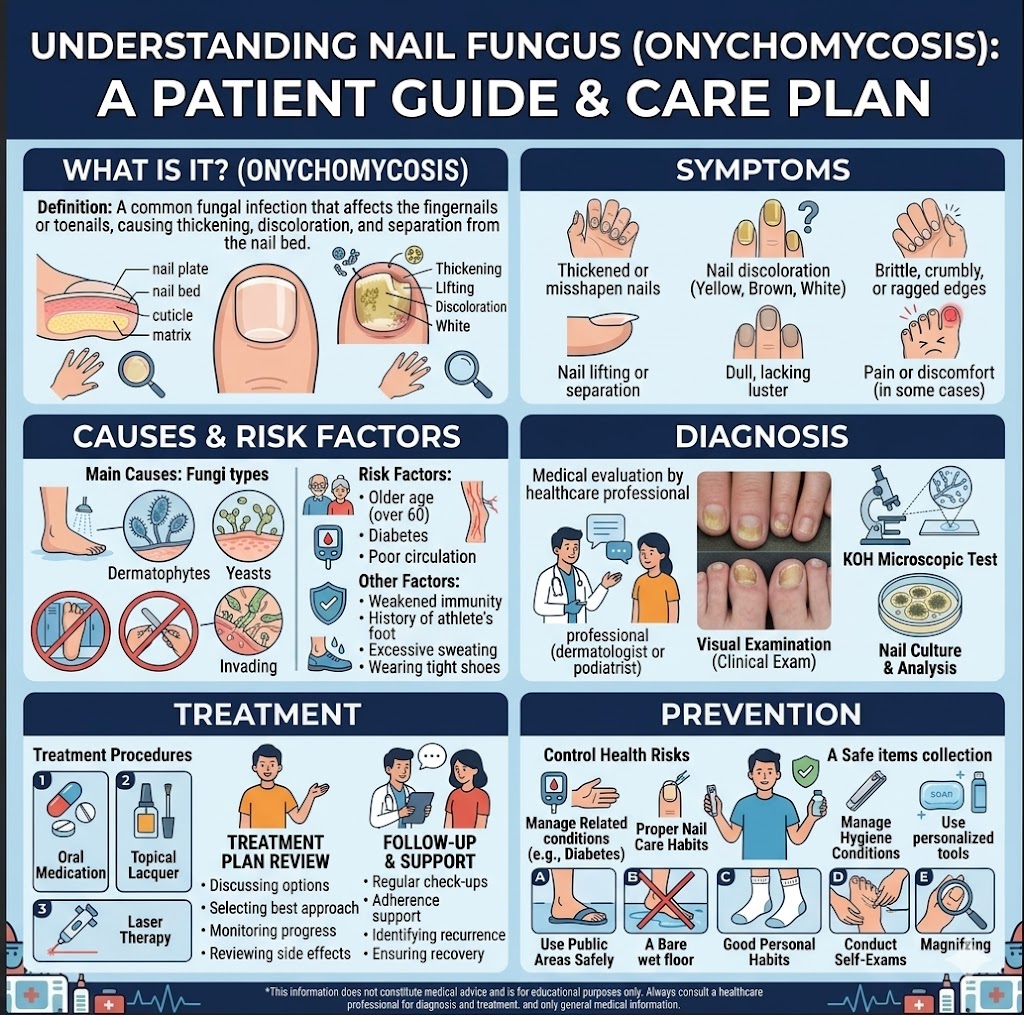
Nail fungus, also known by its medical term onychomycosis, is a common infection that affects your fingernails or, more frequently, your toenails. It typically starts as a small white or yellowish-brown spot beneath the tip of your nail. As the fungal infection progresses and delves deeper into the nail, it can cause the nail to become discolored, thicker, and brittle, often crumbling at the edges. This condition can impact multiple nails. While mild cases that cause no discomfort may not require treatment, painful or significantly thickened nails often benefit from self-care measures and medical intervention. It's important to note that even after successful treatment, nail fungus frequently returns.
Understanding the Condition
Nail Fungus (Onychomycosis): Understanding and Managing the Condition
Understanding the Condition
Common Symptoms
Discoloration: Nails may appear white, yellow, brown, or even greenish-black due to the infection. The color can change as the fungus grows.
Thickening: The infected nail often becomes noticeably thicker than normal, making it difficult to trim.
Brittleness or Crumbly Texture: Nails become fragile, easily breaking, crumbling, or developing a ragged edge.
Misshapen Nails: The shape of the nail can change, sometimes appearing distorted or lifted.
Separation from Nail Bed: In some cases, the infected nail may lift and separate from the underlying skin, known as the nail bed.
Consultation Guide
Which Specialist to Meet
You should consider seeing a primary care provider for an initial assessment. Depending on the severity and specific type of infection, you may be referred to a dermatologist (a skin, hair, and nail specialist) or a podiatrist (a foot specialist), especially if toenails are severely affected or if you have underlying conditions like diabetes.
Preparations Before Your Visit
Before your appointment, avoid trimming or applying nail polish to the affected nails, as this allows the doctor to better assess the condition. Be prepared to discuss your symptoms, when they started, any self-care methods you've tried, and your complete medical history, including any conditions like diabetes, circulation problems, or a weakened immune system. Bring a list of all medications you are currently taking.
Book a doctor visit near me
Oral Antifungal Medications: These prescription medications are taken by mouth and work by helping a new, healthy nail grow free of infection, gradually replacing the infected portion. They are generally more effective for severe cases. (Duration: Typically 6 to 12 weeks for toenails and shorter for fingernails, but full nail regrowth and symptom resolution can take 4 to 12 months.)
Consultation Guide
Nail fungus, also known by its medical term onychomycosis, is a common infection that affects your fingernails or, more frequently, your toenails. It typically starts as a small white or yellowish-brown spot beneath the tip of your nail. As the fungal infection progresses and delves deeper into the nail, it can cause the nail to become discolored, thicker, and brittle, often crumbling at the edges. This condition can impact multiple nails. While mild cases that cause no discomfort may not require treatment, painful or significantly thickened nails often benefit from self-care measures and medical intervention. It's important to note that even after successful treatment, nail fungus frequently returns.
Diagnostic Procedures
Your doctor will visually inspect your affected nails and the surrounding skin to identify characteristic signs of fungal infection and rule out other conditions.
What to Expect
The doctor will look closely at your nails, noting their color, thickness, and texture. They may also examine your feet or hands for signs of related conditions, like athlete's foot.
Nail Clipping or Scraping
A small sample of the infected nail or debris from under the nail is collected for laboratory analysis to confirm the presence of fungus and identify the specific type.
What to Expect
Using a sterile tool, your doctor will gently take a small clipping from the affected nail or scrape a bit of material from beneath it. This procedure is usually painless, though you might feel a slight pressure. The sample is then prepared for further testing.
Microscopic Examination (KOH Prep)
The collected nail sample is treated with potassium hydroxide (KOH) and examined under a microscope. This helps to quickly identify fungal elements.
What to Expect
This step is performed in the laboratory. The treated sample is placed on a slide, and a trained professional examines it for fungal spores or hyphae. You will not feel anything during this part of the diagnostic process.
What to Expect
This test is also performed in the laboratory. The sample is monitored over several days to weeks for fungal growth. You will not experience any sensation during this lab procedure. Results can take some time, as fungi grow slowly.
Treatment Options
The nail sample is placed on a special growth medium to allow any fungi present to grow. This helps to confirm the specific fungal species, which guides the most effective treatment plan.
Home Remedies and Self-Care
Nail Hygiene: Keep nails trimmed short, file down any thickened areas, and disinfect nail clippers after each use. Promptly treat athlete's foot to prevent its spread to nails. (Duration: Ongoing)
Medications
Topical Antifungal Medications: These are prescription creams, solutions, or medicated nail polishes applied directly to the infected nail. They are often used for milder infections or as an adjunct to oral medications. (Duration: Daily application for several months up to a year, until the infected nail has completely grown out.)
Procedures and Therapies
Nail Debridement: Your doctor may thin the thickened nail with a file or specialized tool to reduce pressure and allow topical medications to penetrate better. (Duration: Performed during office visits, as needed.)
Laser Therapy: Specific lasers can be used to pass through the nail plate and target the fungus in the nail bed, helping to reduce the fungal load. (Duration: Multiple sessions (e.g., 3-4 sessions) spaced several weeks apart, with results appearing as the new nail grows over many months.)
Surgical Procedures
Nail Removal: In severe, painful, or persistent cases, the infected nail may be partially or completely removed, either temporarily or permanently, to allow direct treatment of the nail bed with antifungal medications. (Duration: A single procedure, followed by a healing period and new nail growth over several months to a year.)
Prevention & Long-Term Wellbeing
Antifungal Powders or Sprays: Applying antifungal products to your feet and inside your shoes can help manage and prevent spread, especially if you also have athlete's foot. (Duration: As needed, often long-term for prevention)
Prevention of Infection and Reinfection
Maintain Good Nail Hygiene: Keep your hands and feet clean and dry, especially after washing. Dry thoroughly between your toes. Wash your hands after touching an infected nail. Apply antifungal foot powder if prone to sweat.
Trim Nails Correctly: Cut nails straight across, smooth the edges with a file, and keep them short. Long nails create more space for fungi to grow. Disinfect nail clippers after each use.
Wear Appropriate Footwear: Choose shoes made of breathable materials and wear absorbent socks, changing them daily or when damp. Wear sandals or flip-flops in public damp areas like swimming pools, gyms, and shower rooms.
Treat Athlete's Foot Promptly: If you develop athlete's foot (a fungal infection of the skin on your feet), treat it immediately with an antifungal product to prevent it from spreading to your nails.
Ensure Salon Cleanliness: If you get pedicures, choose salons that use sterilized tools for each customer. Alternatively, disinfect your own pedicure tools at home before and after use.
Avoid Nail Polish and Artificial Nails: These can trap moisture and create an ideal environment for fungi to thrive. Allowing nails to breathe is beneficial during and after an infection.
Long-Term Monitoring
Regular Self-Checks: Periodically inspect your nails for any signs of recurrence or new infection, especially if you are prone to nail fungus.
Specialized Foot Care: If you have conditions like diabetes, poor circulation, or a weakened immune system, meticulously care for your feet and promptly report any changes or new infections to your healthcare provider.
Tags & Topics
Notice an error or need an update?
Help us keep medical information accurate. Report incorrect info or suggest an edit.


