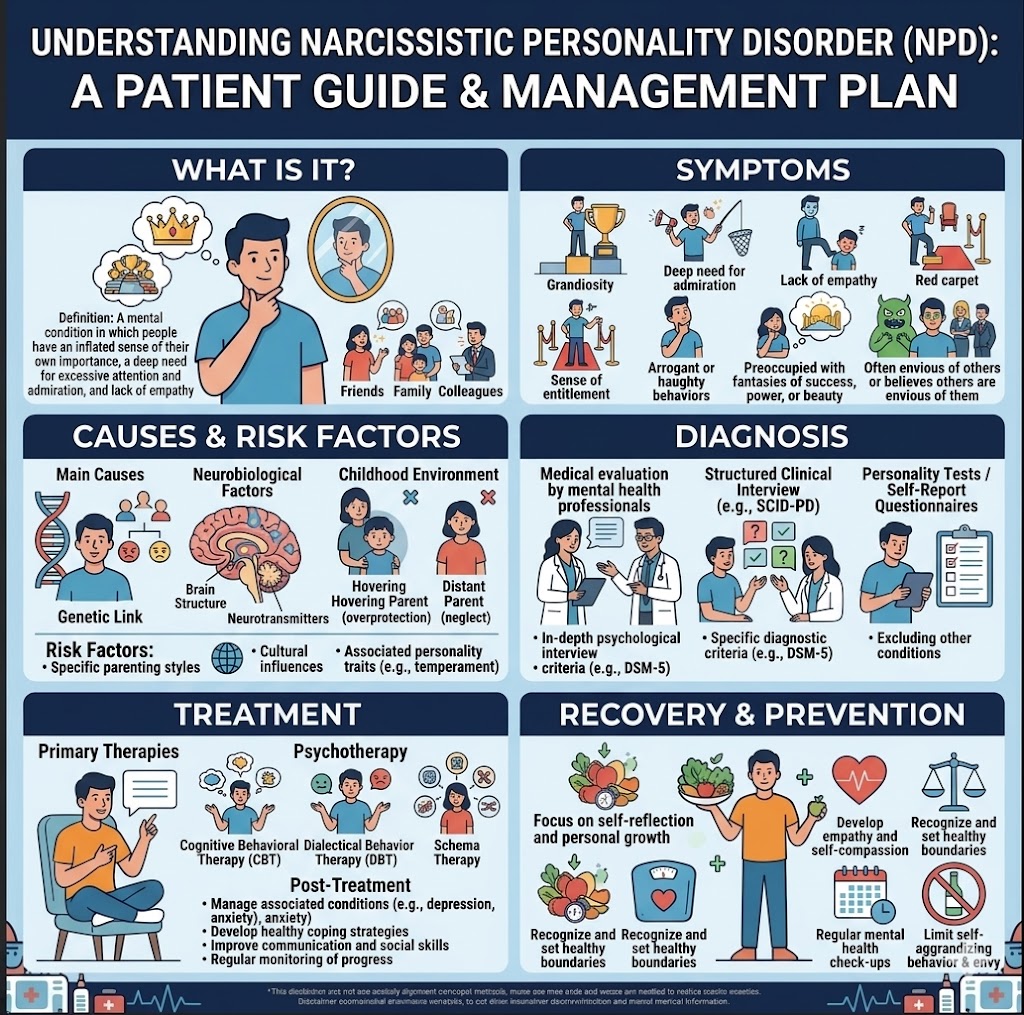
Narcissistic Personality Disorder (NPD) is a mental health condition where individuals have an exaggerated sense of their own importance. They often crave excessive attention and admiration, believing they are superior to others. People with NPD typically struggle to understand or care about the feelings of others. However, beneath this outwardly confident demeanor often lies a fragile self-esteem, making them highly sensitive to criticism. NPD can significantly impact various aspects of life, including relationships, work, and school, leading to unhappiness and disappointment when their perceived special status is not acknowledged. Treatment primarily involves talk therapy, also known as psychotherapy. NPD is more commonly diagnosed in males and typically emerges in the teenage years or early adulthood.
Understanding the Condition
Narcissistic Personality Disorder (NPD)
Understanding the Condition
Common Symptoms
Exaggerated Self-Importance: Having an inflated sense of self-importance and requiring constant, excessive admiration from others.
Before your visit, consider writing down your symptoms, how they affect your daily life, and any concerns you have. Be prepared to discuss your personal history, relationships, and childhood experiences openly and honestly. It can also be helpful to list any medications you're currently taking and any significant stressors or life changes you've recently experienced. Bringing a trusted family member or friend, if you're comfortable, can provide additional insights to the specialist.
Book a doctor visit near me
Narcissistic Personality Disorder is diagnosed by a qualified mental health professional, such as a psychiatrist or psychologist. The diagnosis is based on a comprehensive evaluation of an individual's symptoms, personal history, and observed behaviors, rather than a physical test. This process involves multiple sessions where the professional will assess how well the individual's traits and behaviors align with the specific diagnostic criteria outlined in standardized manuals for mental disorders.
During the evaluation, you can expect to have detailed, in-depth conversations with the mental health professional. They will ask questions about your thoughts, feelings, past and present relationships, work or school experiences, and your childhood. They may also inquire about any significant life events or how you perceive yourself and others. To gather more information and rule out other conditions, standardized psychological questionnaires or assessment tools might be used. It's important to be as open and honest as possible, as this helps the professional form an accurate picture to determine if your symptoms meet the criteria for NPD.
Medications for Co-occurring Conditions: There are no specific medications to treat NPD itself. However, medications may be prescribed to manage other mental health conditions that often occur alongside NPD, such as depression, anxiety disorders, or mood swings. These medications can alleviate specific symptoms, making it easier for individuals to engage in and benefit from psychotherapy. (Duration: Varies depending on the condition being treated; can be short-term or ongoing as needed.)
Home Remedies / Self-Help
Diagnostic Procedures
Narcissistic Personality Disorder (NPD) is a mental health condition where individuals have an exaggerated sense of their own importance. They often crave excessive attention and admiration, believing they are superior to others. People with NPD typically struggle to understand or care about the feelings of others. However, beneath this outwardly confident demeanor often lies a fragile self-esteem, making them highly sensitive to criticism. NPD can significantly impact various aspects of life, including relationships, work, and school, leading to unhappiness and disappointment when their perceived special status is not acknowledged. Treatment primarily involves talk therapy, also known as psychotherapy. NPD is more commonly diagnosed in males and typically emerges in the teenage years or early adulthood.
If you suspect you or a loved one might have Narcissistic Personality Disorder, it's best to start by consulting a primary care physician. They can provide an initial assessment and refer you to a mental health specialist, such as a psychiatrist or psychologist. A psychiatrist can diagnose mental health conditions and prescribe medication for co-occurring issues, while a psychologist or therapist specializes in psychotherapy.
Preparations Before Your Visit
Clinical Evaluation and Psychological Assessment
What to Expect
Treatment Options
Belief in Special Treatment: Feeling entitled to privileges and expecting special treatment that is not given to others.
Expecting Unearned Recognition: Demanding to be recognized as superior even without significant achievements to justify it.
Exaggerating Accomplishments: Making personal achievements and talents seem much bigger or more significant than they truly are.
Fantasies of Grandeur: Being preoccupied with elaborate fantasies about unlimited success, power, brilliance, beauty, or finding the perfect romantic partner.
Belief in Superiority: Believing they are uniquely superior and can only associate with, or be understood by, equally special or high-status individuals or institutions.
Disregarding Others: Being critical of and looking down on people they perceive as unimportant or inferior.
Expecting Unquestioning Compliance: Expecting special favors and anticipating that others will comply with their wishes without question.
Exploiting Others: Taking advantage of other people to achieve their own goals or desires.
Lack of Empathy: Having an inability or unwillingness to recognize or identify with the needs, feelings, and experiences of others.
Envy: Being envious of others' achievements or possessions, and simultaneously believing that others are envious of them.
Arrogant Behavior: Behaving in an arrogant or haughty manner, often boasting excessively and appearing conceited.
Demanding the Best: Insisting on having the absolute best of everything, such as the finest car or the most prestigious office.
Consultation Guide
Which Specialist to Meet
Therapies
Psychotherapy (Talk Therapy): This is the primary and most effective treatment for NPD. It involves working with a trained therapist to understand the disorder's impact, develop healthier ways of interacting with others, and address underlying insecurities. Psychotherapy helps individuals explore the origins of their grandiosity, improve self-esteem, learn to regulate emotions, and develop greater empathy. (Duration: Typically long-term, ranging from several months to years, depending on individual progress and the severity of the condition.)
Cognitive Behavioral Therapy (CBT): A structured form of talk therapy often used in NPD treatment. CBT helps individuals identify and challenge distorted thought patterns and behaviors that contribute to the disorder. It focuses on developing more realistic self-perceptions, improving interpersonal skills, and learning to cope with criticism more constructively. CBT can also effectively address co-occurring conditions like depression or anxiety. (Duration: Often involves a specific number of sessions, such as 12 to 20 over several months, with ongoing practice of learned skills, though it can extend longer for chronic issues.)
Medications
Managing Co-occurring Conditions: Proactively treating any associated mental health issues, such as depression, anxiety, or substance misuse, is vital for overall mental health and improves the effectiveness of NPD treatment. This may involve ongoing medication management in conjunction with therapy.
Developing Self-Awareness and Empathy: Continuous effort to understand one's own behaviors, their impact on others, and practicing empathy are key for personal growth, improving social interactions, and fostering more fulfilling relationships.
Prevention & Long-Term Wellbeing
Self-Care and Lifestyle Adjustments: Engaging in practices that promote overall well-being can support therapeutic efforts. This includes stress management techniques like mindfulness or meditation, maintaining regular physical activity, adhering to a balanced diet, ensuring adequate sleep, and avoiding excessive alcohol or substance use. Learning about NPD and practicing healthier communication skills outside of therapy can also be beneficial. (Duration: As advised)
Prevention
Early Intervention for Mental Health Problems: Addressing mental health concerns in children and adolescents as soon as they arise can potentially mitigate the risk of developing certain personality disorders. Seeking professional help for emotional or behavioral difficulties early on is crucial.
Fostering Healthy Family Dynamics: Participating in family therapy or parenting classes can teach healthy communication strategies, conflict resolution skills, and emotional support within the family unit. This helps create a more nurturing and balanced environment for a child's development.
Long-Term Wellbeing
Consistent Engagement in Psychotherapy: Regular and active participation in talk therapy is fundamental for long-term management of NPD. Continued engagement helps individuals maintain insights, refine coping mechanisms, and sustain healthier relationship patterns.
Stress Management and Healthy Lifestyle: Implementing effective stress-reduction techniques (e.g., mindfulness, hobbies) and maintaining a balanced lifestyle (regular exercise, nutritious diet, sufficient sleep) are crucial for supporting both mental and physical well-being.
Building Supportive Relationships: Working towards forming and nurturing relationships based on mutual respect, understanding, and genuine connection, rather than manipulation or a need for admiration, is a significant long-term goal that enhances overall quality of life.
Tags & Topics
Notice an error or need an update?
Help us keep medical information accurate. Report incorrect info or suggest an edit.


