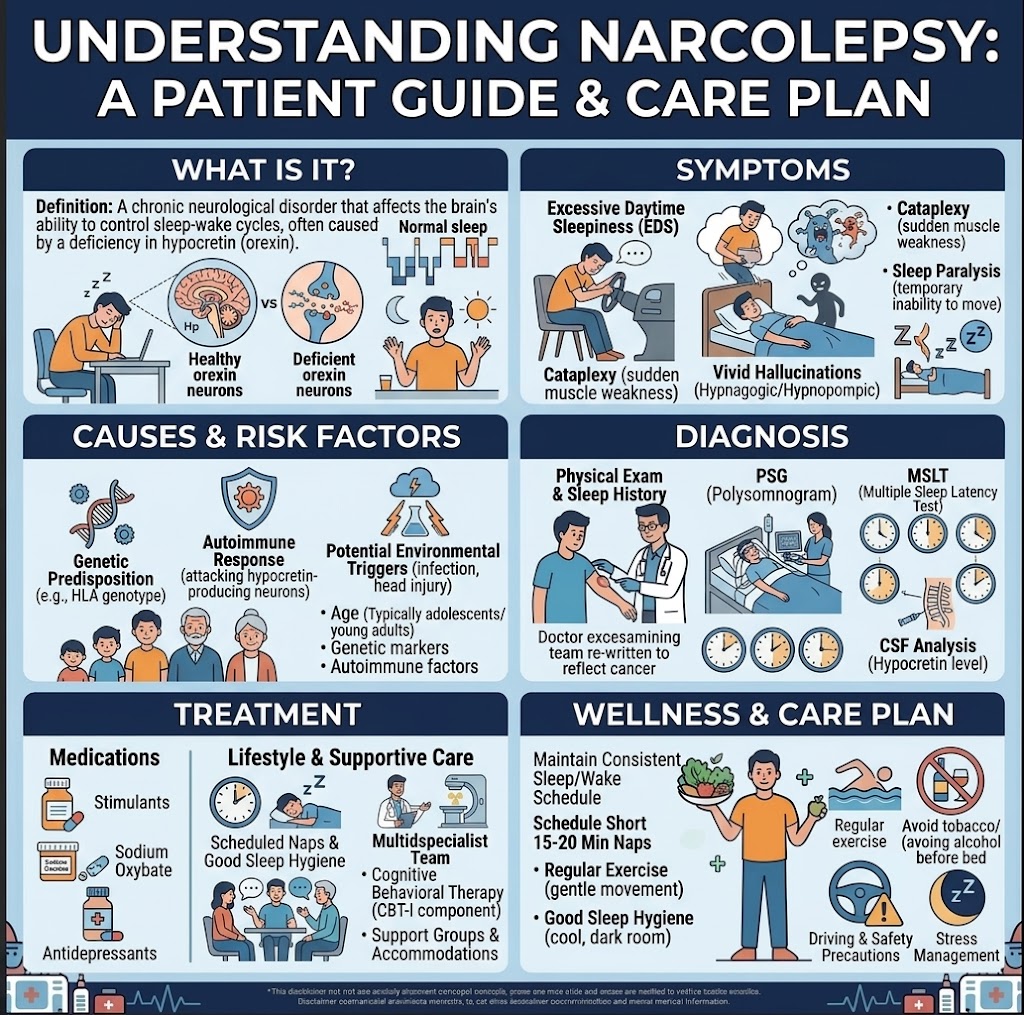
Narcolepsy is a long-term brain condition that causes overwhelming daytime sleepiness and can lead to sudden sleep attacks. It disrupts the normal sleep-wake cycle. Some individuals also experience sudden muscle weakness triggered by strong emotions, a symptom called cataplexy. While there is no cure, narcolepsy can be effectively managed with lifestyle adjustments, support, and various treatments.
Understanding the Condition
Understanding Narcolepsy: A Guide for Non-Medical Persons
Understanding the Condition
Narcolepsy is a long-term brain condition that causes overwhelming daytime sleepiness and can lead to sudden sleep attacks. It disrupts the normal sleep-wake cycle. Some individuals also experience sudden muscle weakness triggered by strong emotions, a symptom called cataplexy. While there is no cure, narcolepsy can be effectively managed with lifestyle adjustments, support, and various treatments.
Common Symptoms
Extreme Daytime Sleepiness: This is often the first and most prominent symptom. People with narcolepsy feel constantly tired and have great difficulty staying awake and focused during the day. They may fall asleep without warning, even during activities like working, talking, or eating. These 'sleep attacks' can last from a few minutes to half an hour. Although they feel refreshed upon waking, the sleepiness soon returns. Falling asleep unexpectedly, especially while driving, can be very dangerous.
Sudden Loss of Muscle Tone (Cataplexy): Cataplexy is a sudden, brief episode of muscle weakness or paralysis, triggered by strong emotions. Laughter, excitement, anger, surprise, or fear are common triggers. Symptoms can range from slurred speech or a drooping head to complete body collapse. These episodes usually last a few seconds to a few minutes. Not everyone with narcolepsy experiences cataplexy; it is a key feature of Type 1 narcolepsy.
Sleep Paralysis: During sleep paralysis, individuals temporarily cannot move or speak when falling asleep or waking up. This can be very frightening, even though it typically lasts only a few seconds to minutes. People are usually aware of what's happening and remember it afterward. Not everyone who experiences sleep paralysis has narcolepsy.
Hallucinations: Some people with narcolepsy may experience vivid, dream-like hallucinations as they fall asleep (hypnagogic) or wake up (hypnopompic). These can be visual, auditory, or tactile, making them feel very real and often frightening, as the person may not be fully asleep or awake during the experience.
Automatic Behaviors: When experiencing a brief sleep attack, some individuals may continue performing routine tasks without being fully aware. For example, they might continue writing, typing, or even driving while briefly asleep. Afterward, they often have no memory of these actions and may have performed them poorly.
Disrupted Nighttime Sleep: Despite overwhelming daytime sleepiness, people with narcolepsy often have trouble sleeping soundly through the night. They may wake up frequently, or experience other sleep disorders like restless legs syndrome, obstructive sleep apnea (breathing stopping and starting), or REM sleep behavior disorder (acting out dreams).
Consultation Guide
Which Specialist to Meet
Before your appointment, keep a detailed sleep diary for a week or two, noting when you go to bed, wake up, take naps, and experience any unusual symptoms like sudden sleepiness or muscle weakness. Make a list of all your symptoms, including when they started and how often they occur. Also, list all medications you currently take (prescription and over-the-counter), any other health conditions you have, and prepare questions you want to ask the doctor.
Book a doctor visit near me
Other Medications for Narcolepsy: Specific medications designed to treat narcolepsy symptoms, including both sleepiness and cataplexy, may be prescribed. Some help consolidate nighttime sleep. (Duration: Taken daily, ongoing)
Regular Medical Follow-ups: Regular visits with your sleep specialist or neurologist are crucial to monitor your symptoms, adjust medications, and ensure your treatment plan remains effective.
Maintain a Healthy Weight: People with narcolepsy are more prone to obesity. Maintaining a healthy weight through diet and exercise can improve overall health and may help manage some symptoms.
Diagnostic Procedures
If you experience persistent daytime sleepiness that significantly impacts your daily life, start by consulting your primary care doctor. They may refer you to a sleep specialist (a doctor specializing in sleep disorders) or a neurologist (a doctor specializing in brain and nervous system disorders) for further evaluation and diagnosis.
Preparations Before Your Visit
Polysomnography (Sleep Study)
A polysomnography, commonly known as a sleep study, is a comprehensive test used to diagnose various sleep disorders, including narcolepsy. It records several body functions during sleep to identify any disruptions in your sleep patterns.
What to Expect
This test is usually performed overnight at a sleep disorders unit or sleep center. You will arrive in the evening and be prepared for sleep. Technicians will attach small sensors to your scalp, face, chest, and legs. These sensors painlessly monitor your brain waves (EEG), heart rate (ECG), breathing patterns, oxygen levels in your blood, and eye and leg movements throughout the night. You'll sleep in a private room, and the technicians will observe you from another room. The goal is to record a typical night's sleep to analyze your sleep stages and cycles and detect any abnormalities that might point to a sleep disorder like narcolepsy or other co-existing conditions like sleep apnea.
Multiple Sleep Latency Test (MSLT)
The Multiple Sleep Latency Test (MSLT) is usually conducted the day after a polysomnography. It measures how quickly you fall asleep during the day and how quickly you enter REM (dreaming) sleep.
What to Expect
Following your overnight sleep study, you will stay at the sleep center for the MSLT. You will be given several opportunities (typically four or five) to nap, spaced about two hours apart, throughout the day. For each nap opportunity, you will lie down in a dark, quiet room and try to fall asleep. Sensors similar to those used in the polysomnography will monitor your brain waves and eye movements. The test measures how long it takes you to fall asleep for each nap and whether you enter REM sleep. Rapid sleep onset and entering REM sleep quickly during these daytime naps are key indicators of narcolepsy.
Treatment Options
Medications
Wakefulness-Promoting Medications: These medications help reduce excessive daytime sleepiness by promoting alertness. (Duration: Taken daily, ongoing)
Stimulants: Some stimulants may be prescribed to help people stay awake during the day. (Duration: Taken daily, ongoing)
Antidepressants: Certain types of antidepressants can help manage cataplexy, sleep paralysis, and hallucinations. (Duration: Taken daily, ongoing)
Prevention & Long-Term Wellbeing
Lifestyle & Behavioral Therapies
Scheduled Naps: Taking short, strategic naps throughout the day can help manage daytime sleepiness and improve alertness. The timing and duration of these naps should be discussed with a doctor. (Duration: Daily, ongoing)
Regular Sleep Schedule: Going to bed and waking up at the same time each day, even on weekends, helps regulate the body's internal clock. (Duration: Daily, ongoing)
Avoidance of Certain Substances: Limiting or avoiding alcohol, caffeine, and nicotine, especially before bedtime, can improve sleep quality and reduce daytime sleepiness. (Duration: Ongoing)
Regular Exercise: Engaging in daily physical activity (but not too close to bedtime) can improve sleep quality and overall energy levels. (Duration: Daily, ongoing)
Dietary Adjustments: Eating light, balanced meals and avoiding heavy meals before bedtime can aid in better sleep. Some individuals find avoiding very sugary or starchy foods helps reduce sleepiness. (Duration: Daily, ongoing)
Daily Management & Safety
Prioritize Sleep Hygiene: Create a comfortable sleep environment, avoid screens before bed, and ensure your bedroom is dark, quiet, and cool to promote better nighttime sleep.
Manage Cataplexy Triggers: Identify and, if possible, manage strong emotions that trigger cataplexy. Learning to recognize the onset of strong emotions can sometimes help you prepare or find a safe place.
Driving and Safety Precautions: Do not drive if you feel sleepy. If you must drive, ensure you are well-rested and take frequent breaks. Be cautious with activities that could be dangerous if you fall asleep, such as cooking or operating machinery.
Educate Others: Inform family, friends, teachers, and employers about your condition. Understanding from others can help them provide support and make necessary accommodations, dispelling misconceptions about laziness.
Seek Support: Connect with support groups or mental health professionals. Living with narcolepsy can be challenging, and emotional support can help manage its impact on personal relationships and daily life.
Work/School Accommodations: Discuss potential accommodations with employers or school administrators, such as flexible work hours, designated nap times, or modifications to tasks that require sustained alertness.
Tags & Topics
Notice an error or need an update?
Help us keep medical information accurate. Report incorrect info or suggest an edit.


