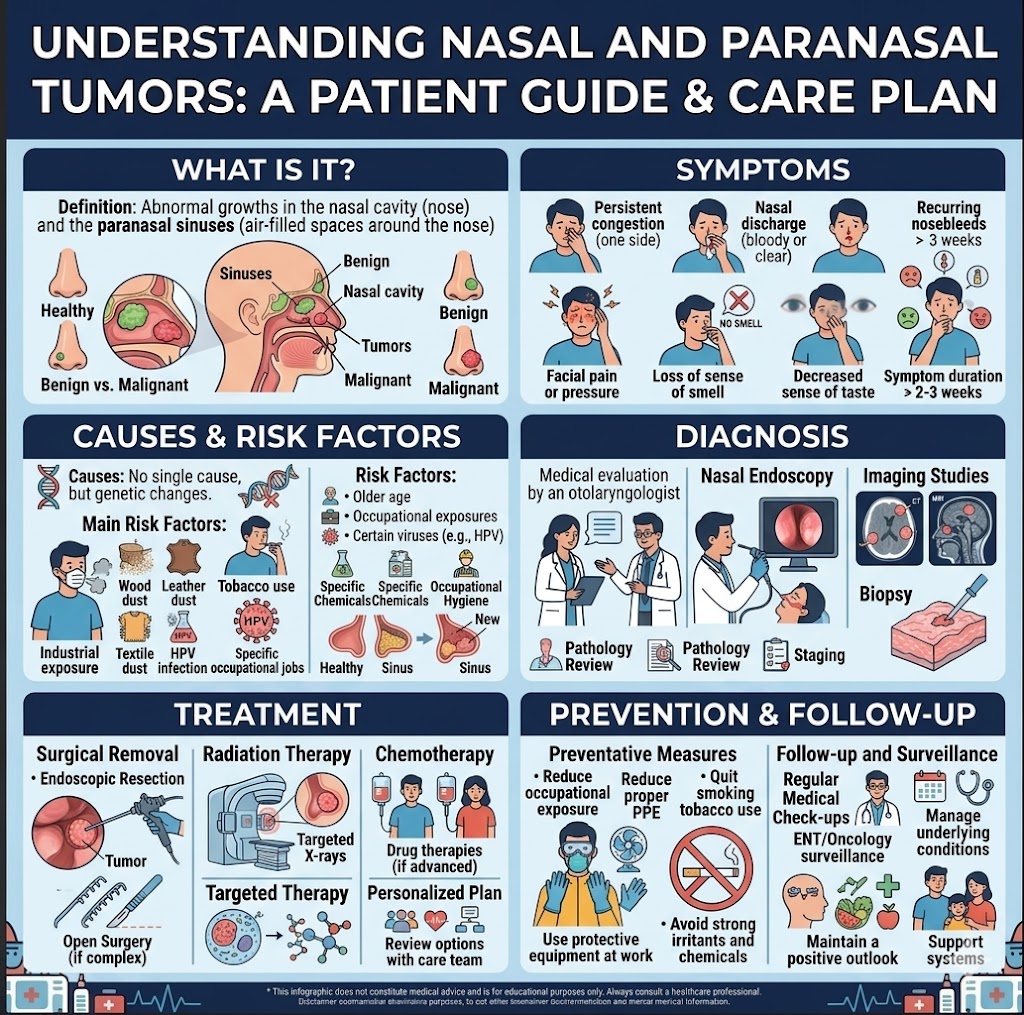
Nasal and paranasal tumors are abnormal growths that can develop inside the nose or in the air-filled spaces around it, known as the paranasal sinuses. Nasal tumors originate in the main nasal passageway. Paranasal tumors are found in the sinuses located behind the cheekbones, forehead, and between the eyes. These growths can be either non-cancerous (benign) or cancerous (malignant). Benign tumors may cause blockages, leading to breathing difficulties. Malignant tumors, or cancers, can invade and damage surrounding healthy tissues and may spread to other parts of the body over time. The specific type of tumor you have will guide your treatment plan.
Understanding the Condition
Nasal and Paranasal Tumors: A Guide for Non-Medical Individuals
Understanding the Condition
Common Symptoms
Difficulty breathing through the nose: Trouble inhaling or exhaling air through one or both nostrils.
Frequent headaches: Head pain that occurs often.
Loss of the sense of smell: An inability to detect odors.
Nosebleeds: Bleeding from the nose.
Discharge from the nose: Runny nose or fluid draining from the nostrils, potentially unusual in color or consistency.
Facial swelling or pain: Noticeable puffiness or discomfort in the face.
Watery eyes: Eyes producing excessive tears.
A sore on the roof of the mouth: An open lesion or painful spot on the palate.
Vision problems: Changes in eyesight, such as double vision or blurry vision.
A lump in the neck: A noticeable mass or swelling in the neck area.
Difficulty opening the mouth: Restricted ability to fully open the jaw.
Consultation Guide
Which Specialist to Meet
You should typically start by seeing an Ear, Nose, and Throat (ENT) specialist, also known as an otolaryngologist, as they specialize in conditions of the head and neck. If a tumor is found to be cancerous, you may also consult with an oncologist (cancer specialist), a radiation oncologist, or a head and neck surgeon.
Preparations Before Your Visit
Before your appointment, it is helpful to write down all your symptoms, including when they started and how they have changed. Make a list of all medications, vitamins, and supplements you take. Be prepared to share your full medical history, including any previous surgeries or conditions. It's also a good idea to write down any questions you have for the doctor. If possible, bring any relevant medical records or imaging results.
Book a doctor visit near me
Symptom Relief: Medications such as pain relievers or decongestants may be prescribed to manage discomfort or improve breathing caused by benign tumors. (Duration: As needed for symptom management.)
Antibiotics: If a tumor leads to a secondary infection, antibiotics might be used. (Duration: Typically 7-14 days.)
Chemotherapy: Drugs administered orally or intravenously to kill cancer cells throughout the body. (Duration: Usually given in cycles over several months, depending on the specific regimen and response.)
Symptom Awareness: Be vigilant about any new or returning symptoms and report them to your doctor promptly.
Consultation Guide
Nasal and paranasal tumors are abnormal growths that can develop inside the nose or in the air-filled spaces around it, known as the paranasal sinuses. Nasal tumors originate in the main nasal passageway. Paranasal tumors are found in the sinuses located behind the cheekbones, forehead, and between the eyes. These growths can be either non-cancerous (benign) or cancerous (malignant). Benign tumors may cause blockages, leading to breathing difficulties. Malignant tumors, or cancers, can invade and damage surrounding healthy tissues and may spread to other parts of the body over time. The specific type of tumor you have will guide your treatment plan.
Diagnostic Procedures
Physical Examination and Nasal Endoscopy
Your doctor will examine your nose and throat. A nasal endoscopy involves inserting a thin, flexible tube with a camera into your nose to get a magnified view of the nasal passages and sinuses.
What to Expect
You will be asked to sit comfortably while the doctor examines you. A local anesthetic spray might be used to numb your nose for the endoscopy to make it more comfortable. You may feel slight pressure, but it is generally quick.
Imaging Scans (CT and MRI)
Computed tomography (CT) scans use X-rays to create detailed cross-sectional images of your nasal passages and sinuses. Magnetic resonance imaging (MRI) uses powerful magnets and radio waves to produce even more detailed images of soft tissues, useful for assessing tumor spread.
What to Expect
For both scans, you will lie still on a table that slides into a large machine. You might receive an injection of a contrast dye through an arm vein. CT scans are usually quick, while MRI scans can take longer (30-60 minutes) and involve loud knocking sounds, so you might be offered earplugs.
A biopsy is the removal of a small tissue sample from the suspicious growth. This sample is then sent to a laboratory where a pathologist examines it under a microscope to determine if the cells are benign or malignant and to identify the specific type of tumor.
What to Expect
A biopsy is often performed during a nasal endoscopy, or it may be a separate procedure. You will receive a local anesthetic to numb the area, so you should not feel pain during the tissue removal, though you might feel some pressure.
Positron Emission Tomography (PET) Scan
A PET scan is often used in combination with a CT scan (PET-CT) to detect if cancer cells have spread to other parts of the body. It involves injecting a small amount of a radioactive sugar into your bloodstream; cancer cells tend to absorb this sugar more quickly than healthy cells, making them visible on the scan.
What to Expect
After the injection, you will wait for about an hour for the tracer to circulate. Then, you will lie still on a table that moves through the PET scanner. The scan itself typically takes 30-45 minutes and is generally painless.
Treatment Options
Medications
Targeted Therapy: Medications designed to specifically attack vulnerabilities in cancer cells while sparing healthy cells. (Duration: Can be months to years, based on disease response and tolerance.)
Immunotherapy: Treatments that boost the body's own immune system to recognize and destroy cancer cells. (Duration: Administered in cycles, potentially over several months or longer.)
Surgical Procedures
Tumor Removal: The primary treatment for many nasal and paranasal tumors, involving the surgical removal of the tumor and a margin of surrounding healthy tissue. This can be done endoscopically (through the nose with small instruments and a camera) for smaller tumors or through an open approach for larger or more complex cases. (Duration: The surgical procedure itself can last several hours. Recovery time varies from a few weeks to several months, depending on the extent of surgery.)
External Beam Radiation: Uses high-energy X-rays or protons directed at the tumor from a machine outside the body to destroy cancer cells or shrink tumors. (Duration: Typically given five days a week for several weeks (e.g., 5-7 weeks), with each session lasting a few minutes.)
Rehabilitation: After extensive surgery or treatment, therapies such as physical, occupational, or speech therapy may be necessary to help recover functions like swallowing, speaking, or managing facial movements. (Duration: Varies widely based on individual needs, potentially weeks to months.)
Regular Follow-Up Appointments: After treatment, consistent follow-up visits with your medical team are crucial to monitor for any signs of recurrence, manage side effects, and ensure overall health. These may include physical exams and imaging scans.
Prevention & Long-Term Wellbeing
Prevention
Avoid Tobacco Products: Do not smoke cigarettes, cigars, or pipes. If you currently use tobacco, seek professional help and resources to quit, as this significantly reduces your risk.
Minimize Exposure to Workplace Hazards: If your job involves exposure to substances like wood dust, glue fumes, formaldehyde, or dust from chromium or nickel, ensure you follow all workplace safety protocols. This includes wearing appropriate protective gear, such as face masks, and ensuring adequate ventilation.
Consider HPV Vaccination: Discuss the Human Papillomavirus (HPV) vaccine with your doctor. The vaccine can protect against certain types of HPV infections that are linked to various cancers, including some nasal and paranasal tumors.
Long-Term Monitoring and Support
Healthy Lifestyle: Maintain a balanced diet, engage in regular physical activity, and manage stress to support your immune system and overall well-being.
Support Groups: Connecting with others who have experienced similar conditions can provide emotional support and practical advice. Ask your healthcare team for local or online support group recommendations.
Tags & Topics
Notice an error or need an update?
Help us keep medical information accurate. Report incorrect info or suggest an edit.


