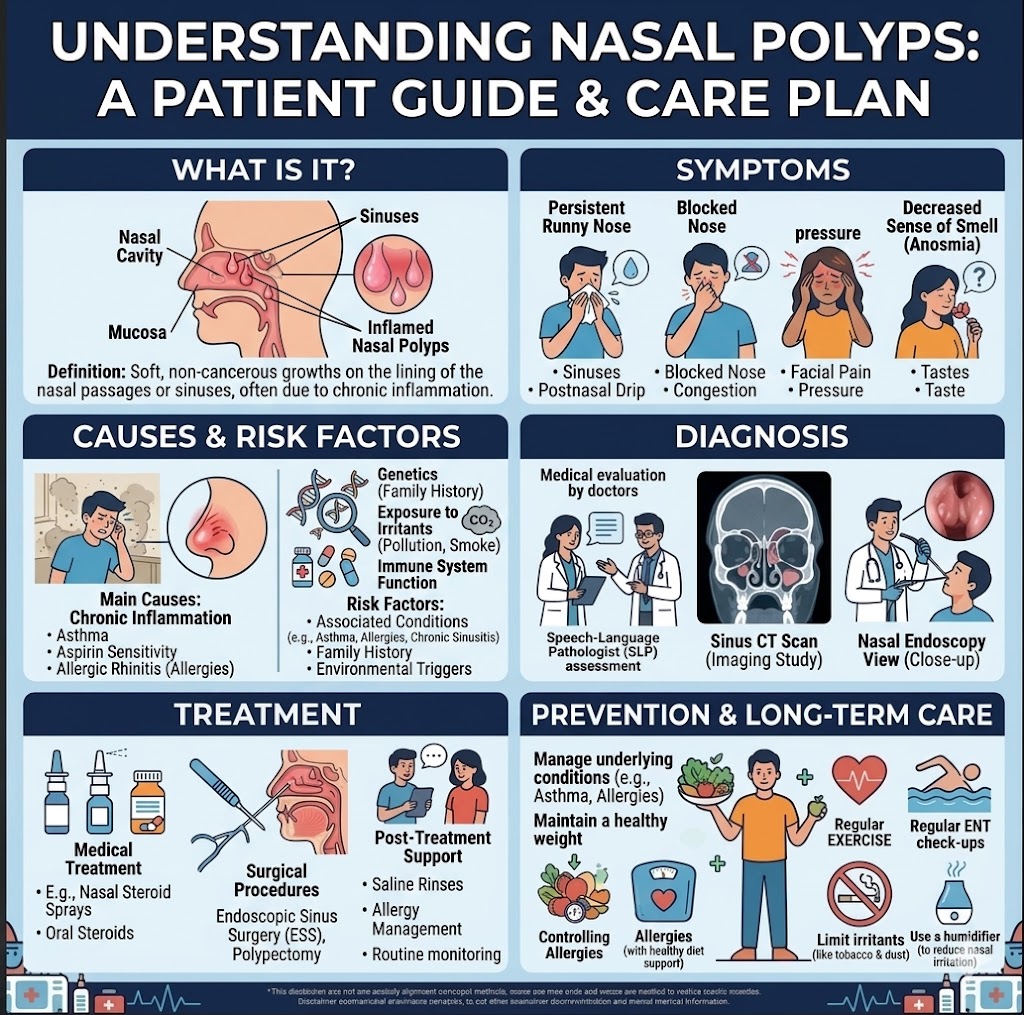
Nasal polyps are soft, painless, non-cancerous growths that form on the lining of your nose or in the hollow spaces within your facial bones, called sinuses. While small polyps might not cause any issues, larger growths or groups of polyps can block your nasal passages. This can lead to breathing difficulties, a reduced or lost sense of smell, and recurrent infections. Nasal polyps are linked to ongoing irritation and swelling (inflammation) inside the nose and sinuses, a condition known as chronic sinusitis. Although the exact cause remains unknown, certain conditions increase the risk. Nasal polyps can affect anyone but are more common in young and middle-aged adults. They can also worsen conditions like asthma. Treatment often involves medication to shrink or eliminate them, but surgery may be necessary. Unfortunately, polyps frequently return even after successful treatment.
Understanding the Condition
Nasal Polyps: Understanding and Managing Growths in Your Nose
Understanding the Condition
Common Symptoms
Chronic Nasal Inflammation: Nasal polyps are closely associated with inflammation and swelling inside the nose and sinuses that lasts for more than 12 weeks, known as chronic sinusitis. However, it's possible to have chronic sinusitis without developing polyps.
Runny, Stuffy Nose: Persistent nasal congestion and discharge are common, making it feel like you always have a cold.
Postnasal Drip: A sensation of mucus constantly running down the back of your throat.
Reduced or Lost Sense of Smell: Difficulty detecting odors or a complete inability to smell.
Reduced or Lost Sense of Taste: As taste is often linked to smell, your ability to taste food may also be affected.
Facial Pressure, Pain, or Headache: A feeling of fullness or pressure over your forehead and face, which can sometimes lead to headaches.
Tooth Pain: Pain or discomfort in your upper teeth.
Consultation Guide
Which Specialist to Meet
Before your visit, be prepared to discuss your symptoms in detail, including when they started, how long they've lasted, and anything that makes them better or worse. Provide a complete medical history, including any allergies, asthma, previous sinus infections, or other chronic health conditions. If you are scheduled for allergy tests, your doctor might advise you to stop taking certain medications, such as antihistamines, a few days beforehand.
Book a doctor visit near me
Nasal Rinses: Regularly flushing your nasal passages with a saltwater solution using a neti pot or squeeze bottle helps clear mucus, irritants, and reduce inflammation. Use distilled, sterile, or previously boiled and cooled water. (Duration: Ongoing, as needed, for symptom relief and prevention.)
Humidification: Using a humidifier in your home, especially in dry environments, can help keep your nasal passages moist, preventing dryness and irritation. (Duration: Ongoing, particularly during dry seasons; requires regular cleaning to prevent bacterial growth.)
Oral Corticosteroids: For more severe symptoms or larger polyps, stronger anti-inflammatory medications taken by mouth may be prescribed for a short period to rapidly reduce inflammation. (Duration: Typically a short course, often 5-10 days.)
Antibiotics: If a bacterial infection accompanies the polyps, antibiotics may be prescribed to clear the infection. (Duration: Typically 7-14 days.)
Manage Allergies and Asthma: Diligent management of conditions like allergies and asthma is crucial. Follow your prescribed treatment plans rigorously, and consult your healthcare provider if your symptoms are not well-controlled, as uncontrolled conditions can exacerbate nasal inflammation and polyp formation.
Avoid Nasal Irritants: Minimize exposure to environmental triggers that can irritate your nasal passages, such as tobacco smoke, chemical fumes, dust, and strong odors. If you smoke, discuss quitting strategies with your doctor.
Practice Good Hygiene: Wash your hands frequently and thoroughly to help prevent infections that can lead to irritation and swelling in your nose and sinuses.
Maintain Nasal Moisture: Using a humidifier in your home, especially during dry seasons, can help prevent nasal passages from drying out and becoming irritated. Remember to clean the humidifier regularly as directed to prevent the growth of bacteria or mold.
Regular Nasal Rinses: Routine rinsing of your nasal passages with a saltwater spray or nasal wash can help flush out irritants, allergens, and excess mucus. Ensure you use distilled, sterile, or previously boiled and cooled water for nasal rinses, and clean your rinsing device after each use.
Consultation Guide
Nasal polyps are soft, painless, non-cancerous growths that form on the lining of your nose or in the hollow spaces within your facial bones, called sinuses. While small polyps might not cause any issues, larger growths or groups of polyps can block your nasal passages. This can lead to breathing difficulties, a reduced or lost sense of smell, and recurrent infections. Nasal polyps are linked to ongoing irritation and swelling (inflammation) inside the nose and sinuses, a condition known as chronic sinusitis. Although the exact cause remains unknown, certain conditions increase the risk. Nasal polyps can affect anyone but are more common in young and middle-aged adults. They can also worsen conditions like asthma. Treatment often involves medication to shrink or eliminate them, but surgery may be necessary. Unfortunately, polyps frequently return even after successful treatment.
Small drops of different allergen extracts are placed on your skin, typically on your forearm or back. A tiny scratch or prick is then made through each drop, just barely breaking the skin's surface. You will wait about 15 to 20 minutes to observe if any red, itchy bumps (similar to a mosquito bite) develop, which would indicate an allergic reaction. The procedure is generally quick and causes only mild, temporary discomfort. If skin tests are not suitable due to skin conditions or certain medications, your doctor might suggest blood tests to check for specific allergy antibodies.
Diagnostic Procedures
You should consult your primary care provider, who may refer you to an Ear, Nose, and Throat (ENT) specialist, also known as an otolaryngologist, or an allergist. These specialists are best equipped to diagnose and manage nasal polyps and any related conditions.
Preparations Before Your Visit
A nasal endoscopy involves a doctor using a thin, flexible tube with a camera and light to look directly inside your nose and sinus passages. This allows them to visualize any polyps, assess their size and location, and examine the overall condition of the nasal lining.
What to Expect
You will typically be seated during the procedure. Your doctor may spray a local anesthetic into your nostril to numb the area and make you more comfortable. The endoscope is then gently inserted into your nose. The procedure is quick, usually lasting only a few minutes, and you might feel a sensation of pressure, tickling, or mild discomfort.
CT Scan (Computerized Tomography)
A CT scan uses specialized X-ray technology and computer processing to create detailed cross-sectional images, or 'slices,' of your bones, blood vessels, and soft tissues inside your head. This provides a clearer, more comprehensive view than standard X-rays, helping to confirm the presence of polyps, determine their exact size and extent, and rule out other potential issues.
What to Expect
You will lie on a motorized table that slides into a large, doughnut-shaped machine. It's important to remain very still during the scan. The machine might make buzzing or clicking noises as it operates. The procedure is generally painless and takes only a few minutes. In some cases, a contrast dye might be injected into a vein to enhance the clarity of specific structures in the images.
These tests involve exposing a small area of your skin to tiny amounts of common allergy-causing substances (allergens) to see if your body reacts. Identifying specific allergies can help determine if they are contributing to the chronic inflammation that leads to nasal polyps.
What to Expect
Treatment Options
Medications
Nasal Corticosteroid Sprays: These medicated sprays are applied directly into the nose to reduce inflammation and help shrink polyps. They are often the first line of treatment. (Duration: Can range from several weeks to months, and sometimes long-term for maintenance.)
Biologic Medications: For individuals with severe chronic sinusitis with nasal polyps that do not respond to other treatments, injectable biologic medications may be used. These target specific inflammatory pathways in the body. (Duration: Long-term treatment, administered periodically (e.g., every 2-4 weeks).)
Surgical Procedures
Endoscopic Polyp Removal / Sinus Surgery: If medications are not effective or polyps are very large, surgery may be recommended. A surgeon uses a thin, lighted tube (endoscope) with small instruments to remove the polyps and often to widen the openings to the sinuses, improving drainage and airflow. (Duration: A single procedure, but polyps often have a tendency to recur, potentially requiring further management.)
Ongoing Medical Follow-up: Since nasal polyps have a tendency to recur, even after successful treatment, regular follow-up appointments with your ENT specialist are important for monitoring your condition and for early intervention if polyps begin to return.
Prevention & Long-Term Wellbeing
Home Remedies & Lifestyle Adjustments
Tags & Topics
Notice an error or need an update?
Help us keep medical information accurate. Report incorrect info or suggest an edit.


