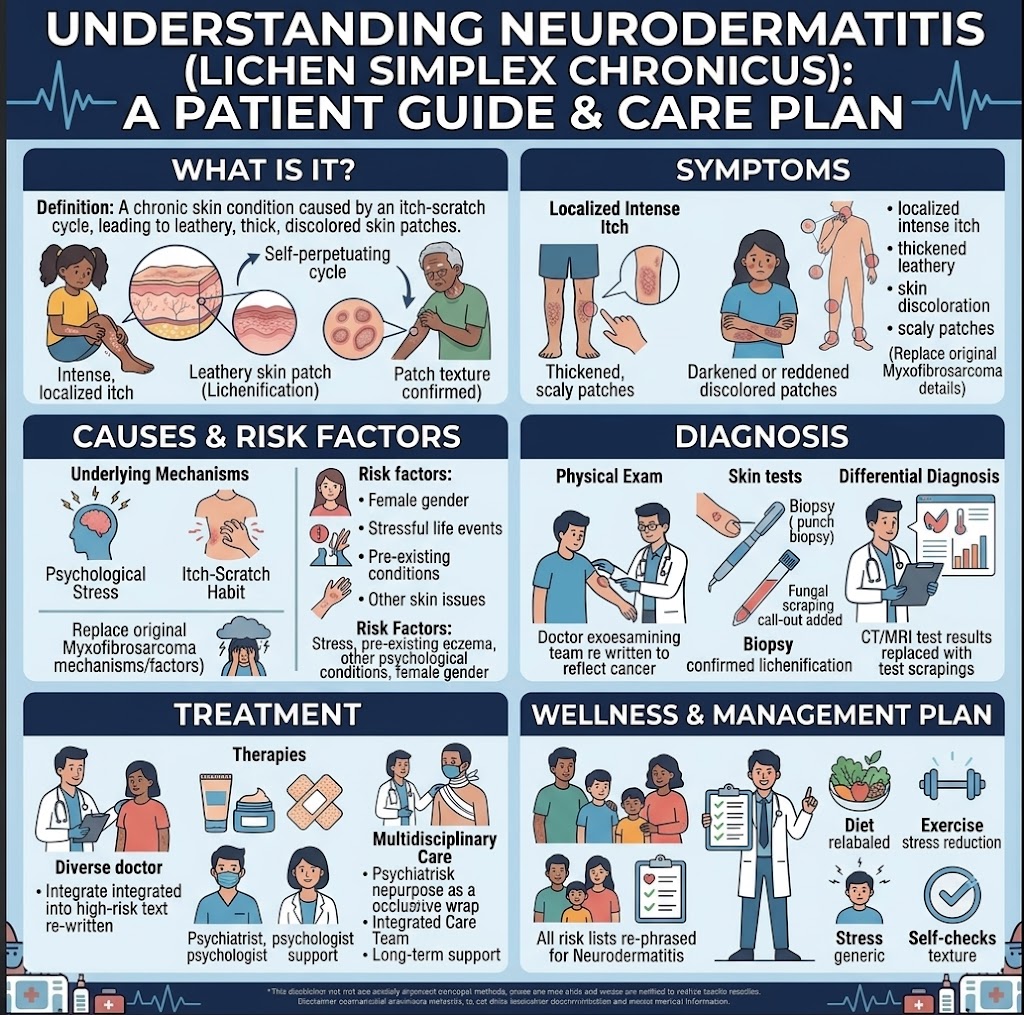
Neurodermatitis, also known as lichen simplex chronicus, is a chronic skin condition that begins with an intensely itchy patch of skin. Repeated scratching worsens the itch, leading to the skin becoming thick, leathery, and discolored. It typically affects areas easily reached for scratching, such as the neck, wrists, forearms, ankles, and groin. While not life-threatening or contagious, the intense itching can severely disrupt sleep, daily activities, and overall quality of life. The exact cause is unknown, but triggers can include skin irritants like tight clothing or insect bites, stress, and anxiety. It is often associated with other skin conditions like dry skin, eczema, or psoriasis. Breaking the itch-scratch cycle is challenging, and the condition is usually long-term, often recurring even after successful treatment. Persistent scratching can lead to open sores, bacterial skin infections, and permanent scarring or changes in skin color.
Understanding the Condition
Neurodermatitis: Understanding and Managing Chronic Itch
Understanding the Condition
Common Symptoms
Persistent Itching: Intense, often uncontrollable itching that can be constant or come and go, frequently worsening at night or during stressful periods.
Thickened, Leathery Skin Patches: Areas of skin become rough, scaly, and significantly thicker, sometimes appearing raised, inflamed, or darker than the surrounding skin due to chronic scratching.
Open Sores and Bleeding: Vigorous scratching can break the skin, leading to open wounds, crusting, and potential bleeding or weeping.
Discolored and Wrinkled Skin: Affected skin, particularly in sensitive areas like the genitals, may appear discolored (darker or lighter) and wrinkled.
Commonly Affected Areas: Lesions are typically found on the scalp, back of the neck, wrists, forearms, ankles, vulva, scrotum, and around the anus.
Consultation Guide
Which Specialist to Meet
It is advisable to consult a dermatologist, a doctor specializing in skin conditions. A primary care provider can offer initial guidance, and a mental health professional like a psychologist or psychiatrist may be beneficial if stress or anxiety significantly trigger or worsen your symptoms.
Preparations Before Your Visit
Before your visit, prepare to discuss your symptoms, including when they started, what makes them better or worse, and their impact on your daily life. It's helpful to list all current medications, other medical conditions, and any family history of skin conditions or allergies. Note any home remedies you've tried and their effectiveness. Be ready to describe how the itching affects your sleep or daily routines. Seek professional help if home remedies haven't helped after two days, if you find yourself repeatedly scratching the same skin patch, or if the itch disrupts your sleep or ability to focus.
Book a doctor visit near me
Trigger Avoidance: Identify and avoid personal triggers such as tight clothing, harsh soaps, perfumes, environmental irritants, or specific allergens. Keep a symptom diary to track these.
Effective Stress Management: Incorporate stress-reducing practices like meditation, yoga, or deep breathing, as emotional stress can significantly worsen itching.
Appropriate Clothing Choices: Opt for loose-fitting garments made from natural, breathable fabrics like cotton to minimize skin irritation and friction.
Long-Term Monitoring & Support
Adhere to Treatment Plan: Consistently follow your prescribed regimen, even when symptoms are controlled, to prevent flare-ups and manage the chronic nature of the condition.
Consultation Guide
Neurodermatitis, also known as lichen simplex chronicus, is a chronic skin condition that begins with an intensely itchy patch of skin. Repeated scratching worsens the itch, leading to the skin becoming thick, leathery, and discolored. It typically affects areas easily reached for scratching, such as the neck, wrists, forearms, ankles, and groin. While not life-threatening or contagious, the intense itching can severely disrupt sleep, daily activities, and overall quality of life. The exact cause is unknown, but triggers can include skin irritants like tight clothing or insect bites, stress, and anxiety. It is often associated with other skin conditions like dry skin, eczema, or psoriasis. Breaking the itch-scratch cycle is challenging, and the condition is usually long-term, often recurring even after successful treatment. Persistent scratching can lead to open sores, bacterial skin infections, and permanent scarring or changes in skin color.
Diagnostic Procedures
A minor procedure where a small skin sample is removed for microscopic analysis to confirm neurodermatitis, rule out other conditions, or identify infections.
What to Expect
Before the procedure, the site is cleaned and numbed with a local anesthetic injection, ensuring you will not feel any pain during the sample collection. During the procedure: a shave biopsy uses a blade to skim the skin's surface for superficial lesions; a punch biopsy uses a circular tool to extract a deeper core sample; or an excisional biopsy uses a scalpel to remove an entire lesion and surrounding skin. Stitches may or may not be needed depending on the biopsy type. Aftercare involves bandaging the site and following wound care instructions. Mild soreness or bruising is common, and results are usually available within days to weeks.
Treatment Options
Corticosteroid Creams: Reduce inflammation and severe itching when applied directly to affected skin. (Duration: Several weeks, as prescribed.)
Non-Steroid Creams (Calceneurin Inhibitors): Modulate skin's immune response to reduce inflammation, often used for sensitive areas or long-term management. (Duration: Daily for weeks to months.)
Anti-itch Creams: Over-the-counter options with ingredients like menthol for temporary itching relief. (Duration: Used as needed.)
Antihistamines: Oral medications, often sedating types, to lessen severe itching and improve sleep. (Duration: Short-term for severe itching or nightly.)
Corticosteroids: A short course may be prescribed for rapid reduction of widespread inflammation in severe cases. (Duration: Typically 1-2 weeks, under medical supervision.)
Immunosuppressants: For very resistant cases, medications to suppress the immune system may be considered. (Duration: Varies, often several months, with close monitoring.)
Therapies
Light Therapy (Phototherapy): Controlled exposure to specific UV light wavelengths to reduce skin inflammation and itching. (Duration: 2-3 times per week for weeks to months.)
Cognitive Behavioral Therapy (CBT): Talk therapy to help manage the itch-scratch cycle, stress, and anxiety by changing thought patterns and behaviors. (Duration: Usually 8-20 sessions over several weeks to months.)
Regular Medical Check-ups: Maintain open communication with your dermatologist through follow-up appointments to adjust treatment and address any new concerns promptly.
Manage Co-existing Conditions: Ensure proper management of related conditions like eczema, psoriasis, or anxiety disorders, as they can influence neurodermatitis.
Prevention & Long-Term Wellbeing
Home Remedies & Lifestyle
Moisturizing and Protective Measures: Apply thick, fragrance-free moisturizers consistently. Use cool compresses for relief. Cover itchy areas with bandages or wet dressings to prevent scratching, and keep nails short. Avoid tight clothing, harsh soaps, and hot water. (Duration: Ongoing, as needed.)
Prevention
Consistent Skin Care: Regularly moisturize with fragrance-free products. Use lukewarm water and mild cleansers for brief baths/showers, then pat dry.
Tags & Topics
Notice an error or need an update?
Help us keep medical information accurate. Report incorrect info or suggest an edit.


