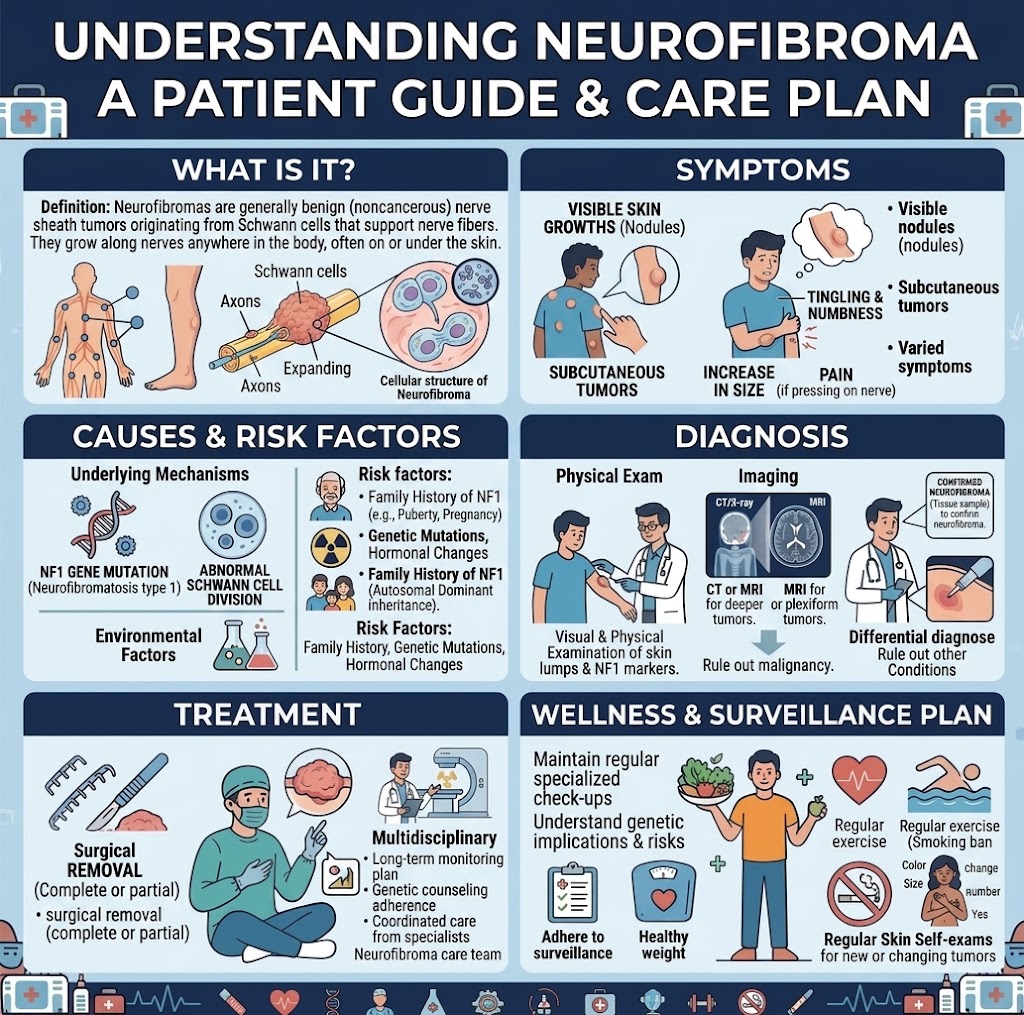
A neurofibroma is a common, usually non-cancerous growth originating from the protective covering of a nerve, known as the nerve sheath. These soft bumps can form on any nerve, anywhere in the body. While most cause few or no symptoms, growths pressing on nerves can lead to pain, numbness, or weakness. Rarely, a neurofibroma may become cancerous. Multiple neurofibromas can occur in individuals with neurofibromatosis type 1 (NF1), sometimes forming larger, more complex "plexiform" neurofibromas that may carry a higher risk.
Understanding the Condition
Neurofibroma: Understanding Soft Nerve Growths
Understanding the Condition
A neurofibroma is a common, usually non-cancerous growth originating from the protective covering of a nerve, known as the nerve sheath. These soft bumps can form on any nerve, anywhere in the body. While most cause few or no symptoms, growths pressing on nerves can lead to pain, numbness, or weakness. Rarely, a neurofibroma may become cancerous. Multiple neurofibromas can occur in individuals with neurofibromatosis type 1 (NF1), sometimes forming larger, more complex "plexiform" neurofibromas that may carry a higher risk.
Common Symptoms
Visible Skin Bumps: A soft, often skin-colored, pink, or tan lump appearing on or under the skin.
Pain or Tenderness: Discomfort if the growth presses on or affects a nerve.
Numbness or Weakness: Tingling, loss of sensation, or reduced muscle strength in the affected area.
Appearance Changes: Noticeable deformity, particularly with large growths on visible body parts like the face.
Multiple Growths (NF1): Individuals with neurofibromatosis type 1 (NF1) often develop numerous neurofibromas, which tend to increase in number and size with age.
List all symptoms (onset, progression), current medications, full medical history, and family history of nerve growths or genetic conditions. Prepare specific questions for your doctor.
Book a doctor visit near me
Your doctor will visually check and gently feel any growths, inquiring about your symptoms, medical history, and family history of nerve growths or NF1.
Observation and Symptom Management
Watchful Waiting: For small, non-problematic neurofibromas, periodic check-ups monitor for any changes in size or symptoms. (Duration: Ongoing, with regular follow-up (e.g., 6-12 months).)
Symptom Management and Rehabilitation: Collaborate with your healthcare team to manage pain, numbness, or weakness, potentially involving physical, occupational, or pain management therapies to improve function.
Psychological Support: Living with a chronic condition or visible growths can affect mental health. Support groups, therapists, or counselors offer emotional support and coping strategies.
Consultation Guide
Plexiform Neurofibroma (NF1-related): These larger, more extensive growths involving multiple nerve bundles can cause significant pain, nerve issues, and have a higher potential to become cancerous.
Consultation Guide
Which Specialist to Meet
Begin with your primary care physician, who can refer you to a specialist. This might be a dermatologist (for skin growths), a neurologist or neurosurgeon (for nerves), an orthopedic surgeon (near bones), or a geneticist if neurofibromatosis type 1 (NF1) is suspected or confirmed.
Preparations Before Your Visit
Diagnostic Procedures
Physical Examination and Medical History
What to Expect
The doctor examines the affected area for size, texture, and location, possibly checking reflexes and sensation. It's a quick, non-invasive process.
Imaging Tests (MRI, CT Scan, Ultrasound)
Detailed internal pictures to locate neurofibromas, determine size, and assess proximity to nerves. MRI is often preferred for soft tissues; CT for bone involvement; Ultrasound for superficial growths.
What to Expect
During an MRI, you lie still on a table inside a noisy, tunnel-like machine for 30-60 minutes. For a CT scan, you lie on a table moving through a donut-shaped machine, taking 5-15 minutes. An ultrasound involves applying gel and moving a handheld device over your skin to create images with sound waves, typically 15-30 minutes and painless.
A tissue sample is removed and examined under a microscope to confirm diagnosis, classify the growth, and check for cancer. It's the most definitive test.
What to Expect
Local anesthetic numbs the area. A small piece of growth is taken via needle (core) or small incision (excisional/incisional). You might feel pressure or a brief sting from the anesthetic. Bandaging and potential stitches follow. Procedure is 15-30 minutes; results take several days to a week.
Confirms Neurofibromatosis type 1 (NF1) if suspected, by identifying specific gene mutations.
What to Expect
A simple blood sample or cheek swab is collected, similar to a routine blood draw. Results are typically available in several weeks.
Treatment Options
Pain Relief: Over-the-counter or prescription non-narcotic medications can manage mild associated pain. (Duration: As needed.)
Oral Medication (Primarily for NF1-related plexiform neurofibromas)
Targeted Oral Therapy: Specific oral medications may help shrink certain complex neurofibromas, particularly in children with NF1, by blocking pathways contributing to growth. (Duration: Long-term, as prescribed, often months to years, with ongoing monitoring.)
Surgical Procedures
Focused Radiation: Rarely, if surgery isn't feasible or for cancerous tumors, high-energy rays target and destroy tumor cells. (Duration: Several short sessions over a few weeks, followed by recovery.)
Prevention & Long-Term Wellbeing
Surgical Removal: Excision of the neurofibroma is recommended for pain, nerve compression, cosmetic concerns, or suspected cancer. Goal: safely remove growth while preserving nerve function. (Duration: Single procedure (30 min-hours); recovery several weeks.)
Radiation Therapy (Rare)
Prevention and Early Detection
Genetic Counseling: For families with NF1 history or those considering children with NF1 risk, counseling offers insights into inheritance, risks, and reproductive options.
Regular Self-Checks and Medical Check-ups: Regularly inspect your skin for new bumps. Promptly report any changes, pain, numbness, or weakness to your doctor for early management.
Long-Term Monitoring and Support
Ongoing Medical Surveillance: For neurofibromas, especially with NF1, crucial regular follow-ups include specialist visits and periodic imaging to monitor existing growths and detect new ones or malignant changes.
Tags & Topics
Notice an error or need an update?
Help us keep medical information accurate. Report incorrect info or suggest an edit.


