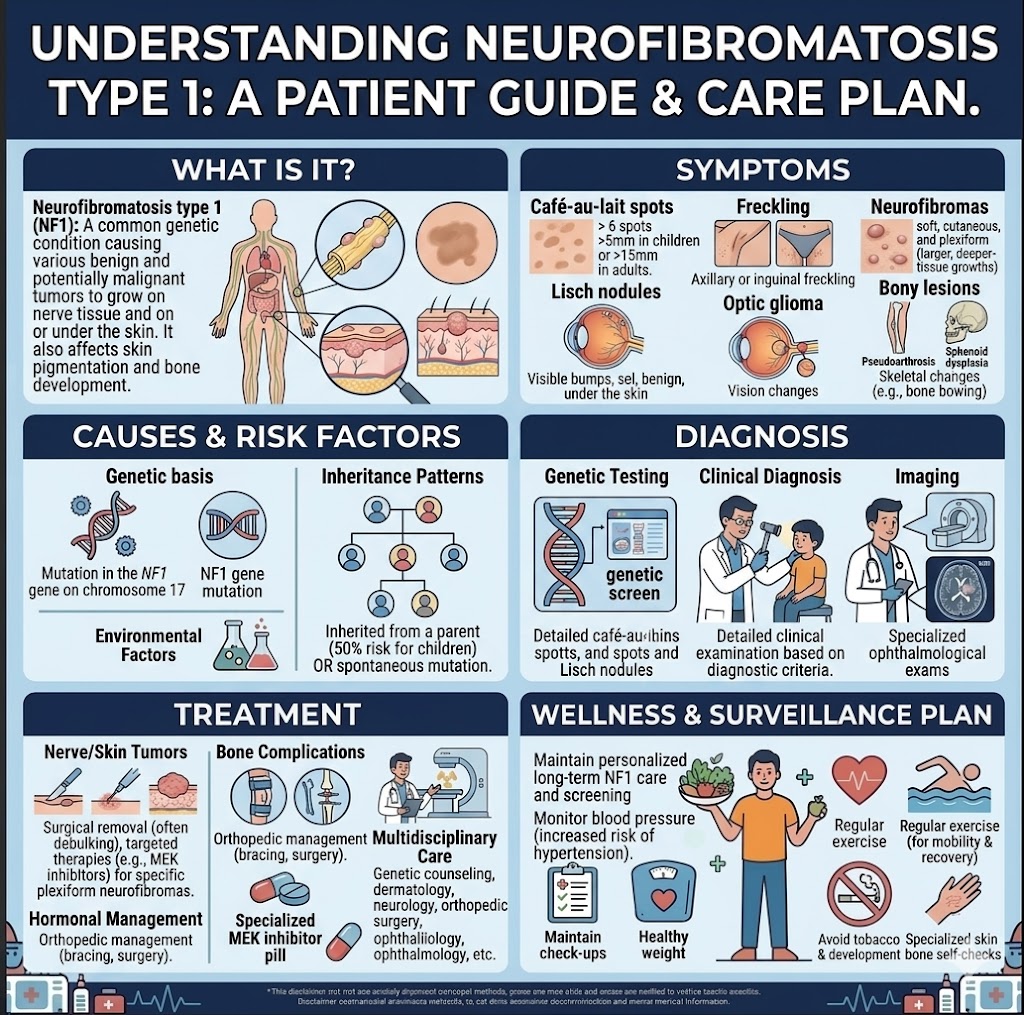
Neurofibromatosis type 1 (NF1) is a genetic condition affecting about 1 in 2,500 people. It causes distinct skin changes, such as light brown spots and freckles, and non-cancerous growths (tumors) on nerve tissue. These tumors can form anywhere in the nervous system, including the brain and spinal cord, and may sometimes become cancerous. NF1 symptoms range from mild to moderate, but can lead to complications like learning difficulties, bone changes, vision issues, and heart or blood vessel problems. Management focuses on supporting healthy development and proactively addressing complications.
Understanding the Condition
Neurofibromatosis Type 1: A Comprehensive Guide
Understanding the Condition
Neurofibromatosis type 1 (NF1) is a genetic condition affecting about 1 in 2,500 people. It causes distinct skin changes, such as light brown spots and freckles, and non-cancerous growths (tumors) on nerve tissue. These tumors can form anywhere in the nervous system, including the brain and spinal cord, and may sometimes become cancerous. NF1 symptoms range from mild to moderate, but can lead to complications like learning difficulties, bone changes, vision issues, and heart or blood vessel problems. Management focuses on supporting healthy development and proactively addressing complications.
Common Symptoms
Cafe au Lait Spots: Flat, light brown spots on the skin. Having more than six spots often suggests NF1. They are usually present from birth or appear during early childhood.
Freckling: Clusters of small freckles in unusual places like the armpits or groin area, typically appearing by ages 3 to 5.
Lisch Nodules: Tiny, harmless bumps on the iris (colored part) of the eye that do not affect vision and are difficult to see without specialized equipment.
Neurofibromas: Soft, pea-sized bumps on or under the skin, or internally. Larger growths involving many nerves (plexiform neurofibromas) can be disfiguring, especially on the face.
Bone Changes: Unusual bone development, leading to conditions like a curved spine (scoliosis) or bowed legs, and lower bone mineral density.
Learning Challenges: Common learning difficulties, including challenges with reading or math, attention-deficit/hyperactivity disorder (ADHD), and speech delays.
Larger Head Size: Head circumference that is often larger than average for their age, due to increased brain volume.
Short Stature: Height that is typically below average for their age.
Consultation Guide
Which Specialist to Meet
A multidisciplinary team often manages NF1, including a geneticist, neurologist, ophthalmologist, dermatologist, and orthopedic surgeon. For children, a pediatrician often coordinates care. Depending on complications, specialists like a cardiologist or endocrinologist may also be involved.
Preparations Before Your Visit
Prepare a detailed list of all observed symptoms, noting when they first appeared. Gather information about any family history of NF1 or similar conditions. Compile a list of questions you have for the doctor. Bring any relevant medical records or previous test results if available.
Book a doctor visit near me
Multidisciplinary Medical Check-ups: Ongoing visits with a team of specialists to monitor for new symptoms, tumor growth, bone changes, vision changes, and cardiovascular health.
Skin Surveillance: Regular self-exams and professional skin checks for new or changing neurofibromas and any suspicious skin lesions.
Annual Eye Examinations: Crucial, particularly in childhood, to monitor for optic pathway gliomas and other eye-related issues.
Blood Pressure Monitoring: Routine blood pressure checks due to an increased risk of high blood pressure and specific adrenal gland tumors.
Skeletal Health Monitoring: Periodic X-rays or bone density scans to monitor for scoliosis, bowing of long bones, or weak bones (osteoporosis).
Cognitive and Developmental Support: Continued academic and behavioral support for children and adolescents with learning disabilities or ADHD to ensure optimal development.
Cancer Screenings: Tailored screening schedules for various cancers, including earlier and more frequent breast cancer screening for women with NF1 starting at age 30.
Psychological Support: Counseling or support groups to address body image concerns, anxiety, and emotional distress related to visible signs of NF1 or living with a chronic condition.
Consultation Guide
Pain Management: Over-the-counter or prescription pain relievers for discomfort caused by neurofibromas or other complications. (Duration: As needed, short or long-term.)
Diagnostic Procedures
A physical assessment by a doctor to identify characteristic skin findings (cafe au lait spots, freckling, neurofibromas), check for eye changes (Lisch nodules), and evaluate overall growth, development, and neurological function.
What to Expect
The doctor will thoroughly examine your skin, eyes, and body, and assess reflexes and coordination. For children, developmental milestones are checked. This examination is painless and straightforward.
A test to confirm the presence of a specific NF1 gene mutation, typically using a blood or saliva sample.
What to Expect
A small blood sample will be drawn from your arm, or a swab taken from inside your cheek. The sample is then sent to a lab for analysis; results may take several weeks.
Magnetic Resonance Imaging (MRI) scans of the brain, spinal cord, or other affected areas to detect internal neurofibromas, optic pathway gliomas (tumors on the nerve connecting the eye to the brain), or bone abnormalities.
What to Expect
You will lie still on a table that slides into a large, tunnel-like machine. It can be noisy, so ear protection is usually provided. The scan duration varies from 30 to 90 minutes.
A detailed eye exam by an ophthalmologist to check for Lisch nodules and assess vision, especially in young children who might develop optic pathway gliomas.
What to Expect
The ophthalmologist will use specialized equipment to examine your eyes. Eye drops may be used to dilate your pupils, temporarily blurring vision. Age-appropriate vision tests are also performed.
X-ray imaging of bones to check for conditions like scoliosis (curved spine) or bowing of the legs.
What to Expect
You will stand or lie in various positions as a technologist takes quick, painless images of your bones. You will need to remain still for a few seconds during each image capture.
Developmental and Learning Assessments
Specialized tests conducted by psychologists or educational specialists to identify specific learning disabilities, speech delays, or attention-deficit/hyperactivity disorder (ADHD).
What to Expect
These involve a series of age-appropriate tests, puzzles, and observations designed to evaluate cognitive abilities, language skills, motor skills, and behavior, usually over several hours.
Treatment Options
Medications
Tumor Growth Inhibitors: Specific medications may be prescribed to reduce the size or slow the growth of certain complex neurofibromas, particularly in children. (Duration: Often long-term, guided by response and tolerability.)
Blood Pressure Control: Medications to manage high blood pressure, which is a common concern in individuals with NF1. (Duration: Ongoing, potentially lifelong.)
Seizure Medications: Anti-seizure medications are used if epilepsy develops. (Duration: Ongoing, often long-term.)
Surgical Procedures
Tumor Removal: Surgery to remove large, painful, or nerve-compressing neurofibromas (including plexiform neurofibromas) and benign adrenal gland tumors (pheochromocytomas) that raise blood pressure. (Duration: One-time procedure per tumor, but multiple surgeries may be needed over time for new growths or recurrences.)
Prevention & Long-Term Wellbeing
Scoliosis Correction: Surgical intervention to correct severe curvature of the spine. (Duration: One-time procedure, followed by a recovery and rehabilitation period.)
Physical and Occupational Therapy: To address bone changes, improve motor skills, strength, and mobility, and help adapt to any physical limitations. (Duration: Varies, can be intermittent or ongoing based on individual need.)
Speech Therapy: For children experiencing speech delays. (Duration: Varies, typically several months to years as needed.)
Educational and Behavioral Support: Specialized academic support and behavioral strategies for learning disabilities or ADHD. (Duration: Ongoing as needed throughout schooling and potentially into adulthood.)
Healthy Lifestyle: Encouraging balanced nutrition, regular physical activity, and adequate sleep to promote overall health and well-being. (Duration: Lifelong.)
Prevention and Early Intervention
Genetic Counseling: For individuals with NF1 or a family history, genetic counseling can help understand inheritance patterns and reproductive options when planning a family.
Early Detection and Monitoring: Regular medical check-ups and early screening from childhood are crucial for timely detection and management of potential complications before they become severe.
Long-Term Monitoring and Support
Tags & Topics
Notice an error or need an update?
Help us keep medical information accurate. Report incorrect info or suggest an edit.


