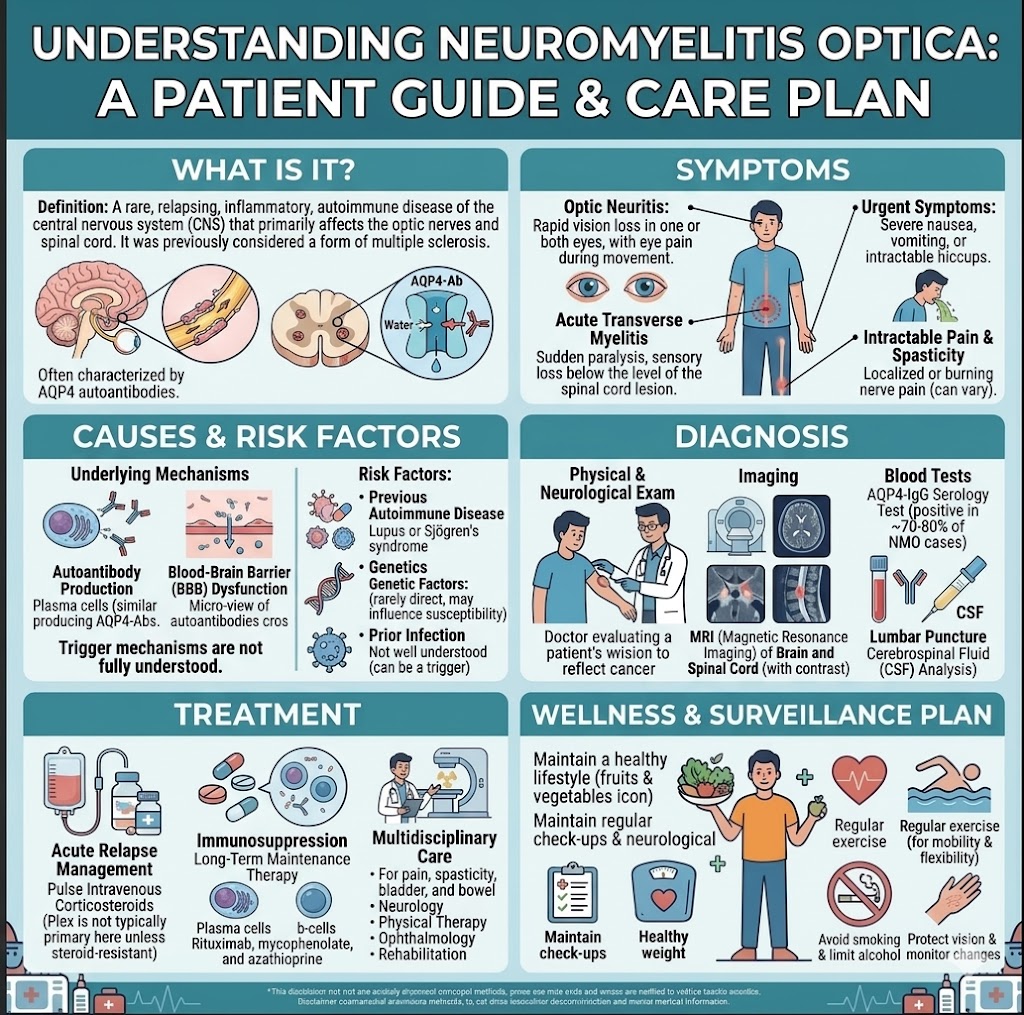
Neuromyelitis Optica (NMO), also known as Devic disease, is a rare and serious autoimmune condition. This means your body's immune system mistakenly attacks its own healthy cells, primarily in the optic nerves (connecting your eyes to your brain) and the spinal cord, causing inflammation and damage. While sometimes confused with multiple sclerosis (MS), NMO is a distinct disorder that can lead to severe symptoms like blindness, limb weakness, and pain. Episodes of worsening symptoms, called relapses, can cause lasting disability, making early diagnosis and ongoing treatment crucial for managing the condition.
Understanding the Condition
Neuromyelitis Optica: A Guide for Understanding and Management
Understanding the Condition
Neuromyelitis Optica (NMO), also known as Devic disease, is a rare and serious autoimmune condition. This means your body's immune system mistakenly attacks its own healthy cells, primarily in the optic nerves (connecting your eyes to your brain) and the spinal cord, causing inflammation and damage. While sometimes confused with multiple sclerosis (MS), NMO is a distinct disorder that can lead to severe symptoms like blindness, limb weakness, and pain. Episodes of worsening symptoms, called relapses, can cause lasting disability, making early diagnosis and ongoing treatment crucial for managing the condition.
Common Symptoms
Vision Problems (Optic Neuritis): Blurred vision or loss in one or both eyes, difficulty seeing colors.
Spinal Cord Symptoms (Transverse Myelitis): Stiffness, weakness, or numbness in legs and sometimes arms; loss of feeling; bladder or bowel control issues; tingling or shooting pain in the neck, back, or abdomen.
Other Symptoms: Severe, persistent vomiting and hiccups; extreme tiredness (fatigue).
Consultation Guide
Which Specialist to Meet
Consult a neurologist, a doctor specializing in nervous system disorders. Ideally, seek a neuro-immunologist or a neurologist with expertise in NMO and similar autoimmune conditions.
Preparations Before Your Visit
List all symptoms (when they started, progression), full medical history, medications, and questions. Bringing a family member can be helpful.
Book a doctor visit near me
Your neurologist will ask about your history and symptoms. They'll then perform non-invasive tests to check balance, coordination, reflexes, muscle strength, sensation, vision, and mental status. This may involve walking, touching your nose, or following a light. The exam is typically painless and varies in length.
Lumbar Puncture (Spinal Tap)
Symptomatic Management and Rehabilitation
Regular Check-ups: Visit your neurologist and specialists to monitor disease activity, treatment effectiveness, and address new symptoms.
Symptom Tracking: Keep a journal of your symptoms (severity, duration, triggers) for your healthcare team.
Stress Management: Practice relaxation techniques like meditation or deep breathing, as stress can worsen symptoms.
Avoid Smoking: Quitting smoking is strongly recommended due to its impact on autoimmune conditions.
Support and Education
Seek Support Groups: Connect with others for emotional support and practical coping strategies.
Educate Yourself and Others: Understand NMO to advocate for your care and inform family/friends.
Diagnostic Procedures
Neurological Examination
A comprehensive check of your brain, spinal cord, nerves, and muscles to assess nervous system function and identify concerns.
What to Expect
Collection of cerebrospinal fluid (CSF) from your lower back for analysis. CSF surrounds your brain and spinal cord. Testing helps identify inflammation markers or specific antibodies related to NMO, and rules out other conditions.
What to Expect
You'll typically lie curled on your side or sit leaning forward. Your lower back is cleaned and numbed with a local anesthetic. A thin needle is gently inserted between spinal bones to collect CSF. You might feel pressure. Afterward, the needle is removed, a bandage is applied, and you may lie flat for a period to prevent headache.
Treatment Options
Immunosuppressive Medications: Oral or injectable medications that calm the overactive immune system to reduce attack frequency and severity. (Duration: Long-term, often many years or indefinitely.)
Targeted Antibody Therapies: Newer treatments specifically targeting parts of the immune system involved in NMO, given via infusion or injection. (Duration: Long-term, at regular intervals (e.g., monthly).)
Pain Management: Medications and therapies for nerve pain, muscle spasms, and discomfort. (Duration: As needed, long-term.)
Physical Therapy: Exercises to improve strength, flexibility, balance, and walking, maintaining mobility and function. (Duration: Ongoing, tailored to individual needs.)
Occupational Therapy: Helps adapt to physical challenges and maintain daily independence using specialized techniques and assistive devices. (Duration: Ongoing, as needed.)
Bladder and Bowel Management: Strategies, medications, or specialized care for control issues. (Duration: Ongoing, as needed.)
Adhere to Treatment: Strictly follow prescribed medications and attend all appointments to monitor your condition and prevent relapses.
Prevention & Long-Term Wellbeing
Relapse Prevention (Long-Term Therapy)
Prevention and Monitoring
Lifestyle Adjustments
Healthy Diet: Eat balanced meals. Discuss vitamin D intake with your doctor.
Regular, Gentle Exercise: As tolerated (e.g., walking, swimming) to maintain strength and flexibility. Consult your doctor or physical therapist.
Tags & Topics
Notice an error or need an update?
Help us keep medical information accurate. Report incorrect info or suggest an edit.


