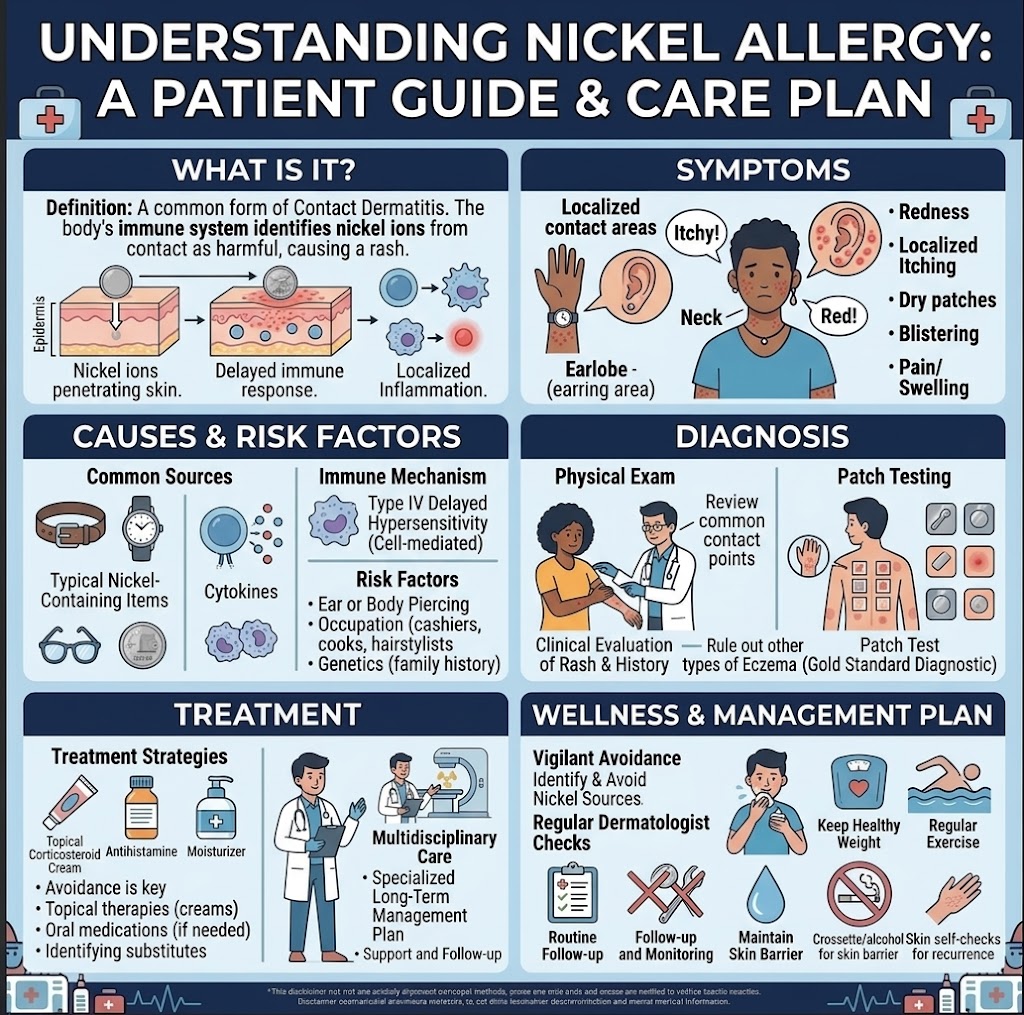
A nickel allergy is a common immune system reaction to objects containing nickel. When your skin touches this metal, your body mistakenly identifies it as a harmful foreign invader, triggering an allergic reaction. This typically results in an itchy, red rash at the site of contact. While jewelry like earrings is the most frequent culprit, nickel is also found in everyday items like coins, zippers, keys, glasses, cellphones, and laptops. While there is no permanent cure, symptoms can be easily managed with medical treatments, and future flare-ups can be prevented by avoiding contact with nickel-containing materials.
Understanding the Condition
Understanding Nickel Allergy: Symptoms, Diagnosis, and Management
Understanding the Condition
A nickel allergy is a common immune system reaction to objects containing nickel. When your skin touches this metal, your body mistakenly identifies it as a harmful foreign invader, triggering an allergic reaction. This typically results in an itchy, red rash at the site of contact. While jewelry like earrings is the most frequent culprit, nickel is also found in everyday items like coins, zippers, keys, glasses, cellphones, and laptops. While there is no permanent cure, symptoms can be easily managed with medical treatments, and future flare-ups can be prevented by avoiding contact with nickel-containing materials.
Common Symptoms
Itchy Rash (Contact Dermatitis): An itchy, red, or inflamed rash that typically begins within 12 to 48 hours after touching nickel. The rash is usually confined to the contact area but can sometimes spread to surrounding skin.
Dry Patches and Swelling: The affected skin may become dry, rough, swollen, and warm to the touch, sometimes resembling a burn.
Blisters and Drainage: In severe allergic reactions, small or large blisters may form, which can break open, ooze fluid, and crust over.
Signs of Secondary Infection: If the skin is broken from scratching, bacteria can enter. Watch for increased redness, warmth, throbbing pain, pus, or liquid draining from the area.
Systemic and Device-Related Symptoms: Less commonly, inhaling or swallowing nickel can cause general symptoms like headaches, nausea, or stomach upset. Internal medical or dental devices containing nickel can cause localized tissue irritation, chronic pain, or device instability.
Consultation Guide
Which Specialist to Meet
You should consult a board-certified dermatologist or an allergist/immunologist. These specialists are experts in identifying skin allergies and designing targeted management plans.
Preparations Before Your Visit
Soothing Over-the-Counter Lotions: Applying mild, fragrance-free moisturizing lotions or calamine lotion helps restore the skin's natural barrier and relieve dryness. (Duration: Apply liberally multiple times a day as long as symptoms persist.)
Consultation Guide
Choose Hypoallergenic Jewelry: Opt for jewelry made from metals less likely to cause an allergic reaction, such as surgical-grade stainless steel, titanium, 18-karat yellow gold, sterling silver, or platinum.
Create a Protective Barrier: If you must handle objects containing nickel, wear protective gloves. For clothing fasteners like metal snaps or belt buckles, cover them with iron-on patches or coat them with clear nail polish to prevent direct contact with your skin.
Inspect Electronics and Household Items: Use protective, non-metallic cases for your laptop, cell phone, and tablets to shield your hands and face from nickel-containing casings.
Substitute Metal Fasteners: When shopping for clothing, look for garments that feature plastic, silicone, coated metal, or wooden buttons, zippers, and snaps.
Diagnostic Procedures
Before your appointment, make a list of all metal objects that frequently touch your skin, including jewelry, belt buckles, and electronic devices. Track when your rash first appeared and what treatments you have tried. Stop taking oral antihistamines several days before your visit if allergy testing is planned, as these medications can mask test results. Write down any questions you have for the specialist.
Book a doctor visit near me
This is the gold standard diagnostic procedure used to confirm contact allergies. It helps determine if nickel or another specific substance is triggering your skin reaction.
What to Expect
During a patch test, a healthcare provider applies small patches containing tiny amounts of nickel and other common allergens to the skin of your upper back. These patches must remain completely dry and in place for 48 hours. You will return to the clinic to have the patches removed and the skin evaluated. A final evaluation is typically scheduled 72 to 96 hours after application to check for delayed allergic reactions.
Allergy Blood Testing (In Vitro IgE Test)
An alternative diagnostic tool used when skin patch testing cannot be safely performed, such as when a patient has a severe, widespread skin condition like active eczema.
What to Expect
A nurse or phlebotomist will draw a small sample of blood from a vein in your arm. This sample is sent to a laboratory to measure specific antibodies. No special preparation is needed, and you do not need to stop taking antihistamines prior to this test.
Treatment Options
Prescription Medications
Topical Corticosteroid Creams: These prescription-strength creams or ointments are applied directly to the rash to quickly soothe itching, reduce redness, and calm local inflammation. (Duration: Typically used once or twice daily for 5 to 14 days, depending on severity.)
Oral Corticosteroids: For severe, widespread, or highly inflamed rashes, a doctor may prescribe corticosteroid pills to systematically reduce inflammation throughout the body. (Duration: Usually prescribed as a short, tapering course lasting 5 to 10 days.)
Oral Antihistamines: Non-sedating or nighttime antihistamine pills can help relieve intense itching so you can rest comfortably. (Duration: Taken daily or nightly during active flare-ups, typically for 3 to 7 days.)
Topical Nonsteroidal Creams: Prescription immune-modulating creams can be used as an alternative to steroids, especially on sensitive areas like the face or eyelids. (Duration: Used twice daily for 1 to 2 weeks or until the rash resolves.)
Home Remedies and Supportive Care
Cool Compresses: Applying clean, damp cloths soaked in cool water or diluted astringent solutions helps dry up blisters and soothe burning, itchy skin. (Duration: Apply for 15 to 30 minutes, several times a day as needed.)
Phototherapy (Light Therapy): This treatment exposes the skin to controlled amounts of ultraviolet (UV) light to reduce immune system overactivity and calm chronic, treatment-resistant skin inflammation. (Duration: Requires multiple brief weekly sessions over a period of several weeks to months.)
Prevention & Long-Term Wellbeing
Prevention and Protection Strategies
Tags & Topics
Notice an error or need an update?
Help us keep medical information accurate. Report incorrect info or suggest an edit.


