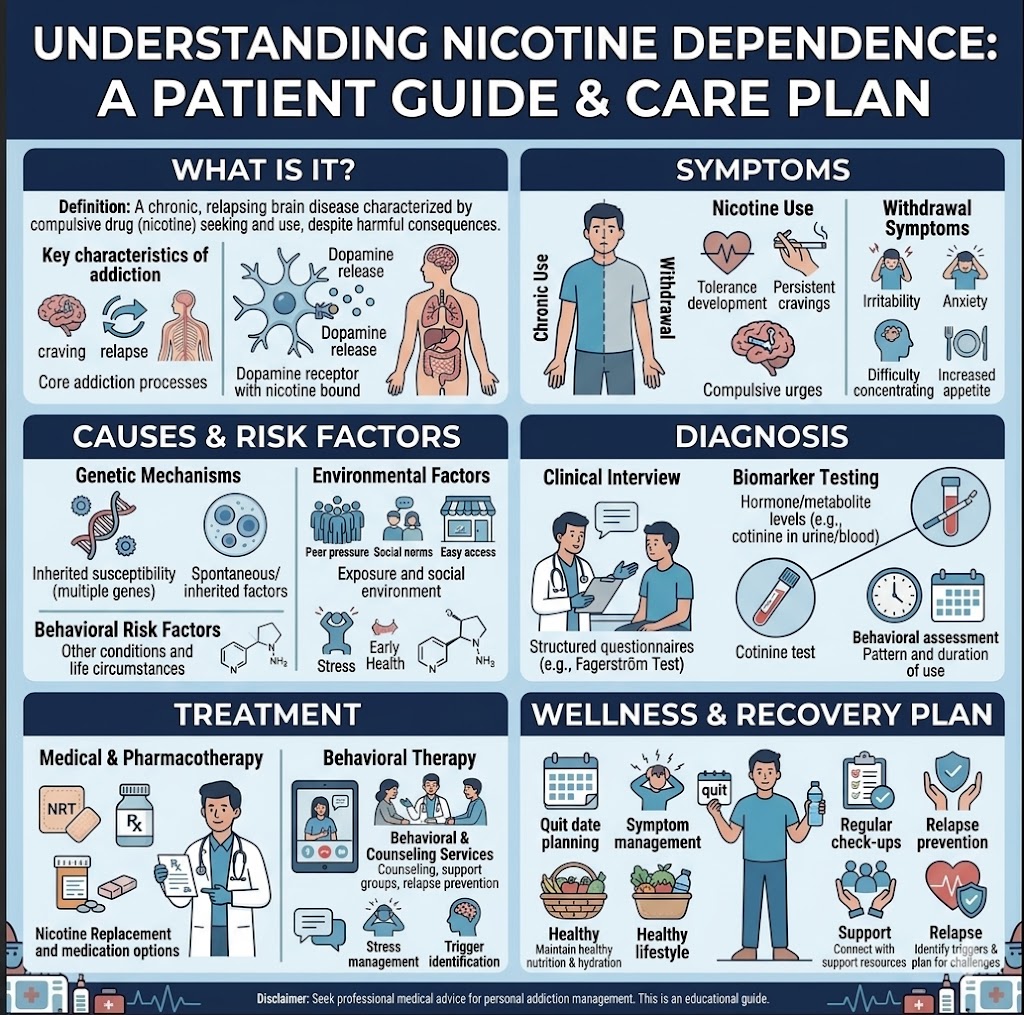
Nicotine dependence is a powerful addiction where your body intensely craves nicotine, the chemical found in tobacco products. This craving makes it very difficult to stop using tobacco, even when you want to. Nicotine delivers a brief feeling of pleasure, but these effects quickly fade, leading to a strong urge for more. The more you use tobacco, the more your body adapts, requiring greater amounts of nicotine to feel normal. Trying to stop results in uncomfortable physical and emotional changes, known as withdrawal symptoms. Whether you've used tobacco for a short time or many years, quitting can significantly improve your health, and effective treatments are available.
Understanding the Condition
Nicotine Dependence: Understanding and Overcoming the Addiction
Understanding the Condition
Nicotine dependence is a powerful addiction where your body intensely craves nicotine, the chemical found in tobacco products. This craving makes it very difficult to stop using tobacco, even when you want to. Nicotine delivers a brief feeling of pleasure, but these effects quickly fade, leading to a strong urge for more. The more you use tobacco, the more your body adapts, requiring greater amounts of nicotine to feel normal. Trying to stop results in uncomfortable physical and emotional changes, known as withdrawal symptoms. Whether you've used tobacco for a short time or many years, quitting can significantly improve your health, and effective treatments are available.
Common Symptoms
Inability to Stop: Despite serious efforts to quit, you haven't been able to stop using tobacco for good.
Early Morning Use: You feel the need to use tobacco, such as smoking a cigarette, within 30 minutes of waking up. The sooner you use tobacco after waking and the more you use throughout the day, the stronger your dependence.
Withdrawal Symptoms: When you try to stop using tobacco, you experience unpleasant physical or mood-related symptoms. These can include strong cravings for tobacco, anxiety, irritability, restlessness, difficulty focusing, trouble sleeping, feelings of sadness or depression, frustration, anger, increased hunger, and constipation.
Continued Use Despite Health Issues: You continue to use tobacco even after developing health problems that are clearly linked to it.
Before your visit, be prepared to discuss your history of tobacco use, including how long you've used it, the types of products you use (cigarettes, cigars, chewing tobacco, hookah, etc.), and how much you use daily. Think about any previous attempts to quit, what worked or didn't work, and any withdrawal symptoms you experienced. Also, be ready to discuss any related health conditions or medications you are currently taking.
Book a doctor visit near me
A diagnosis of nicotine dependence is primarily made through a thorough discussion with your doctor about your tobacco use patterns and experiences. There are no specific lab tests or imaging scans typically used for diagnosis. Instead, the focus is on understanding your history and symptoms.
During the assessment, your doctor will ask detailed questions about your tobacco use, such as when you started, how often you use it, and how quickly you use it after waking. You will be asked about your efforts to quit, any withdrawal symptoms you've experienced (like cravings, irritability, or anxiety), and how tobacco use impacts your daily life. The doctor may use a standardized questionnaire to help evaluate the severity of your dependence. This conversation helps your doctor understand the extent of your addiction and create a personalized plan to help you quit.
Nicotine Replacement Therapy (NRT): These products deliver small, controlled doses of nicotine to reduce cravings and withdrawal symptoms without the harmful chemicals found in tobacco. Available forms include patches, gum, lozenges, inhalers, and nasal sprays. (Duration: Typically used for several weeks to a few months, with the dose gradually reduced over time.)
Non-Nicotine Medications: Certain prescription medications can help reduce cravings and withdrawal symptoms by affecting brain chemicals involved in nicotine addiction. These do not contain nicotine. (Duration: Usually taken for several weeks to several months, as prescribed by your doctor.)
Therapies and Counseling
Monitor Physical Health: Be aware that some symptoms, like an increased cough after quitting, can be a sign of healing. However, if a cough or other new symptoms persist for more than a month, consult your healthcare provider to rule out other medical issues.
Develop Coping Mechanisms: Establish a robust set of healthy coping strategies for stress, boredom, or other emotions that previously triggered tobacco use. This could include hobbies, exercise, or mindfulness practices.
Regular Check-ups: Maintain regular doctor visits to monitor your overall health and discuss any concerns related to your past tobacco use or quitting journey.
Consultation Guide
Avoiding Smoke-Free Environments: You may skip social activities or avoid places where tobacco use is prohibited because you cannot use tobacco in those situations.
Consultation Guide
Which Specialist to Meet
Diagnostic Procedures
Clinical Assessment for Nicotine Dependence
What to Expect
Treatment Options
You should consult with a general practitioner or family doctor. They can provide initial guidance and refer you to a tobacco treatment specialist or counselor who has expertise in helping people quit tobacco.
Preparations Before Your Visit
Medications
Behavioral Counseling: Working with a tobacco treatment specialist or counselor provides strategies to cope with cravings, identify triggers, and develop healthier habits. This can be done individually, in group sessions, or through telephone quitlines. (Duration: Can range from a few sessions over several weeks to ongoing support for many months.)
Cognitive Behavioral Therapy (CBT): A type of counseling that helps you recognize and change thought patterns and behaviors that lead to tobacco use. (Duration: Typically involves weekly sessions over several weeks to a few months.)
Prevention & Long-Term Wellbeing
Home Remedies and Lifestyle Strategies
Identify and Avoid Triggers: Recognize situations, emotions, or activities that make you want to use tobacco and develop strategies to avoid them or cope differently. Examples include drinking coffee, taking work breaks, or spending time with certain friends. (Duration: As advised)
Manage Cravings: When cravings strike, try distracting yourself, exercising, deep breathing, drinking water, or reaching out to a support person. Remember that cravings are usually short-lived. (Duration: As advised)
Build a Support System: Lean on family, friends, or support groups who can encourage you and help you stay accountable during your quitting journey. (Duration: As advised)
Healthy Habits: Engage in regular physical activity, eat a balanced diet, and get enough sleep to support your overall well-being and reduce stress. (Duration: As advised)
Prevention
Avoid Starting Tobacco Use: The most effective way to prevent nicotine dependence is to never start using any form of tobacco, including cigarettes, cigars, chewing tobacco, snus, or hookahs.
Lead by Example for Children: Children whose parents do not use tobacco or successfully quit are significantly less likely to start using tobacco themselves.
Educate on Risks of All Tobacco Forms: Understand that all tobacco products, including smokeless tobacco, cigars, and hookahs, contain nicotine and harmful chemicals, and are not safer alternatives to cigarettes.
Protect Against Secondhand and Thirdhand Smoke: Ensure all indoor areas are completely smoke-free to protect yourself and others from the harmful effects of tobacco smoke that lingers in the air (secondhand) and on surfaces (thirdhand).
Long-Term Wellbeing and Relapse Prevention
Ongoing Support: Continue engaging with counseling or support groups as needed, especially during challenging times or periods of stress, to maintain your commitment to being tobacco-free.
Tags & Topics
Notice an error or need an update?
Help us keep medical information accurate. Report incorrect info or suggest an edit.


