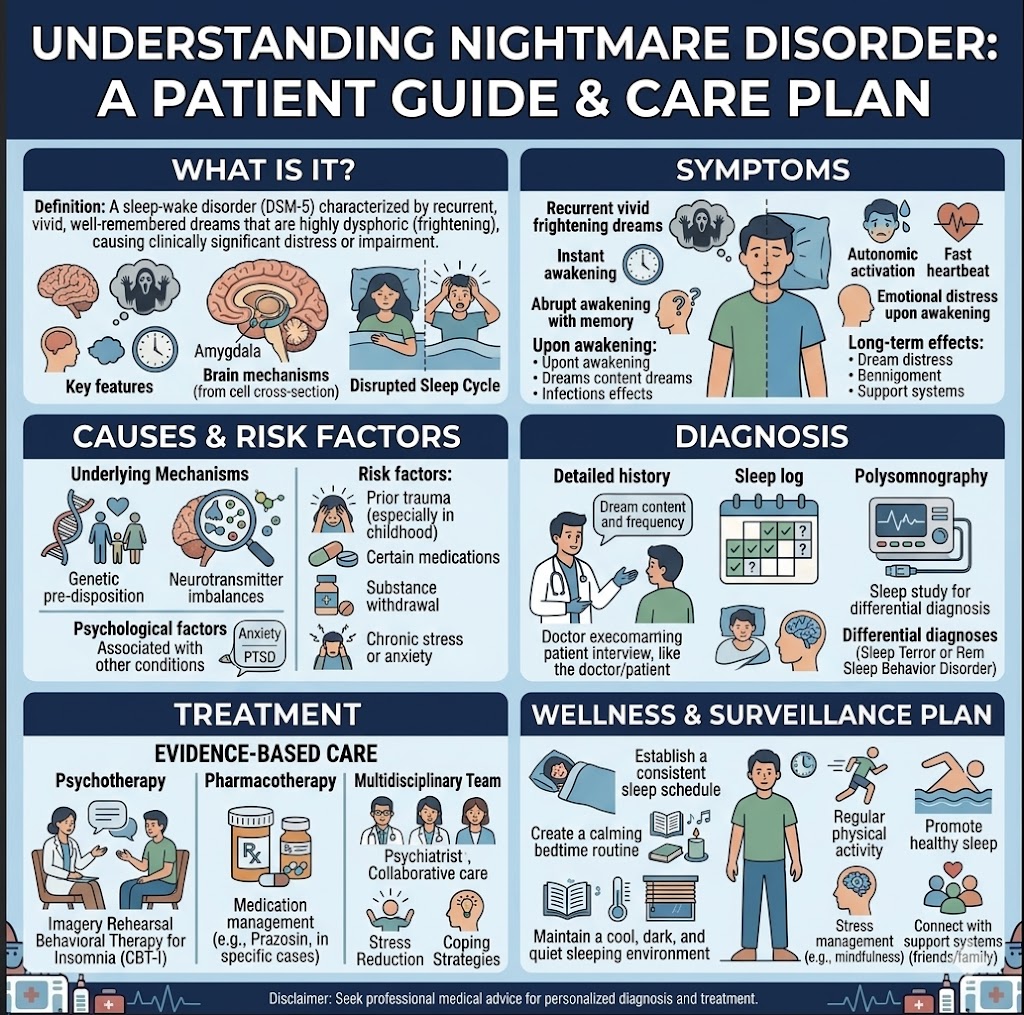
Nightmare disorder involves frequent, distressing dreams that awaken you, causing fear, anxiety, or other negative emotions. While occasional nightmares are common at any age, especially in children, nightmare disorder disrupts sleep, affects daytime functioning, and can lead to a fear of sleeping. This condition, medically known as a parasomnia, typically occurs during the Rapid Eye Movement (REM) stage of sleep.
Understanding the Condition
Nightmare Disorder: Understanding and Managing Vivid Bad Dreams
Understanding the Condition
Nightmare disorder involves frequent, distressing dreams that awaken you, causing fear, anxiety, or other negative emotions. While occasional nightmares are common at any age, especially in children, nightmare disorder disrupts sleep, affects daytime functioning, and can lead to a fear of sleeping. This condition, medically known as a parasomnia, typically occurs during the Rapid Eye Movement (REM) stage of sleep.
Common Symptoms
Dream Characteristics: Dreams are vivid, realistic, and deeply upsetting, often intensifying in disturbance as they unfold. Themes commonly involve threats to safety or survival, but other disturbing subjects can also occur.
Before your appointment, keep a sleep diary for a few weeks, noting when nightmares occur, their content, and how they affect you. List all your symptoms, current medications (including over-the-counter drugs and supplements), and any significant life changes or stressors. Prepare a list of questions for your doctor to ensure all your concerns are addressed.
Book a doctor visit near me
Consultation Guide
Awakening and Emotional Impact: Nightmares cause you to awaken, leaving you feeling scared, anxious, angry, sad, or disgusted. You may experience physical sensations like sweating or a pounding heart while still in bed.
Recall and Difficulty Returning to Sleep: Upon awakening, you can usually think clearly and recall many details of the nightmare. The distress from the dream often makes it difficult to fall back asleep easily.
Frequency and Severity: Nightmares can occur rarely or frequently, sometimes several times a night, typically in the latter half of your sleep. They are considered a disorder when they happen often, cause significant distress, disrupt your sleep quality, impact your daily life, or create a fear of going to sleep.
Consultation Guide
Which Specialist to Meet
Initially, consult your primary care physician. They may refer you to a sleep specialist, a neurologist, or a mental health professional like a psychologist or psychiatrist, especially if underlying stress, anxiety, or trauma are contributing factors.
Preparations Before Your Visit
Practice Stress Management Daily: Incorporate relaxation techniques such as deep breathing, meditation, or light stretching into your daily routine to effectively manage stress levels, a common cause of nightmares.
Regular Physical Activity: Engage in moderate exercise most days of the week, but avoid intense workouts close to bedtime, as this can interfere with sleep.
Diagnostic Procedures
Polysomnography (Sleep Study)
A polysomnography, or sleep study, is a comprehensive test used to diagnose various sleep disorders. It records several bodily functions while you sleep to identify any abnormalities. This test can help determine if nightmares are linked to another sleep disorder or condition.
What to Expect
Typically, you'll spend a night at a sleep disorders unit in a hospital or a specialized sleep center. Small sensors are gently attached to your scalp, face, chest, and limbs. These sensors record your brain waves (EEG), blood oxygen levels, heart rate, breathing patterns (airflow and effort), and eye and leg movements throughout the night. A technician monitors you from another room. The goal is to capture your natural sleep cycles and identify any disruptions. In some cases, a simpler home sleep apnea test might be used, which focuses on breathing, oxygen levels, and heart rate to diagnose specific conditions like obstructive sleep apnea.
Treatment Options
Medications
Medications for Underlying Conditions: If nightmares are linked to conditions like anxiety, depression, or post-traumatic stress disorder (PTSD), treating these primary conditions with appropriate medications can often reduce nightmare frequency. (Duration: Ongoing, as prescribed by your doctor.)
Short-Term Nightmare-Reducing Medications: In some cases, specific medications may be prescribed for a limited period to help reduce the frequency or intensity of nightmares, particularly when other treatments are insufficient or during periods of severe distress. (Duration: Short-term, as directed by your doctor.)
Monitor Diet and Substance Use: Avoid heavy meals, caffeine, and alcohol, particularly in the evening, as they can disrupt sleep and potentially contribute to nightmares. Be mindful of any medications that might be triggering nightmares.
Seek Ongoing Support: If nightmares persist or negatively impact your life, continue working with your doctor or a mental health professional to adjust treatment strategies and address any underlying issues.
Prevention & Long-Term Wellbeing
Therapies and Lifestyle Adjustments
Imagery Rehearsal Therapy (IRT): This therapy involves mentally rewriting the nightmare with a positive or non-threatening storyline during waking hours, and then rehearsing this new version. It aims to reduce the frequency and intensity of distressing nightmares. (Duration: Typically several weeks, with ongoing practice.)
Cognitive Behavioral Therapy (CBT): CBT helps individuals identify and change negative thought patterns or behaviors related to sleep and nightmares. It can address underlying anxiety or stress contributing to nightmares. (Duration: Several weeks to months, depending on individual needs.)
Stress Management Techniques: Learning and practicing relaxation methods like deep breathing exercises, mindfulness meditation, or yoga can help reduce overall stress and anxiety levels, which are common nightmare triggers. (Duration: Ongoing practice, often daily.)
Good Sleep Hygiene: Establishing a consistent sleep schedule, creating a relaxing bedtime routine, ensuring a comfortable and dark sleep environment, and avoiding caffeine or alcohol before bed can significantly improve sleep quality. (Duration: Ongoing daily practice.)
Prevention and Long-Term Management
Maintain a Consistent Sleep Schedule: Go to bed and wake up at the same time each day, even on weekends, to regulate your body's natural sleep-wake cycle.
Create a Relaxing Bedtime Routine: Engage in calming activities like reading, taking a warm bath, or listening to soothing music for 30-60 minutes before bed to signal to your body that it's time to wind down.
Limit Exposure to Disturbing Content: Avoid scary books, movies, or upsetting news, especially in the hours leading up to bedtime, as these can trigger nightmares in some individuals.
Tags & Topics
Notice an error or need an update?
Help us keep medical information accurate. Report incorrect info or suggest an edit.


