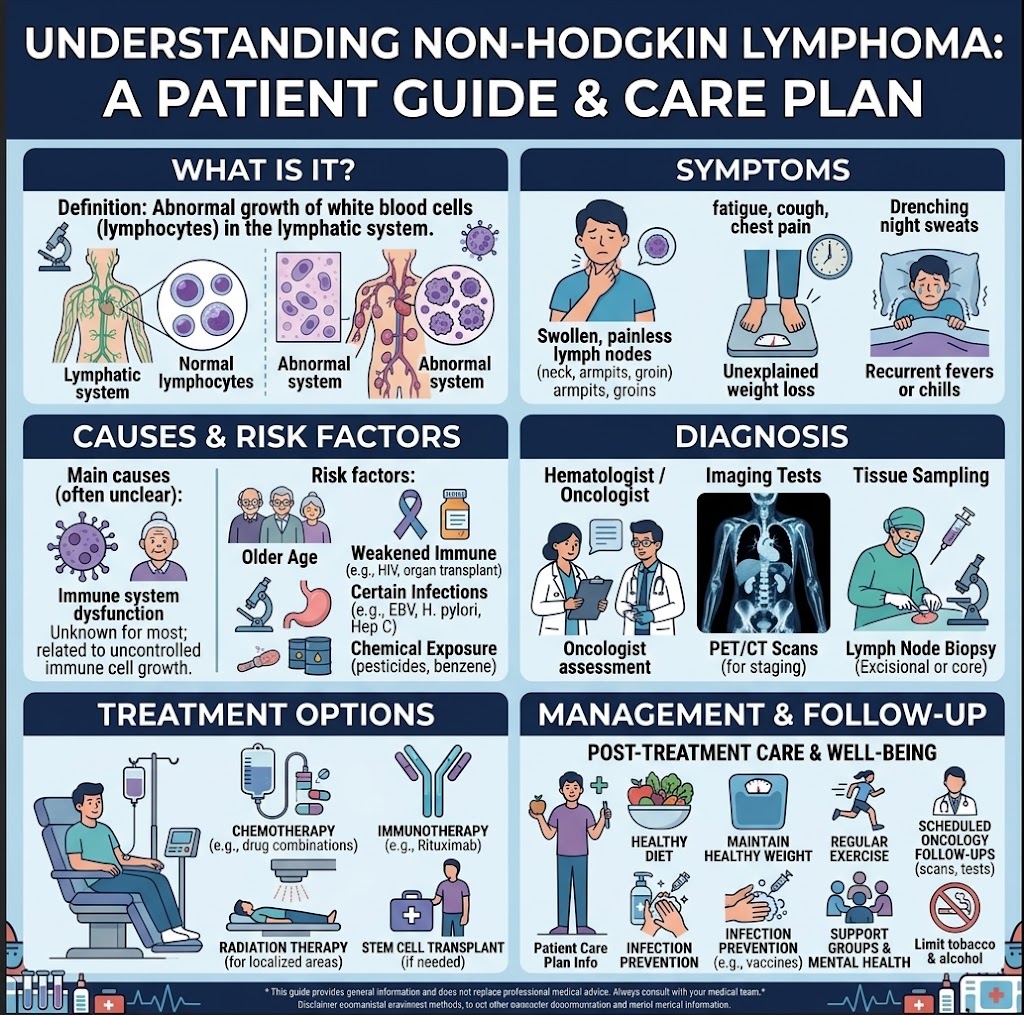
Non-Hodgkin lymphoma is a cancer that begins in white blood cells called lymphocytes, which are a vital part of the body's immune system. These cells normally fight infections. This cancer affects the lymphatic system, a network of vessels, glands (lymph nodes), and organs like the spleen, thymus, and bone marrow. In Non-Hodgkin lymphoma, lymphocytes grow abnormally and uncontrollably, often accumulating in lymph nodes or other parts of the lymphatic system. The cancer typically starts in B cells, which produce antibodies, or less commonly in T cells, which directly destroy foreign invaders. The exact cause is not fully understood, but it involves changes in the DNA of these immune cells, leading to their uncontrolled growth and extended survival.
Understanding the Condition
Non-Hodgkin Lymphoma: Understanding a Type of Blood Cancer
Understanding the Condition
Common Symptoms
Swollen Lymph Nodes: Noticeable lumps under the skin, most commonly in the neck, armpits, or groin, which are usually painless.
Belly Pain or Swelling: Discomfort or visible enlargement in the abdominal area.
Chest Pain, Coughing, or Trouble Breathing: Discomfort in the chest, persistent cough, or difficulty taking a full breath.
Drenching Night Sweats: Excessive sweating during sleep that soaks clothing or bedding.
You should consult a hematologist-oncologist, a doctor specializing in blood disorders and cancers, if you experience any concerning symptoms.
Preparations Before Your Visit
Before your visit, list all your symptoms, including when they started and how often they occur. Bring a complete medical history, including any past illnesses, current medications, and known family history of lymphoma. Prepare a list of questions for your doctor to ensure all your concerns are addressed.
Book a doctor visit near me
Watch and Wait: This approach is used for slow-growing lymphomas that aren't causing symptoms. Your doctor will regularly monitor your condition, and treatment will begin only if the cancer progresses or symptoms appear. (Duration: Ongoing, with regular check-ups)
Regular Follow-Up: Regular appointments with your healthcare team are crucial to monitor for any recurrence, detect new symptoms early, and manage any long-term effects of treatment. This includes physical exams and diagnostic tests as needed.
Consultation Guide
Non-Hodgkin lymphoma is a cancer that begins in white blood cells called lymphocytes, which are a vital part of the body's immune system. These cells normally fight infections. This cancer affects the lymphatic system, a network of vessels, glands (lymph nodes), and organs like the spleen, thymus, and bone marrow. In Non-Hodgkin lymphoma, lymphocytes grow abnormally and uncontrollably, often accumulating in lymph nodes or other parts of the lymphatic system. The cancer typically starts in B cells, which produce antibodies, or less commonly in T cells, which directly destroy foreign invaders. The exact cause is not fully understood, but it involves changes in the DNA of these immune cells, leading to their uncontrolled growth and extended survival.
Itchy Skin: Persistent itching of the skin without a clear rash or cause.
Consultation Guide
Which Specialist to Meet
A PET scan is an imaging test that uses a radioactive sugar-like drug (tracer) to highlight areas of high metabolic activity in your body. Cancer cells typically show up as bright spots because they use more sugar than healthy cells, helping to find cancer and see if treatment is working.
Managing Risk Factors: While there is no known way to completely prevent Non-Hodgkin lymphoma, managing conditions like HIV or autoimmune disorders may help reduce associated risks. Maintaining a generally healthy lifestyle supports overall immune function.
Diagnostic Procedures
Bone Marrow Biopsy and Aspiration
These procedures involve collecting samples of liquid bone marrow (aspiration) and a small piece of solid bone marrow tissue (biopsy) from inside your bones, typically the hip bone. The samples are then examined under a microscope to detect cancer cells and assess bone marrow health.
What to Expect
You'll lie on your stomach or side, and the area (usually your hip bone) will be numbed with a local anesthetic. A doctor will insert a thin needle to first draw liquid bone marrow (aspiration), then a slightly larger needle to collect a small piece of solid bone marrow (biopsy). You might feel pressure or a brief, sharp pain as the samples are taken.
CT Scan (Computerized Tomography)
A CT scan uses special X-ray equipment and computer processing to create detailed cross-sectional images, or 'slices,' of bones, blood vessels, and soft tissues inside your body. It helps identify the location and extent of the lymphoma.
What to Expect
You'll lie on a table that slides into a doughnut-shaped scanner. You may need to hold your breath briefly. Sometimes, a special dye is given through an IV or swallowed to make internal structures clearer. The scan is usually quick and painless.
Lumbar Puncture (Spinal Tap)
This procedure involves collecting a small sample of cerebrospinal fluid (CSF), the fluid that surrounds your brain and spinal cord, from your lower back. The CSF is then tested to check for the presence of lymphoma cells.
What to Expect
You'll typically lie on your side with your knees curled towards your chest. After numbing the skin on your lower back, a doctor will carefully insert a thin needle between two vertebrae to collect a small sample of the fluid. You might feel pressure or a brief sting.
PET Scan (Positron Emission Tomography Scan)
What to Expect
You'll receive an injection of a small amount of a radioactive sugar-like substance. After about an hour for it to spread, you'll lie on a table that slides into a scanner. The machine detects areas where the sugar is used more rapidly, often indicating cancer. This scan is often combined with a CT scan.
A urinalysis is a test of your urine's appearance, concentration, and content. It can help detect or rule out infections or kidney issues, which can sometimes be relevant in cancer management.
What to Expect
You will be asked to provide a urine sample, usually collected in a sterile cup.
An X-ray is a quick, painless imaging test that uses radiation to create pictures of the structures inside your body, especially bones and internal organs like the lungs. It can help identify enlarged lymph nodes or other abnormalities.
What to Expect
You'll be positioned so the X-ray machine can capture images of the targeted body part. You'll need to stay still for a few moments during the brief, painless scan.
Treatment Options
Chemotherapy: This treatment uses powerful drugs to kill fast-growing cancer cells throughout the body. The drugs can be given by mouth or intravenously (into a vein). (Duration: Typically given in cycles over several weeks or months, with rest periods in between)
Immunotherapy: These treatments help your body's own immune system recognize and fight cancer cells. They might boost the immune response or remove signals that hide cancer from the immune system. (Duration: Varies depending on the specific therapy, often given in cycles over weeks or months)
Targeted Therapy: These drugs specifically attack unique weaknesses or changes within cancer cells, often leading to fewer side effects on healthy cells compared to traditional chemotherapy. (Duration: Can be ongoing for an extended period, or in cycles)
Chimeric Antigen Receptor (CAR)-T Cell Therapy: Your own T cells (a type of immune cell) are collected, genetically modified in a lab to better identify and destroy cancer cells, grown in large numbers, and then infused back into your body. (Duration: A complex process involving cell collection, lab modification (several weeks), and a single infusion, followed by close monitoring)
Bone Marrow Transplant (Stem Cell Transplant): This procedure replaces diseased bone marrow with healthy blood-forming stem cells. High-dose chemotherapy is usually given first to destroy existing diseased cells. Healthy stem cells are then infused, which travel to the bone marrow to produce new blood cells. (Duration: Requires intensive treatment (chemotherapy) followed by transplant and a recovery period of several weeks to months)
Radiation Therapy: High-energy beams, often X-rays, are precisely aimed at cancer cells to kill them. This treatment is localized, meaning it targets specific areas of the body. (Duration: Typically given in daily sessions over a period of a few weeks)
Healthy Lifestyle: Adopting a balanced diet, engaging in regular physical activity as tolerated, and practicing stress management techniques can significantly contribute to overall well-being and help your body recover and cope during and after treatment.
Side Effect Management: Work closely with your medical team to manage any side effects from treatment. They can provide strategies, supportive care, and medications to alleviate discomfort and maintain your quality of life.
Prevention & Long-Term Wellbeing
Unexplained Weight Loss: Losing a significant amount of weight without changes in diet or exercise.
Prevention
Tags & Topics
Notice an error or need an update?
Help us keep medical information accurate. Report incorrect info or suggest an edit.


