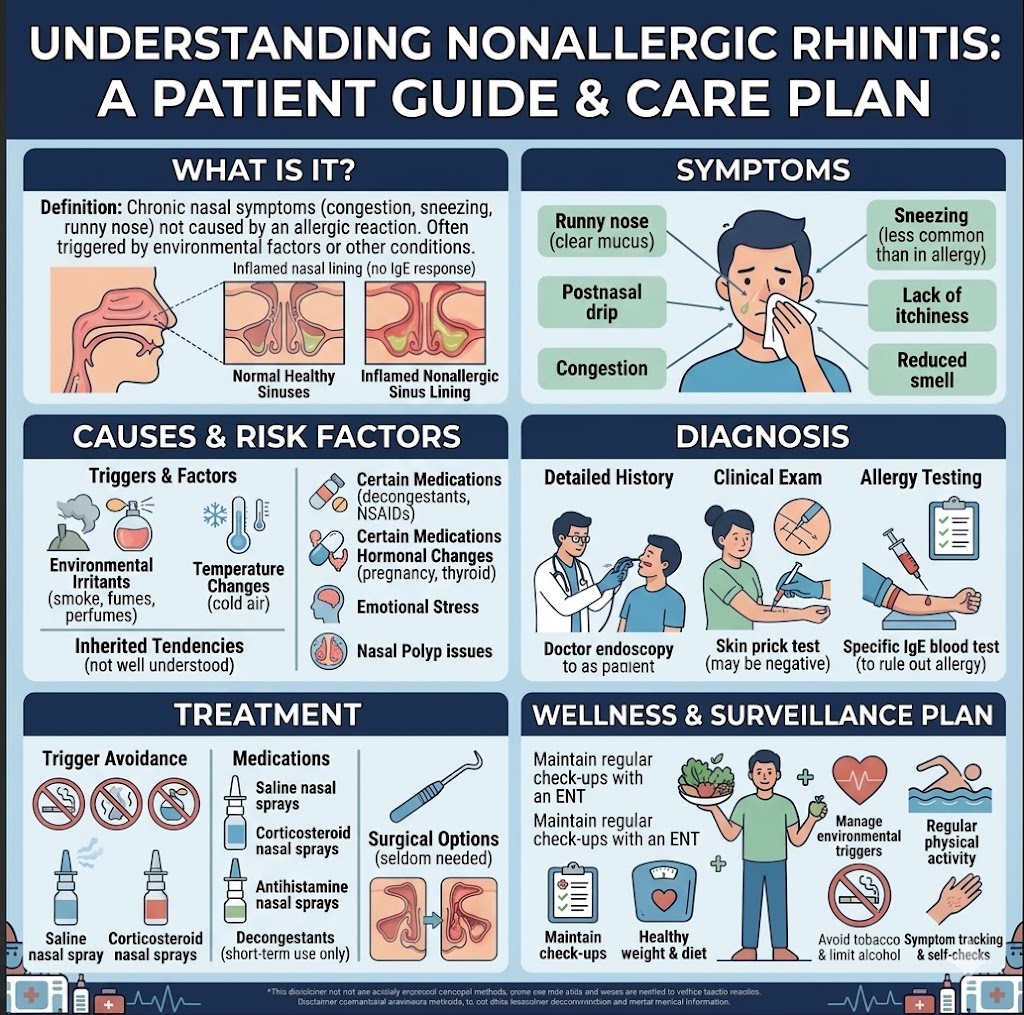
Nonallergic rhinitis is a condition that causes symptoms similar to hay fever, such as sneezing and a stuffy or runny nose, but it is not caused by allergies. It can be a long-term problem with no clear cause. While it can affect people of all ages, it is more common after age 20. Triggers for symptoms vary widely from person to person and often involve changes in the nasal blood vessels, leading to swelling and excess mucus inside the nose.
Understanding the Condition
Nonallergic Rhinitis: Understanding Your Stuffy, Drippy Nose
Understanding the Condition
Nonallergic rhinitis is a condition that causes symptoms similar to hay fever, such as sneezing and a stuffy or runny nose, but it is not caused by allergies. It can be a long-term problem with no clear cause. While it can affect people of all ages, it is more common after age 20. Triggers for symptoms vary widely from person to person and often involve changes in the nasal blood vessels, leading to swelling and excess mucus inside the nose.
Common Symptoms
Sneezing: Frequent and often sudden bursts of sneezing.
Nasal Congestion: A stuffy or blocked feeling in one or both nostrils.
Runny Nose: Clear, watery mucus draining from the nose.
Postnasal Drip: A feeling of mucus running down the back of the throat.
General Symptoms: Symptoms tend to come and go throughout the year and typically do not include an itchy nose, eyes, or throat, which are more common with allergies like hay fever.
Consultation Guide
Which Specialist to Meet
Initially, you should consult your primary care doctor. Depending on your symptoms and initial findings, they may refer you to an allergist/immunologist (to rule out allergies) or an ear, nose, and throat (ENT) specialist for further evaluation and management of nasal conditions.
Preparations Before Your Visit
Before your appointment, prepare a detailed description of your symptoms, including when they started, how often they occur, what seems to trigger or worsen them, and what makes them feel better. Make a list of all medications you currently take, including over-the-counter drugs and supplements. Also, write down any questions you have for your doctor.
Book a doctor visit near me
These tests are used to determine if your symptoms are caused by allergies. During the test, your skin is exposed to tiny amounts of common substances that can cause allergies (allergens) to check for a reaction.
A CT scan uses special X-ray equipment and a computer to create detailed cross-sectional images of your body's bones, blood vessels, and soft tissues. It may be used to rule out other conditions that could be causing your symptoms, such as structural issues in the nasal passages or sinus problems.
Nasal Rinses: Using a saline solution (saltwater) to rinse nasal passages can help clear mucus, irritants, and soothe inflamed tissues. (Duration: Daily use, or as needed for symptom relief.)
Humidifier Use: Adding moisture to the air can help keep nasal passages from drying out and can ease congestion. (Duration: As needed, especially in dry environments or during sleep.)
Trigger Avoidance: Identifying and avoiding specific triggers (e.g., strong odors, smoke, temperature changes) that worsen your symptoms. (Duration: Ongoing.)
Nasal Antihistamine Sprays: These sprays can provide quick relief from sneezing and a runny nose by blocking histamine, although histamine is less central in nonallergic rhinitis than allergic rhinitis. (Duration: Used as needed, or daily for consistent symptom control.)
Capsaicin Nasal Sprays: Derived from chili peppers, these sprays may help desensitize nerve endings in the nose, potentially reducing symptoms like congestion and runny nose for some individuals. (Duration: Used short-term, typically for a few weeks, as directed by a healthcare provider.)
Identify and Avoid Triggers: Keep a diary to pinpoint specific environmental or dietary triggers (e.g., perfume, smoke, cold air, spicy foods) that worsen your symptoms, and then actively try to minimize exposure to them.
Maintain Nasal Hygiene: Regularly rinse your nasal passages with a saline solution to help clear irritants and maintain moisture, which can soothe the nasal lining.
Optimize Indoor Air Quality: Use a humidifier to keep indoor air moist, especially in dry climates or during winter. Ensure good ventilation in your home to reduce airborne irritants.
Stay Hydrated: Drinking plenty of fluids helps thin nasal mucus, making it easier to clear and potentially reducing congestion.
Regular Medical Follow-up: Consult with your healthcare provider periodically to review your symptoms, adjust treatment plans as needed, and ensure no other conditions are developing or being missed.
Consultation Guide
Cough: Often caused by irritation from postnasal drip.
Reduced Sense of Smell: Difficulty detecting or distinguishing odors.
Diagnostic Procedures
What to Expect
A healthcare professional will typically apply small drops of different allergen extracts onto your skin, usually on your forearm or back. They will then gently prick or scratch the surface of your skin through each drop. You might feel a brief, mild sting or itch. After about 15-20 minutes, the skin is checked for raised, red, itchy bumps (like a mosquito bite), which indicate an allergic reaction to that specific substance.
Allergy Blood Tests (in vitro immunoglobulin E antibody tests)
These tests measure the level of specific antibodies called immunoglobulin E (IgE) in your blood, which the body produces in response to allergens. They are an alternative if skin tests are not suitable or safe for you.
What to Expect
A small sample of blood will be drawn from a vein, typically in your arm. This blood sample is then sent to a laboratory where it is tested for various IgE antibodies. The process is similar to any routine blood draw and usually takes only a few minutes. Results are typically available within a few days to a week.
CT Scan (Computerized Tomography Scan)
What to Expect
You will lie on a motorized table that slides into a large, doughnut-shaped machine. You'll need to stay very still during the scan, and you might be asked to hold your breath for short periods. The machine makes some whirring or clicking noises during operation. The scan itself is painless and usually takes about 10-30 minutes, depending on the area being examined.
Treatment Options
Medications
Nasal Corticosteroid Sprays: These sprays help reduce inflammation in the nasal passages, significantly alleviating congestion, runny nose, and sneezing. (Duration: Often prescribed for daily, long-term use for best results.)
Nasal Ipratropium Sprays: This medication helps reduce excessive mucus production in the nose, primarily targeting a runny nose. (Duration: Used as needed, usually several times a day.)
Oral Decongestants: Pills that help narrow blood vessels in the nose, reducing swelling and congestion. (Duration: Used for short-term relief, typically not recommended for long-term use due to potential side effects.)
Prevention & Long-Term Wellbeing
Home Remedies and Lifestyle Adjustments
Prevention and Long-Term Management
Tags & Topics
Notice an error or need an update?
Help us keep medical information accurate. Report incorrect info or suggest an edit.


