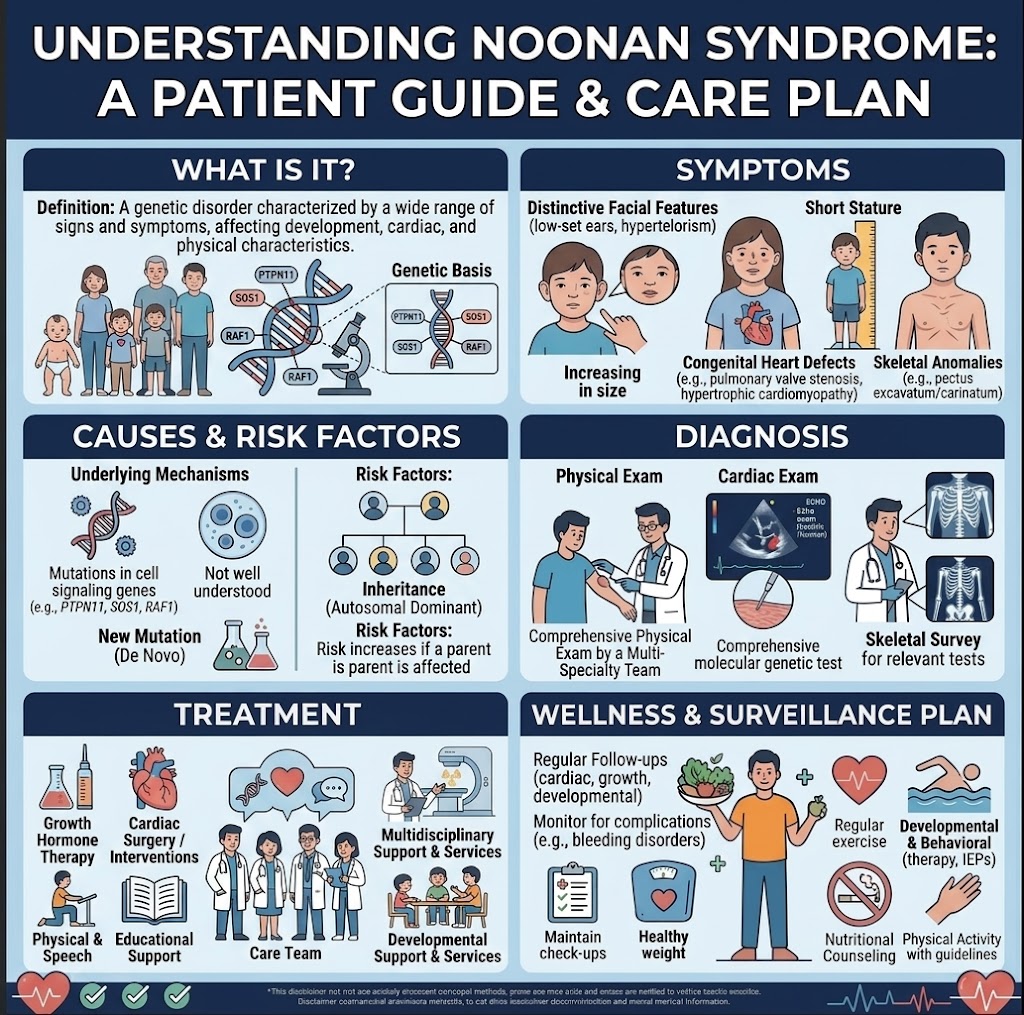
Noonan syndrome is a genetic condition that impacts how different parts of the body typically develop. It can lead to a variety of physical characteristics and health issues, including distinct facial features, shorter height, heart problems, and slower development in areas like walking, talking, or learning. The condition is caused by a change in a specific gene, which can be inherited from a parent or occur spontaneously. Management focuses on treating the specific symptoms and complications that arise.
Understanding the Condition
Noonan Syndrome: A Comprehensive Guide
Understanding the Condition
Noonan syndrome is a genetic condition that impacts how different parts of the body typically develop. It can lead to a variety of physical characteristics and health issues, including distinct facial features, shorter height, heart problems, and slower development in areas like walking, talking, or learning. The condition is caused by a change in a specific gene, which can be inherited from a parent or occur spontaneously. Management focuses on treating the specific symptoms and complications that arise.
Common Symptoms
Varying Severity: Symptoms of Noonan syndrome range significantly from mild to severe, and their specific presentation can depend on the particular gene that has changed.
Before your visit, gather a detailed family health history, noting any conditions or medical issues in relatives. Make a comprehensive list of all symptoms and developmental milestones or challenges observed. Prepare a list of questions you have for the doctor to ensure all your concerns are addressed during the appointment.
Book a doctor visit near me
Regular Medical Check-ups: Ongoing visits with a team of specialists (e.g., cardiologist, endocrinologist, developmental specialist) are crucial to monitor growth, heart health, overall development, and to manage any evolving symptoms or complications.
Consultation Guide
Genetic testing examines your DNA, which contains the instructions for your body's functions, to identify specific gene changes that cause Noonan syndrome. This is often the definitive way to confirm a diagnosis.
Diagnostic Procedures
Facial Features: Often a key indicator for diagnosis, these features may be more noticeable in infants and young children and tend to become less distinct with age. Common features include: wide-set eyes with a downward slant and droopy eyelids, often pale blue or green; low-set ears that appear tipped backward; a nose that is depressed at the top with a wide base and rounded tip; a deep groove between the nose and mouth, wide peaks in the upper lip, and potentially crooked teeth or a highly arched roof of the mouth; a small lower jaw; and sometimes a large head with a broad forehead and a low hairline at the back. The face may appear less expressive.
Short Height: Many individuals with Noonan syndrome experience significantly shorter stature.
Heart Problems: Structural heart defects are common and can range from mild to severe, often requiring medical attention.
Skin Characteristics: With age, the skin may appear thinner or more transparent in some individuals.
Slowed Development: Children may develop more slowly than their peers, affecting milestones such as walking, talking, and acquiring new skills or learning at school.
Consultation Guide
Which Specialist to Meet
If Noonan syndrome is suspected, start by consulting your primary care doctor or pediatrician. They may refer you to a geneticist for diagnosis and genetic counseling. Other specialists may include a cardiologist for heart concerns, an endocrinologist for growth-related issues, and developmental specialists (such as physical, occupational, or speech therapists) for developmental delays. A urologist may be consulted for male fertility concerns.
Preparations Before Your Visit
What to Expect
A small sample of blood will typically be collected from a vein, or cells may be gathered using a swab inside your cheek. The sample is then sent to a specialized laboratory for analysis. Results can take several weeks to process. The physical risks associated with blood tests or cheek swabs are minimal. If prenatal testing (such as amniocentesis or chorionic villus sampling) is considered, your doctor will discuss the small associated risks, including a slight chance of pregnancy loss.
Electrocardiogram (ECG or EKG)
An ECG is a quick and non-invasive test that records the electrical signals of your heart. It helps assess how fast or slow your heart is beating and can detect irregular heart rhythms or signs of strain on the heart, which are common in Noonan syndrome.
What to Expect
You will lie down on an examination table. Small, sticky patches called electrodes will be placed on your chest, and sometimes on your arms and legs. Wires connect these patches to an ECG machine, which records your heart's electrical activity. The test is painless, takes only a few minutes, and requires you to lie still during the recording.
An echocardiogram uses sound waves to produce detailed, moving images of your heart. This test allows doctors to visualize the heart's structure, check the function of its chambers and valves, and identify any congenital heart defects that are frequently associated with Noonan syndrome.
What to Expect
You will typically lie on an examination table. A special gel is applied to your chest, and a handheld device called a transducer is moved across your skin. This device sends out sound waves that bounce off your heart and create images on a screen. You may feel slight pressure from the transducer, but the test is generally painless and takes approximately 30 to 60 minutes.
Testicle Surgery (Orchiopexy): In males with undescended testicles (testicles that haven't moved into the scrotum), surgery is performed to bring them into the correct position. This can help improve fertility potential and reduce other associated risks. (Duration: A single procedure, typically performed during childhood.)
Genetic Counseling: For individuals with a family history of Noonan syndrome, genetic counseling before starting a family is highly recommended. It provides valuable information about the risks of passing on the changed gene and discusses reproductive options, including genetic testing.
Early Diagnosis and Intervention: Detecting Noonan syndrome early allows for prompt and continuous medical care. This proactive approach can help mitigate or reduce the severity of potential complications, particularly those related to heart health.
Long-Term Monitoring and Management
Monitoring for Bleeding Issues: Due to a higher risk of bleeding problems, special precautions and blood tests should be undertaken before any dental procedures or surgeries.
Fertility Assessments: For males, ongoing monitoring and management of fertility concerns are important, especially if there was a history of undescended testicles.
Treatment Options
Medications
Growth Hormone Therapy: This treatment involves administering specific hormones to children with significantly short stature to help promote growth and improve final adult height. (Duration: Typically ongoing for several years during childhood and adolescence, until maximum adult height is reached.)
Therapies and Supportive Care
Developmental and Educational Support: Includes a range of therapies such as speech therapy for communication difficulties, physical therapy for motor skill development, occupational therapy for daily living skills, and special education programs to address learning delays. These interventions are customized to each child's individual needs. (Duration: Long-term and ongoing, often continuing throughout childhood and adolescence.)
Fluid Management: Strategies designed to reduce fluid buildup in the body (lymphedema), which may involve methods like compression garments, specialized massage, and targeted exercises. (Duration: Ongoing as needed, with duration varying greatly among individuals.)
Surgical Procedures
Heart Surgery: For significant structural heart defects, such as narrowed heart valves or other abnormalities, surgical intervention may be necessary to improve heart function and health. (Duration: A single procedure, though follow-up monitoring and care are essential.)
Urinary Tract Health Management: Regular screening for kidney abnormalities and immediate treatment of any urinary tract infections are important to prevent kidney-related complications.
Cancer Surveillance: Individuals with Noonan syndrome may have a slightly increased risk for certain types of cancer, such as specific forms of leukemia. Appropriate monitoring and awareness are advised.
Prevention & Long-Term Wellbeing
Prevention
Tags & Topics
Notice an error or need an update?
Help us keep medical information accurate. Report incorrect info or suggest an edit.


