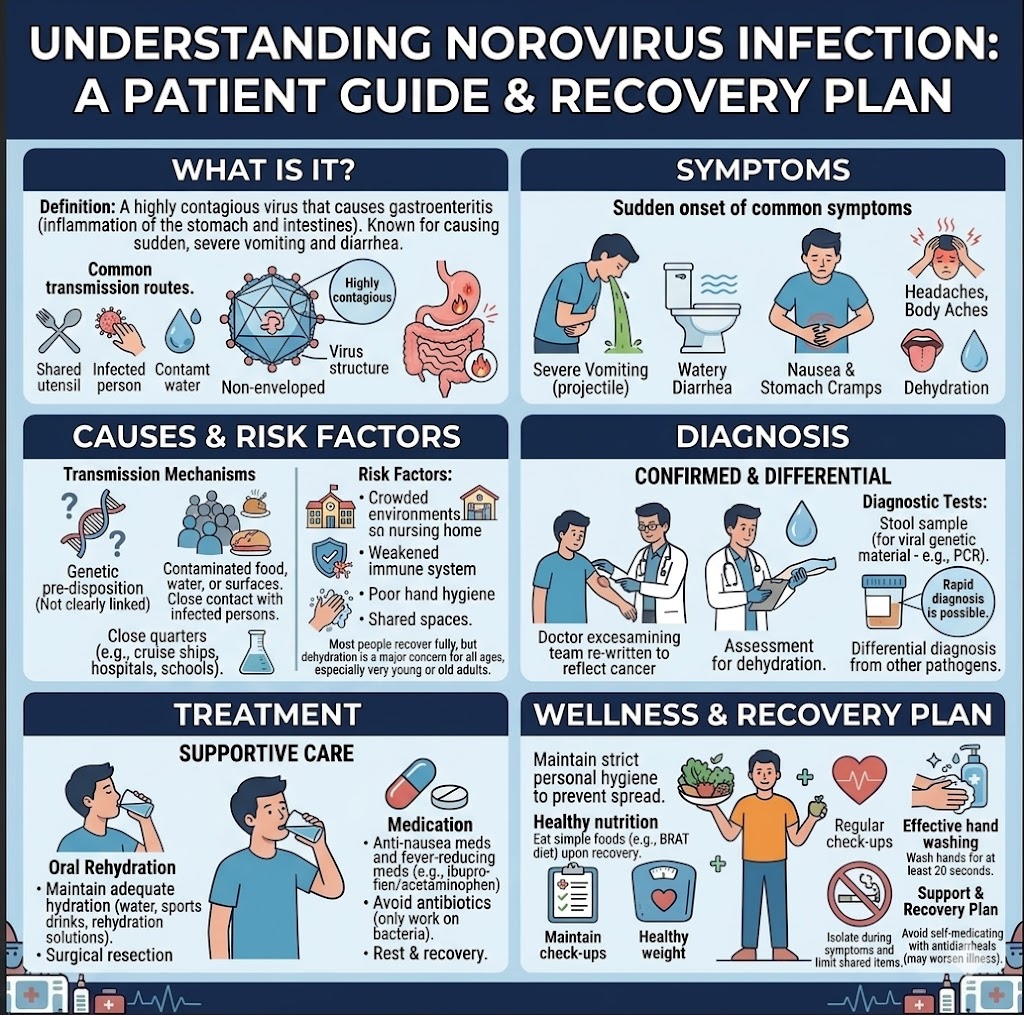
Norovirus infection, commonly known as the 'stomach flu' (though it's not related to influenza), is a very common and highly contagious illness that causes sudden, severe vomiting and watery diarrhea. This virus spreads very easily from person to person, often through contaminated food or water, shared surfaces, or close contact with someone who is sick. Symptoms typically begin quickly, usually 12 to 48 hours after exposure, and most people feel better within 1 to 3 days. While most individuals recover fully without specific medical treatment, young children, older adults, and people with existing health conditions can become severely dehydrated, sometimes requiring medical attention. Norovirus outbreaks are common in crowded places like hospitals, nursing homes, child care centers, schools, and cruise ships, mainly because the virus is difficult to eliminate—it can withstand hot and cold temperatures and many common disinfectants.
Understanding the Condition
Norovirus: Understanding the Stomach Bug
Understanding the Condition
Norovirus infection, commonly known as the 'stomach flu' (though it's not related to influenza), is a very common and highly contagious illness that causes sudden, severe vomiting and watery diarrhea. This virus spreads very easily from person to person, often through contaminated food or water, shared surfaces, or close contact with someone who is sick. Symptoms typically begin quickly, usually 12 to 48 hours after exposure, and most people feel better within 1 to 3 days. While most individuals recover fully without specific medical treatment, young children, older adults, and people with existing health conditions can become severely dehydrated, sometimes requiring medical attention. Norovirus outbreaks are common in crowded places like hospitals, nursing homes, child care centers, schools, and cruise ships, mainly because the virus is difficult to eliminate—it can withstand hot and cold temperatures and many common disinfectants.
Common Symptoms
Sudden Vomiting: Often forceful and intense, starting very quickly. This can lead to significant fluid loss.
Watery Diarrhea: Frequent, loose bowel movements that contribute to rapid fluid loss.
Stomach Pain or Cramps: Discomfort, aching, or cramping sensations in the abdominal area.
Nausea: A feeling of sickness in the stomach, often preceding vomiting.
Low-Grade Fever: A slight increase in body temperature, though not always present.
Body Aches and Headache: General discomfort in the muscles and head, common with many viral illnesses.
Asymptomatic Infection: Some individuals may carry and spread the norovirus without showing any symptoms themselves. These 'silent carriers' are still contagious.
Consultation Guide
Which Specialist to Meet
For typical norovirus symptoms, you should consult your primary care physician (family doctor) or an urgent care doctor. If symptoms are severe, particularly signs of extreme dehydration, an emergency room doctor may be necessary. For ongoing or complicated cases, an infectious disease specialist might be involved.
Preparations Before Your Visit
Before your visit, make a list of your symptoms, noting when they started, their severity, and how long they've lasted. Mention any recent travel, places you've been (especially crowded environments), or known contact with sick individuals. Be prepared to discuss your normal diet and any recent food or drink intake. Provide a list of any underlying health conditions and all medications you currently take. It's crucial to try and stay as hydrated as possible before your appointment.
Book a doctor visit near me
Often, norovirus infection is diagnosed based on your symptoms alone, especially during known outbreaks or when symptoms are typical. A specific test is not always required.
Your doctor will ask about your symptoms, their onset, and their severity. They will also inquire about any recent exposures, travel, or others around you who might be sick. A physical examination will assess for signs of dehydration.
This laboratory test is used to confirm norovirus by detecting its genetic material in a sample of your stool. It is typically performed when a confirmed diagnosis is important for public health reasons, for outbreaks, or for individuals with severe symptoms or weakened immune systems.
Hydration Therapy: The most important treatment is to replace fluids and electrolytes lost from vomiting and diarrhea. Drink plenty of clear liquids like water, oral rehydration solutions (specially formulated drinks with salts and sugar), clear broths, and diluted fruit juices. Avoid sugary sodas, caffeine, and alcohol, which can worsen dehydration. (Duration: Throughout the illness (typically 1-3 days, or longer if symptoms persist))
Rest: Allow your body sufficient rest to recover and conserve energy. Avoid strenuous physical activities. (Duration: Throughout the illness)
Bland Diet: When you feel ready to eat, gradually reintroduce food. Start with easily digestible items such as toast, rice, bananas, applesauce, and plain crackers. Avoid fatty, spicy, or heavily seasoned foods until you are fully recovered. (Duration: As symptoms improve, for several days)
Anti-Diarrheal Medications: Over-the-counter medications can help reduce the frequency of diarrhea, but they do not kill the virus. Use these cautiously and ideally under a doctor's guidance, especially for children, as they can sometimes prolong the illness by keeping the virus in the body longer. (Duration: Short-term, as needed during acute symptoms)
Isolate When Sick: Stay home from work, school, and other public activities when you have symptoms. Avoid close contact with others to prevent spreading the virus.
Proper Laundry Care: Immediately remove and wash contaminated clothing and bedding. Use hot water and detergent. Handle soiled items carefully to avoid further spreading the virus.
Continued Hygiene Post-Recovery: Even after symptoms resolve, norovirus can still be shed in stool for several weeks (and sometimes months, especially for those with other medical conditions). Continue rigorous hand hygiene during this period to prevent further spread.
Monitor for Dehydration: Continue to watch for signs of dehydration, particularly in vulnerable individuals, even after the initial symptoms subside.
Gradual Return to Activities: Gradually return to your normal diet and activities, listening to your body's signals for full recovery. Avoid close contact with others for at least 2-3 days after symptoms have cleared to reduce transmission risk.
Diagnostic Procedures
What to Expect
Stool Sample Test (PCR Test)
What to Expect
You will be provided with a sterile container and instructions to collect a small amount of a bowel movement. This collection is usually done privately at home or in a clinic restroom. The sample is then securely sealed and sent to a laboratory for analysis. Results generally take a few days.
Treatment Options
Home Remedies & Supportive Care
Medications
Anti-Nausea Medications: In cases of severe, persistent vomiting that prevents fluid intake, a doctor might prescribe medication to help control nausea and allow you to drink fluids. (Duration: Short-term, as needed for severe vomiting)
Intravenous (IV) Fluid Rehydration: For individuals who are severely dehydrated and unable to keep fluids down by mouth, fluids can be administered directly into a vein. This procedure is performed in a hospital or urgent care setting. (Duration: Until hydration is restored, typically a few hours to a day)
Prevention & Long-Term Wellbeing
Prevention
Thorough Handwashing: Wash your hands meticulously with soap and water for at least 20 seconds, especially after using the bathroom, changing diapers, and before preparing or eating food. Alcohol-based hand sanitizers are generally less effective against norovirus than soap and water.
Careful Food Preparation: Wash fruits and vegetables thoroughly before eating. Cook seafood, particularly shellfish, to the appropriate internal temperature. Avoid preparing food for others if you are sick or have recently been in contact with someone who has norovirus.
Disinfect Contaminated Surfaces: Clean and disinfect surfaces immediately after someone vomits or has diarrhea. Use a bleach-based cleaner (a solution of 5-25 tablespoons of household bleach per gallon of water) or a disinfectant specifically proven to kill norovirus.
Long-Term Monitoring / Recovery
Tags & Topics
Notice an error or need an update?
Help us keep medical information accurate. Report incorrect info or suggest an edit.


