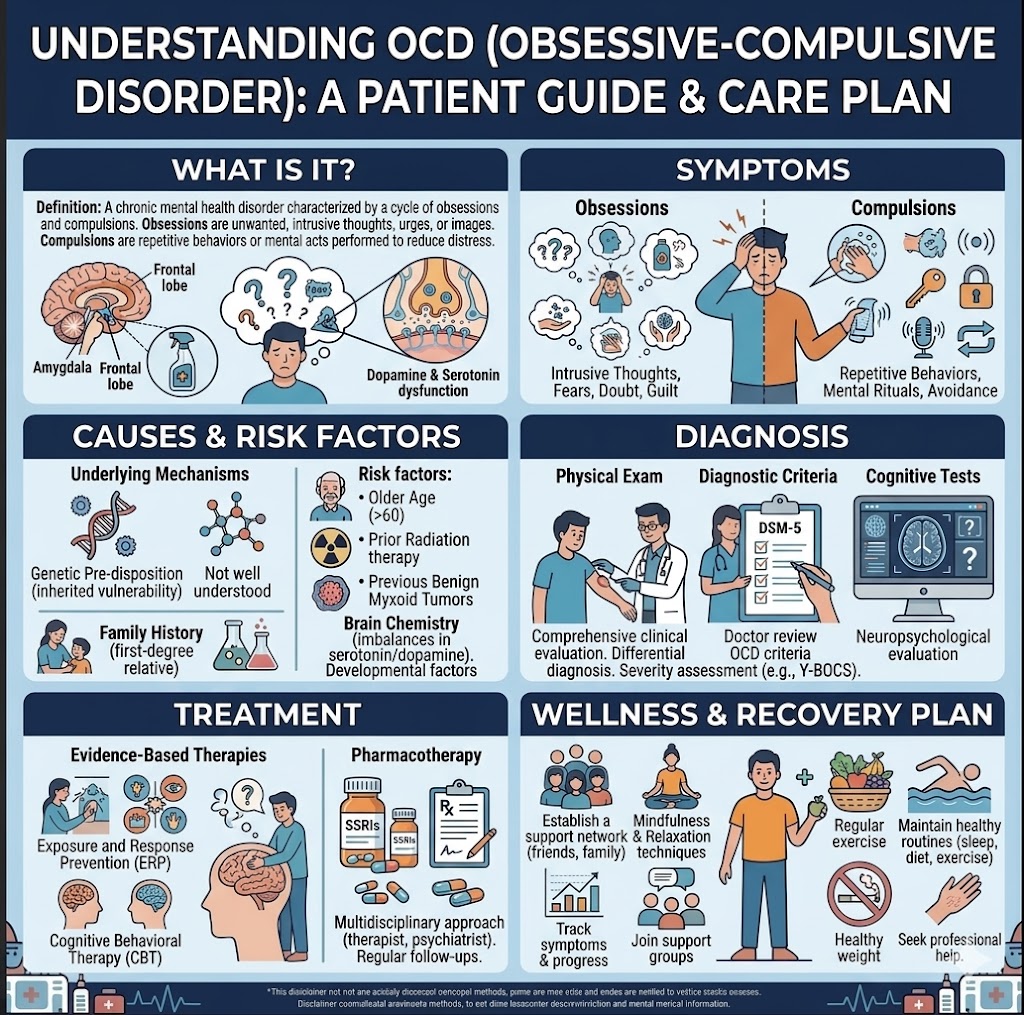
Obsessive-compulsive disorder (OCD) involves persistent, unwanted thoughts or fears (obsessions) that trigger repetitive behaviors (compulsions). This cycle creates significant distress and interferes with daily life. While its exact cause isn't fully known, theories point to biological changes in the brain, genetic factors, and learned behaviors.
Understanding the Condition
Obsessive-Compulsive Disorder (OCD): Understanding and Managing the Condition
Understanding the Condition
Common Symptoms
General Symptoms: OCD typically involves both obsessions and compulsions, though some individuals may experience only one. Symptoms consume considerable time, reduce life quality, and disrupt routines, even if you don't realize they're unreasonable.
Obsessions: Recurring, unwelcome thoughts, urges, or images causing distress. You might try to ignore them or perform a ritual to make them disappear. * **Common Themes:** Fear of contamination, persistent doubts/uncertainty, need for order/symmetry, aggressive or inappropriate thoughts (harm, sex, religion). * **Examples:** Intense fear of germs from touching objects, repeatedly doubting if a door is locked or stove is off, significant unease from disorder, disturbing mental images, avoiding handshakes.
Compulsions: Repetitive behaviors or mental acts performed to reduce obsession-related anxiety or prevent a feared event. Relief is temporary, and actions aren't realistically linked to the outcome. * **Examples:** Excessive hand-washing until raw, repeatedly checking locks or appliances, ordering items precisely, counting in specific patterns, seeking constant reassurance.
Consultation Guide
Which Specialist to Meet
Before your visit, make a list of your symptoms, including when they started, how often they occur, and how they impact your daily life, work, or relationships. Note any previous treatments you've tried and any questions you have for the doctor.
Book a doctor visit near me
OCD diagnosis relies on a thorough clinical assessment by a mental health professional. This involves detailed discussions about your thoughts, feelings, and behaviors to understand symptoms and their impact, along with reviewing your medical history to rule out other conditions that might be causing similar symptoms.
You'll have a private, confidential conversation with a psychiatrist, psychologist, or another trained mental health provider. They will ask a series of questions about your obsessions (unwanted thoughts, urges, images) and compulsions (repetitive behaviors or mental acts). This may include questions about how much time these symptoms consume, the distress they cause, and how they interfere with your daily life, work, and relationships. You may also be asked to complete questionnaires or rating scales to help assess the severity and nature of your symptoms. This entire process aims to gather comprehensive information to arrive at an accurate diagnosis and develop a personalized treatment plan.
Psychotherapy (Talk Therapy): A broader term for various therapeutic approaches where you talk with a mental health provider to understand your condition, thoughts, emotions, and behaviors. It helps develop healthy coping skills and manage stressful situations, supporting overall well-being. (Duration: Can range from short-term (a few months) to long-term (a year or more), depending on individual needs and the complexity of symptoms.)
Pharmacotherapy (Medication Treatment): Certain types of antidepressant medications, specifically those affecting serotonin, can help reduce OCD symptoms by impacting brain chemistry. These medications can manage the frequency and intensity of obsessions and compulsions, often making therapy more effective. They are prescribed by a medical doctor. (Duration: Often involves ongoing use for several months to years, or even indefinitely, to maintain symptom control. Dosage adjustments are common.)
Deep Brain Stimulation (DBS): DBS is a surgical procedure for severe OCD that hasn't responded to other treatments. It involves implanting electrodes in specific brain areas that produce electrical impulses. These impulses are controlled by a pacemaker-like device placed under the skin in the chest, which affects brain activity to reduce symptoms. (Duration: The device is implanted in a single surgical procedure. Stimulation is then adjusted over time, with the device remaining in place for long-term symptom management.)
Electroconvulsive Therapy (ECT): ECT is a medical procedure, performed under general anesthesia, where small electric currents are passed through the brain to intentionally cause a brief, controlled seizure. It's believed to change brain chemistry and can rapidly improve severe symptoms of certain mental health conditions, including severe OCD, especially when other treatments have failed or are not tolerated. (Duration: A course typically involves multiple sessions (e.g., 6-12 treatments) over several weeks, potentially followed by maintenance treatments for some individuals.)
Seek Early Treatment: There's no guaranteed way to prevent OCD, but getting a diagnosis and starting treatment as soon as symptoms emerge can significantly prevent the condition from worsening and disrupting your life. Early intervention can improve outcomes.
Stress Management: While not a direct cause, stressful or traumatic life events can trigger or worsen OCD symptoms. Learning healthy ways to manage stress through relaxation techniques, mindfulness, or regular physical activity can be beneficial.
Long-Term Management and Support
Adhere to Treatment Plan: Consistently following your prescribed therapy sessions, taking medications as directed, and practicing learned coping strategies are crucial for sustained symptom control and preventing relapse.
Recognize Warning Signs: Learn to identify early signs of worsening symptoms or potential relapses. Being proactive allows you to address issues quickly with your healthcare provider.
Manage Complications: Untreated or poorly managed OCD can lead to significant issues such as excessive time spent on rituals, physical health problems (e.g., skin irritation from frequent washing), difficulties at work or school, troubled relationships, a reduced quality of life, and in severe cases, thoughts of self-harm. Addressing these through integrated care is vital for overall well-being.
Consultation Guide
Obsessive-compulsive disorder (OCD) involves persistent, unwanted thoughts or fears (obsessions) that trigger repetitive behaviors (compulsions). This cycle creates significant distress and interferes with daily life. While its exact cause isn't fully known, theories point to biological changes in the brain, genetic factors, and learned behaviors.
Diagnostic Procedures
For OCD, consult a mental health professional like a psychiatrist (for diagnosis and medication management) or a psychologist (for therapy). Your primary care physician can also provide an initial assessment and refer you to appropriate specialists.
Preparations Before Your Visit
Clinical Assessment and Mental Health Evaluation
What to Expect
Treatment Options
Therapies
Medications
Transcranial Magnetic Stimulation (TMS): TMS is a non-invasive procedure that uses magnetic fields to stimulate specific nerve cells in the brain thought to be involved in mood control and OCD. It involves placing an electromagnetic coil against the scalp to deliver repeated magnetic pulses. A specific type, Deep TMS, stimulates deeper and wider brain areas. It's typically used when other treatments haven't been effective. (Duration: A typical course involves daily sessions for several weeks (e.g., 4-6 weeks), followed by maintenance or follow-up sessions if needed.)
Prevention & Long-Term Wellbeing
Cognitive Behavioral Therapy (CBT): CBT is a highly effective talk therapy that helps you identify and change unhelpful thinking patterns and behaviors. For OCD, a specific type of CBT called Exposure and Response Prevention (ERP) is often used. ERP gradually exposes you to your fears (obsessions) in a controlled environment while helping you resist the urge to perform compulsive rituals. (Duration: Typically involves several weeks to months of regular sessions (e.g., 12-20 sessions), with ongoing practice between sessions.)
Prevention and Early Intervention
Maintain a Healthy Lifestyle: Regular physical activity, a balanced diet, adequate sleep, and avoiding substances like excessive alcohol or caffeine can contribute to overall mental well-being and help manage stress, which can indirectly support OCD management.
Build a Support System: Connect with trusted friends, family, or support groups. Sharing experiences can reduce feelings of shame and isolation, and provide encouragement.
Tags & Topics
Notice an error or need an update?
Help us keep medical information accurate. Report incorrect info or suggest an edit.


