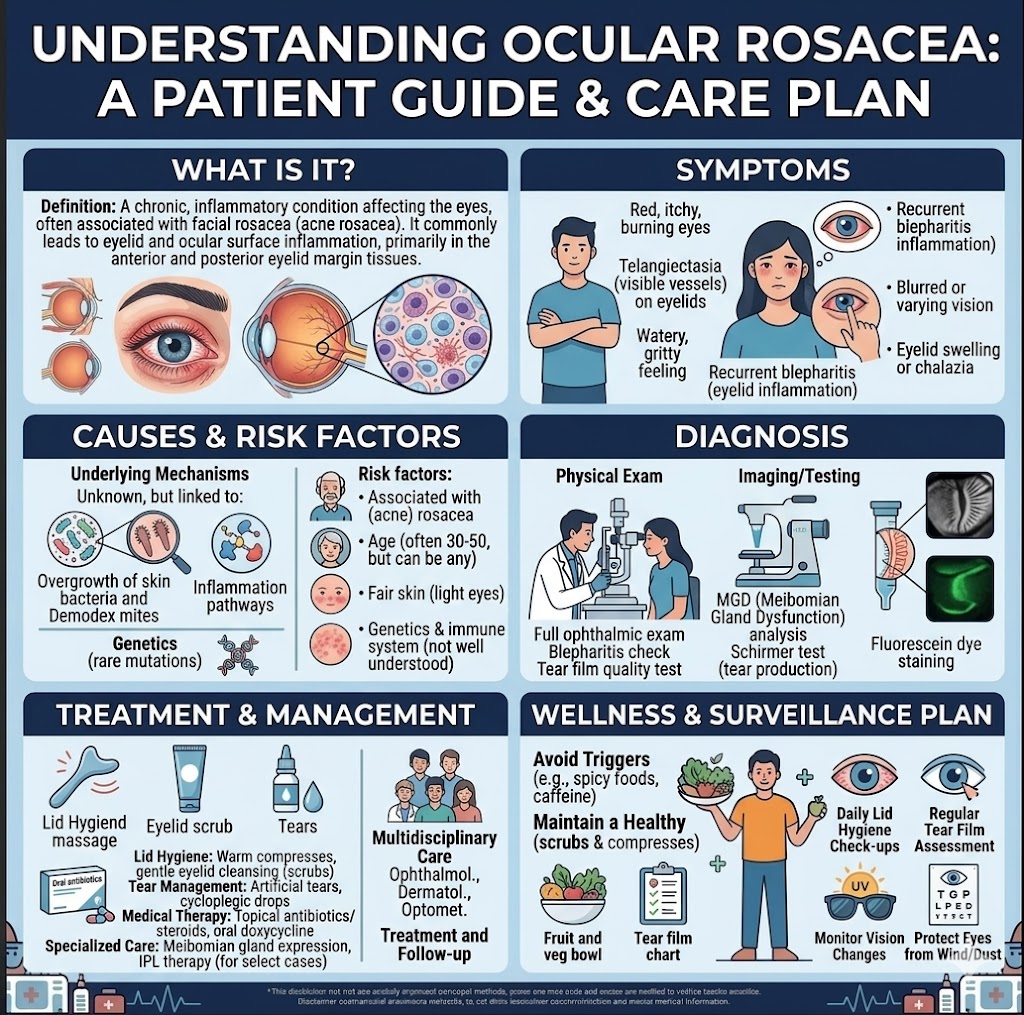
Ocular rosacea (pronounced roe-ZAY-she-uh) is a condition causing inflammation of the eyes, leading to symptoms like redness, burning, and itching. It often appears in individuals who also have facial rosacea, a chronic skin condition. Sometimes, eye rosacea can be the first sign that skin rosacea may develop later. This condition primarily affects adults between 30 and 50, especially those prone to blushing. While there is no definitive cure, medical treatments and consistent eye care effectively manage symptoms.
Understanding the Condition
Ocular Rosacea: Understanding and Managing Eye Inflammation
Understanding the Condition
Ocular rosacea (pronounced roe-ZAY-she-uh) is a condition causing inflammation of the eyes, leading to symptoms like redness, burning, and itching. It often appears in individuals who also have facial rosacea, a chronic skin condition. Sometimes, eye rosacea can be the first sign that skin rosacea may develop later. This condition primarily affects adults between 30 and 50, especially those prone to blushing. While there is no definitive cure, medical treatments and consistent eye care effectively manage symptoms.
Common Symptoms
Red, Burning, Itchy, or Watery Eyes: Persistent discomfort and excessive tearing.
Gritty Sensation: A feeling of having sand or a foreign object in the eye.
Blurred Vision: Vision may become temporarily unclear.
Light Sensitivity (Photophobia): Discomfort or pain in bright light.
Visible Blood Vessels: Small, widened blood vessels may be seen on the white part of the eye.
Red, Swollen Eyelids: The edges of the eyelids may appear inflamed and puffy.
Recurrent Eye Infections: Frequent occurrences of infections such as Pink Eye (Conjunctivitis, inflammation of the clear membrane covering the white part of the eye), Blepharitis (inflammation along the eyelid edges), Sties (painful bumps on the eyelid), or Chalazia (non-painful lumps on the eyelid). Symptom severity doesn't always match skin rosacea. Consult an eye care professional for persistent dry, burning, itchy, red eyes, or blurred vision.
Consultation Guide
Which Specialist to Meet
You should consult an ophthalmologist, a medical doctor specializing in eye and vision care. If you also have skin rosacea, they may coordinate with a dermatologist. Before your appointment, list your symptoms (onset, frequency, triggers), current medications, allergies, and usual eye care routine. This helps diagnosis and treatment planning.
Preparations Before Your Visit
Before your appointment, prepare a list of your symptoms (including when they started, how often they occur, and anything that makes them better or worse), any current medications you are taking, allergies you have, and your usual eye care routine. This information is crucial for your doctor to make an accurate diagnosis and recommend the best course of action.
Book a doctor visit near me
Diagnosis involves a comprehensive eye examination and review of your symptoms and medical history, looking for specific signs of inflammation. This assesses overall eye health and vision, checking visual acuity and eye structures.
Since dry eyes are common, tear quality and quantity may be assessed to determine if evaporation or insufficient production contributes to symptoms.
Identify and Avoid Triggers: Identify and avoid symptom triggers: hot/spicy foods/drinks, excessive sun, strong winds, extreme temperatures, stress/anger, strenuous exercise, hot baths/saunas.
Protect Your Eyes from Environmental Factors: Wear sunglasses outdoors (sun/wind). Use a humidifier in dry environments.
Manage Stress: Manage stress with techniques like meditation, as stress can worsen rosacea symptoms.
Long-Term Management & Monitoring
Consistent Eye Hygiene: Continue daily eyelid cleaning and warm compresses, even with mild symptoms, to prevent flare-ups.
Consultation Guide
This might involve using a special paper strip placed just inside your lower eyelid for a few minutes to measure tear production, or using eye drops with a dye that helps visualize your tear film under the slit lamp. These tests are usually quick and cause minimal discomfort.
Diagnostic Procedures
Comprehensive Eye Examination
What to Expect
You'll sit in an exam chair, reading an eye chart for visual acuity. The doctor will carefully inspect your eyelids, eyelashes, the white part of your eye, and the surface of your eye for redness, swelling, dilated blood vessels, or signs of infection.
Slit-Lamp Examination
A slit lamp is a special microscope allowing detailed, magnified examination of your eyelids, cornea (clear front surface of the eye), conjunctiva (lining of eyelids and white eye), and other structures.
What to Expect
You will place your chin on a rest and your forehead against a band. The doctor will shine a bright, narrow beam of light into your eye while looking through the microscope. This test is painless, though the light can be bright. They will carefully check for signs of inflammation, blocked eyelid glands, changes to the cornea, or other indicators of ocular rosacea.
What to Expect
Treatment Options
Home Remedies & Eye Care
Warm Compresses and Eyelid Hygiene: Warm, moist compresses several times daily loosen crusts and improve oil gland function. Gentle eyelid cleaning with mild cleanser or diluted baby shampoo removes debris and bacteria. (Duration: Daily and ongoing)
Artificial Tears: Over-the-counter lubricating eye drops relieve dryness and irritation. (Duration: As needed, ongoing)
Medications
Topical Eye Drops: Anti-inflammatory eye drops may reduce redness and irritation, sometimes with bacterial control ingredients. (Duration: As prescribed, often for several weeks or longer, with potential for long-term low-dose use)
Oral Medications: Low-dose oral antibiotics may be prescribed for their anti-inflammatory effects to calm overall inflammation, not just to kill bacteria. (Duration: Typically several weeks to months, sometimes longer for maintenance)
Procedural Treatments
In-Office Eyelid Procedures: In-office procedures may clear blocked eyelid glands or remove irritating misdirected eyelashes. (Duration: As needed, often a one-time procedure with potential for repeat sessions)
Surgical Procedures
Corneal Surgery: Rarely, severe corneal damage and vision loss from ocular rosacea may warrant surgery to restore vision. (Duration: One-time procedure, followed by recovery and rehabilitation)
Regular Eye Check-ups: Schedule routine ophthalmologist visits to monitor eye health, adjust treatment, and detect complications early.
Prevention & Long-Term Wellbeing
Prevention & Lifestyle Management
Maintain Overall Health: A healthy lifestyle (balanced diet, exercise) supports overall well-being, benefiting chronic conditions like rosacea.
Tags & Topics
Notice an error or need an update?
Help us keep medical information accurate. Report incorrect info or suggest an edit.


