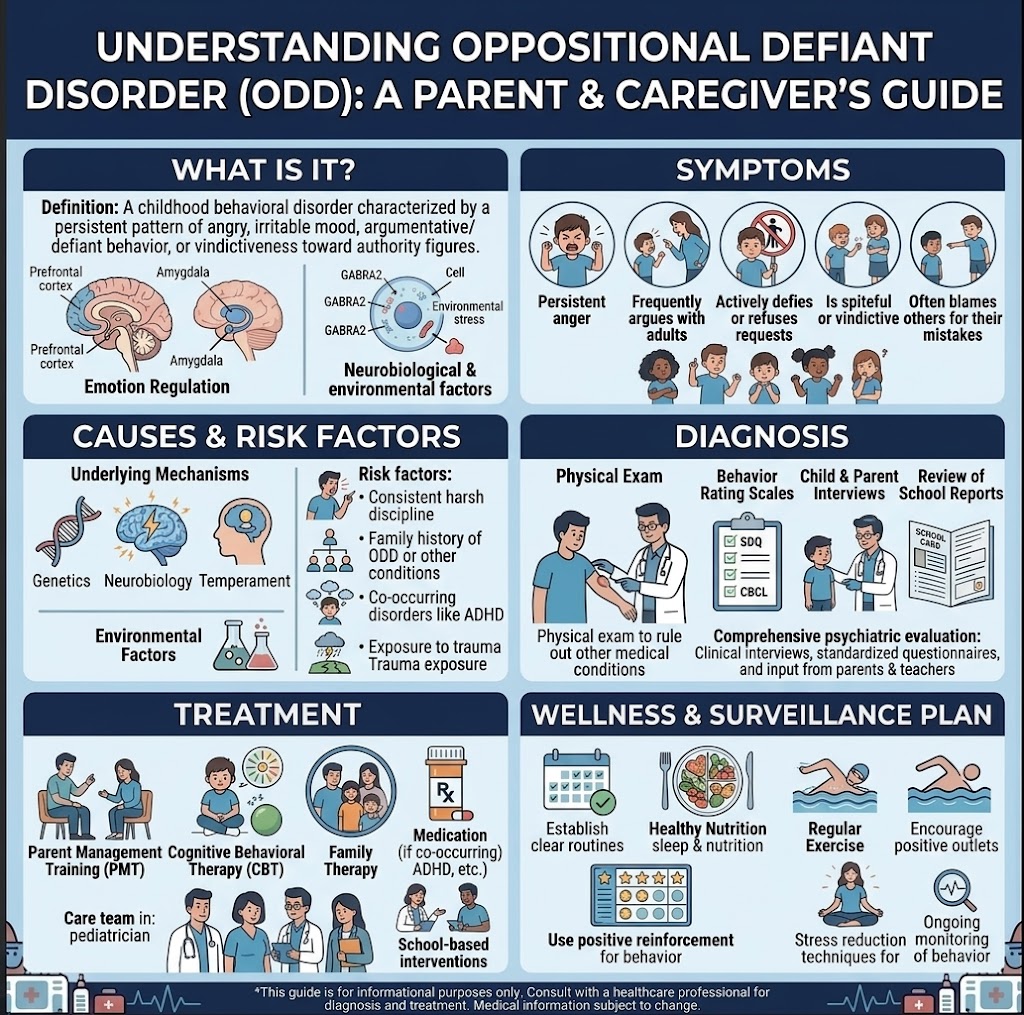
Oppositional Defiant Disorder (ODD) is a mental health condition in children and teenagers marked by a persistent pattern of anger, irritability, arguing, and defiance toward authority figures. This behavior goes beyond typical childhood struggles, causing significant difficulties within families, social circles, and at school. Recognizing ODD and seeking professional help is vital, as early intervention can greatly improve a child's behavior, strengthen family relationships, and enhance overall well-being. Treatment typically involves teaching new skills for positive family interactions and managing challenging behaviors, sometimes alongside therapy or medication for related mental health conditions.
Understanding the Condition
Oppositional Defiant Disorder (ODD): A Guide for Parents
Understanding the Condition
Common Symptoms
Understanding ODD Symptoms: It can be challenging to distinguish ODD from a child who is simply strong-willed or going through a tough phase, as some oppositional behavior is common during development. However, ODD involves behaviors that are frequent, ongoing, and severe enough to cause significant problems in relationships, school, and family life for at least six months. Symptoms typically emerge during preschool years but nearly always before the early teenage years. Key symptom categories include:
Angry and Irritable Mood: This category includes a child frequently losing their temper, being easily annoyed by others, and often expressing anger and resentment. This is a persistent emotional state, not just an occasional bad mood.
Argumentative and Defiant Behavior: Children with ODD often argue with adults, actively refuse to follow requests or rules, deliberately annoy others, and consistently blame others for their own mistakes or misbehavior. This pattern is stubborn and goes against reasonable expectations.
Hurtful and Revengeful Behavior: A key aspect of ODD is spitefulness and seeking revenge, also known as vindictiveness. This means intentionally trying to hurt others' feelings or get back at them.
Consultation Guide
Which Specialist to Meet
To address concerns about Oppositional Defiant Disorder, you should start by consulting your child's pediatrician. They can provide an initial assessment and refer you to specialists such as a child psychiatrist, child psychologist, child development expert, or a family therapist. A school psychologist may also offer valuable insights.
Preparations Before Your Visit
Before your visit, make a detailed list of your child's specific behaviors, including their frequency, intensity, and any triggers you've noticed. Note how long these behaviors have been occurring and what strategies you've tried. Be prepared to discuss your family's medical history, your child's developmental milestones, and bring any relevant school reports or observations from teachers.
Book a doctor visit near me
Parents and teachers may be asked to complete specific questionnaires or rating scales. These standardized tools systematically evaluate the presence and severity of ODD symptoms, as well as symptoms of other co-occurring conditions like Attention-Deficit/Hyperactivity Disorder (ADHD), anxiety, or depression. They provide objective data to aid in diagnosis.
This crucial step involves ruling out other conditions that can present with similar symptoms, such as ADHD, conduct disorder, anxiety disorders, depression, or learning and communication disorders. Often, ODD can occur alongside these other conditions, making a thorough evaluation essential to ensure all contributing factors are identified.
The diagnostic process will include a detailed evaluation to confirm that the symptoms are not better explained by another medical or mental health condition. If other conditions are present, they will also be identified and incorporated into the overall treatment plan, ensuring that all aspects of your child's difficulties are addressed.
Supportive Medication: There are no specific medications for ODD itself. However, medication may be prescribed to manage co-occurring mental health conditions often seen with ODD, such as Attention-Deficit/Hyperactivity Disorder (ADHD), depression, or anxiety. These medications help alleviate symptoms of the co-occurring condition, which can indirectly improve ODD behaviors. (Duration: Varies widely based on the specific condition being treated and individual response, often long-term under strict medical supervision.)
Home-Based Strategies
Consistent Routines and Positive Reinforcement: Implementing consistent daily routines, clear rules, and predictable consequences at home is crucial. Encouraging and rewarding positive behaviors through praise and privileges helps reinforce desired actions. Ensuring a nurturing, stable family environment, along with promoting healthy habits like adequate sleep and limited screen time, also supports overall well-being. (Duration: Ongoing, as these are fundamental aspects of effective parenting and family life.)
Early Intervention: Seek professional help promptly if you notice persistent patterns of defiant or angry behavior. Early identification and treatment can prevent symptoms from worsening and significantly improve long-term outcomes for the child and family.
Stress Management for Parents: Parents should learn and practice strategies to manage their own stress, as parental stress can significantly impact family dynamics and a child's behavior. A calmer parent often leads to a calmer household.
Promote Emotional Regulation: Help your child develop skills to identify and express their emotions in healthy ways. Teach them effective coping mechanisms for frustration, anger, and disappointment, building their emotional intelligence.
Long-Term Monitoring and Support
Ongoing Therapy and Support: Continue therapy as recommended by professionals, which may include individual child therapy, parent training, or family therapy. This reinforces learned skills, addresses new challenges, and provides continuous support for the child and family.
Addressing Co-occurring Conditions: Ensure that any co-occurring mental health conditions (e.g., ADHD, anxiety, depression) are adequately identified and managed through appropriate, ongoing treatment plans. Addressing these can lead to a significant improvement in ODD symptoms.
School Collaboration: Maintain open and consistent communication with school staff, including teachers and counselors. Ensure that behavior management strategies are consistent between home and school to support academic and social success.
Diagnostic Procedures
Clinical Interview and Assessment
A healthcare professional will conduct in-depth interviews with the child, parents, and potentially teachers. This process gathers detailed information about the child's developmental and medical history, family dynamics, social interactions, and school performance. The professional asks specific questions about the frequency, intensity, and duration of defiant, angry, and irritable behaviors to determine if they meet ODD diagnostic criteria and to rule out other conditions.
What to Expect
You will be asked extensive questions about your child's behavior at home, school, and with peers. The professional will seek to understand when these behaviors began, what triggers them, and how they impact daily life. They may also observe your child's interactions during the visit, and your child might be asked about their feelings and experiences. This helps build a comprehensive picture for an accurate diagnosis.
Standardized Questionnaires and Rating Scales
What to Expect
You and your child's teachers will likely receive forms to fill out, rating the frequency and severity of various behaviors (e.g., 'loses temper,' 'argues with adults,' 'blames others') on a scale. Your child might also complete age-appropriate questionnaires. These forms provide structured, objective data to help the professional make a more accurate assessment of behaviors across different settings.
Behavioral Observation
A mental health professional may observe the child in different settings, such as during a therapy or play session, to assess how they interact with adults and peers, manage frustration, and follow instructions. This direct observation offers valuable insights into the child's typical behaviors and emotional responses.
What to Expect
During appointments, the professional will pay close attention to your child's behavior, communication style, and emotional reactions. They might use structured activities or games to observe specific behaviors. These observations, combined with information from interviews and questionnaires, contribute to a comprehensive understanding of the child's challenges.
Differential Diagnosis
What to Expect
Treatment Options
Oppositional Defiant Disorder (ODD) is a mental health condition in children and teenagers marked by a persistent pattern of anger, irritability, arguing, and defiance toward authority figures. This behavior goes beyond typical childhood struggles, causing significant difficulties within families, social circles, and at school. Recognizing ODD and seeking professional help is vital, as early intervention can greatly improve a child's behavior, strengthen family relationships, and enhance overall well-being. Treatment typically involves teaching new skills for positive family interactions and managing challenging behaviors, sometimes alongside therapy or medication for related mental health conditions.
Therapies
Parent Management Training (PMT): This therapy teaches parents effective strategies to manage their child's challenging behaviors. It focuses on using positive reinforcement, consistent discipline, and clear communication skills to improve family interactions. (Duration: Typically 8-16 weekly sessions, with ongoing practice at home.)
Child Skills Training: Children learn vital social skills, anger management techniques, and problem-solving strategies. This helps them respond to difficult situations more constructively and improve their interactions with others. (Duration: Varies, often 10-20 individual or group sessions, with ongoing practice.)
Family Therapy: This therapy aims to improve communication and understanding among family members. It addresses family dynamics that may contribute to or maintain ODD behaviors, fostering a more supportive environment. (Duration: Varies, often 12-24 sessions, depending on specific family needs and progress.)
Cognitive Behavioral Therapy (CBT): CBT helps children identify and change negative thought patterns and behaviors. They learn healthier coping mechanisms for anger, frustration, and defiance, leading to more positive responses. (Duration: Typically 12-20 sessions, with consistent practice of new skills outside of therapy.)
Medications
Prevention & Long-Term Wellbeing
Prevention
Positive Parenting Practices: Establish clear rules, consistent expectations, and predictable, calm consequences for your child's behavior. Use positive reinforcement to reward good behavior and maintain a warm, supportive relationship, fostering trust and cooperation.
Healthy Lifestyle: Encourage a balanced diet, regular physical activity, adequate sleep, and limited screen time. These healthy habits contribute significantly to overall mental and physical well-being, which can positively impact behavior.
Building Resilience: Help your child develop strong problem-solving skills, foster their self-esteem, and encourage positive relationships with peers and adults. Building resilience equips them to navigate future challenges more effectively.
Tags & Topics
Notice an error or need an update?
Help us keep medical information accurate. Report incorrect info or suggest an edit.


