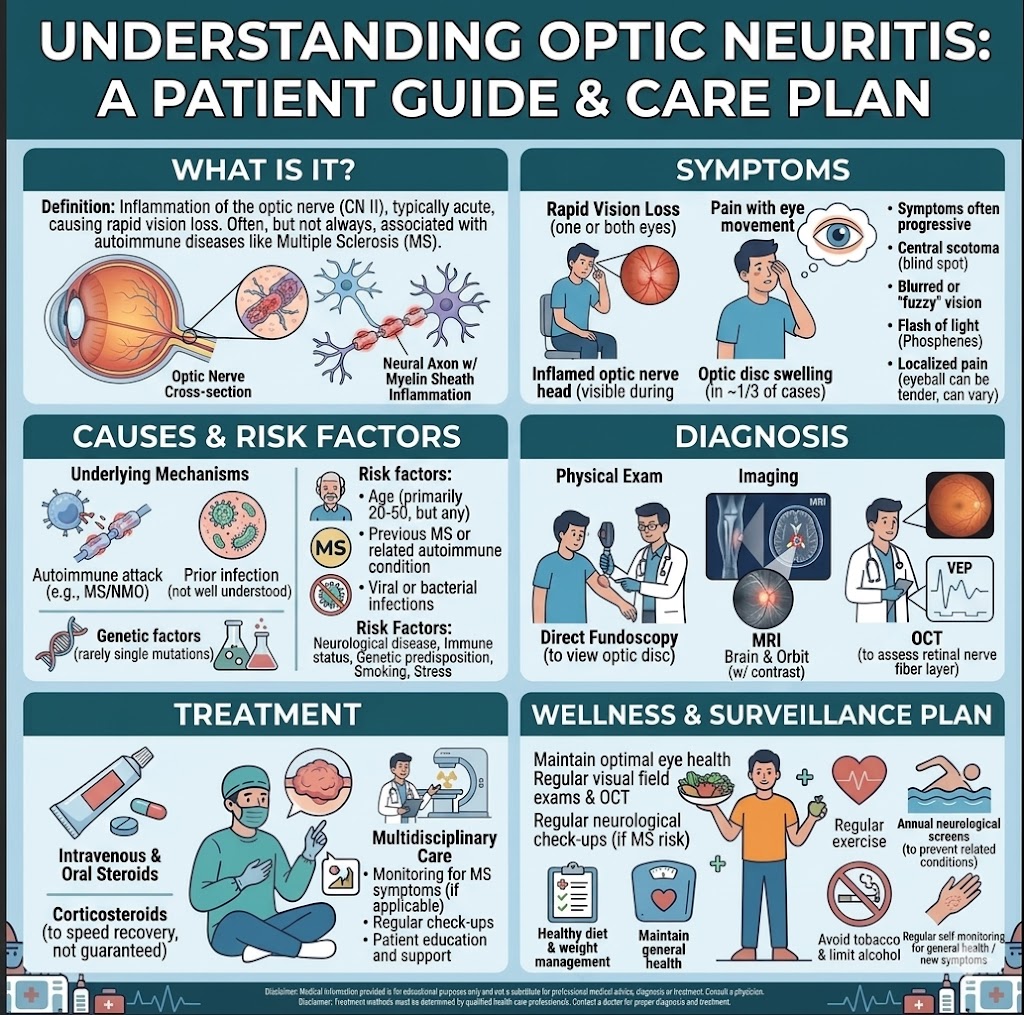
Optic neuritis is a condition where the nerve connecting your eye to your brain, called the optic nerve, becomes swollen and damaged. This nerve acts as a crucial communication cable, transmitting visual information. When it's inflamed, this signal transmission is disrupted, leading to common symptoms such as pain when moving your eye and temporary vision loss, typically in one eye. The nerve fibers of the optic nerve are covered by a protective layer called myelin. Damage to this layer is believed to occur when the body's immune system mistakenly attacks it. While many people recover their vision, optic neuritis can sometimes be the first sign of underlying conditions like Multiple Sclerosis, infections, or other immune system diseases.
Understanding the Condition
Optic Neuritis: Understanding Inflammation of the Optic Nerve
Understanding the Condition
Optic neuritis is a condition where the nerve connecting your eye to your brain, called the optic nerve, becomes swollen and damaged. This nerve acts as a crucial communication cable, transmitting visual information. When it's inflamed, this signal transmission is disrupted, leading to common symptoms such as pain when moving your eye and temporary vision loss, typically in one eye. The nerve fibers of the optic nerve are covered by a protective layer called myelin. Damage to this layer is believed to occur when the body's immune system mistakenly attacks it. While many people recover their vision, optic neuritis can sometimes be the first sign of underlying conditions like Multiple Sclerosis, infections, or other immune system diseases.
Common Symptoms
Temporary Vision Loss: Can range from partial blurring to a complete loss of sight in one eye, often developing over several days.
Loss of Color Vision: Colors may appear faded, dull, or less vibrant than usual, especially in the affected eye.
Flashes of Light: Some individuals may experience flickering or flashing lights, particularly when moving their eyes.
Consultation Guide
Which Specialist to Meet
Before your visit, be prepared to discuss your symptoms in detail: when they started, how severe they are, and what makes them better or worse. Bring a list of all current medications, any other health conditions you have, and your family medical history. It's also helpful to write down any questions you have for the doctor.
Book a doctor visit near me
Observation and Monitoring: Many individuals experience natural vision recovery without specific drug treatments. In these cases, doctors closely monitor vision and other symptoms to ensure recovery and identify any potential complications. (Duration: Ongoing until vision fully recovers, with potential long-term follow-up if an underlying cause is present.)
Prompt Reporting of New or Worsening Symptoms: Any new changes in your vision, increased eye pain, or other neurological symptoms should be communicated to your doctor immediately. Early reporting allows for timely evaluation and intervention, which can be critical for managing your condition.
Consultation Guide
You should consult an ophthalmologist (an eye doctor specializing in medical and surgical eye care) and potentially a neurologist (a doctor specializing in brain and nervous system disorders). These specialists can accurately diagnose your condition and investigate any underlying causes.
Preparations Before Your Visit
This exam checks how well different parts of your nervous system, including your brain, spinal cord, nerves, and muscles, are working. It helps doctors identify nervous system problems and their causes.
Also known as a 'sed rate,' this blood test can indicate if there's inflammation in your body. When inflammation is present, red blood cells tend to clump together and settle faster in a test tube. While it shows inflammation, it doesn't specify the cause and is often used alongside other tests.
Diagnostic Procedures
Neurological Examination
What to Expect
Your doctor will ask about your medical history and test your mental alertness, balance, coordination, reflexes, sensation, vision, hearing, and speech. This might involve simple tasks like walking in a straight line, touching your nose, or following a light with your eyes.
Erythrocyte Sedimentation Rate (ESR) Blood Test
What to Expect
A healthcare professional will take a small blood sample, usually from a vein in your arm, similar to a routine blood test. The sample is then sent to a lab for analysis.
Medical Imaging (e.g., MRI)
Imaging tests, such as Magnetic Resonance Imaging (MRI), create detailed pictures of your brain and optic nerves. These images can help detect inflammation or damage, which is especially important if conditions like Multiple Sclerosis are suspected.
What to Expect
You will lie on a sliding table that moves into a large, tube-shaped scanner. The machine uses powerful magnets and radio waves to generate images. It's a painless procedure but can be noisy, and you will need to remain still. Sometimes, a contrast dye is injected into a vein to make specific areas show up more clearly.
Treatment Options
Medications
Steroid Medications: These powerful anti-inflammatory drugs are administered to reduce swelling in the optic nerve, which can accelerate the recovery of vision. (Duration: Typically given intravenously for a few days, sometimes followed by oral tablets that are gradually reduced over time.)
Treatment for Underlying Conditions: If optic neuritis is linked to another health issue, such as an infection or an autoimmune disease, treating that specific condition is essential. This might involve specific medicines designed to manage those diseases. (Duration: Varies widely depending on the underlying condition, from short courses for acute infections to long-term or lifelong management for chronic diseases like Multiple Sclerosis.)
Managing Underlying Health Conditions: If your optic neuritis is associated with another disease (e.g., Multiple Sclerosis, lupus, or certain infections), it is vital to strictly follow the prescribed treatment plan for that condition. This helps manage the disease and potentially prevents future episodes of optic neuritis.
Prevention & Long-Term Wellbeing
Long-Term Monitoring and Management
Regular Medical Follow-ups: Consistent appointments with your ophthalmologist and neurologist are crucial, especially if optic neuritis is connected to a chronic condition like Multiple Sclerosis. These visits help monitor your vision, nerve health, and overall neurological function.
Adopting Healthy Lifestyle Practices: Maintaining a balanced diet rich in nutrients, engaging in regular physical activity, ensuring adequate sleep, and developing effective stress management techniques can significantly support your immune system and overall health.
Tags & Topics
Notice an error or need an update?
Help us keep medical information accurate. Report incorrect info or suggest an edit.


