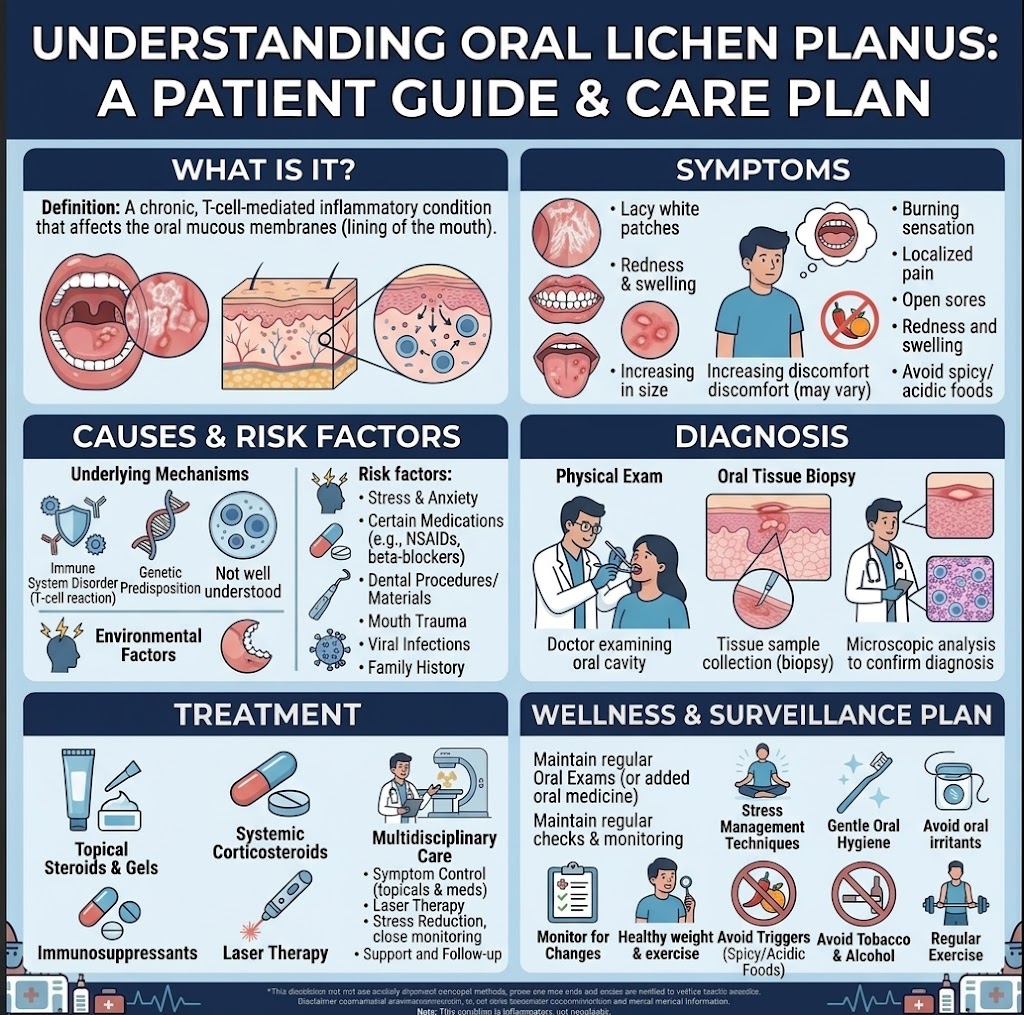
Oral lichen planus (LIE-kun PLAY-nus) is a persistent inflammatory condition that affects the moist lining (mucous membranes) inside the mouth. It is not contagious and cannot be passed from person to person. While the exact cause is unknown, it occurs when the body's immune system mistakenly attacks healthy cells in the mouth. Symptoms often vary in severity and appearance, ranging from white, lacy patches that may cause no discomfort to painful, red, swollen tissues or open sores. Regular medical checkups are crucial, especially for the more severe type, due to a potential increased risk of developing mouth cancer in affected areas.
Understanding the Condition
Oral Lichen Planus: Understanding a Chronic Mouth Condition
Understanding the Condition
Oral lichen planus (LIE-kun PLAY-nus) is a persistent inflammatory condition that affects the moist lining (mucous membranes) inside the mouth. It is not contagious and cannot be passed from person to person. While the exact cause is unknown, it occurs when the body's immune system mistakenly attacks healthy cells in the mouth. Symptoms often vary in severity and appearance, ranging from white, lacy patches that may cause no discomfort to painful, red, swollen tissues or open sores. Regular medical checkups are crucial, especially for the more severe type, due to a potential increased risk of developing mouth cancer in affected areas.
Common Symptoms
General Symptoms of Erosive Type: Beyond visible sores, individuals with erosive oral lichen planus may experience heightened sensitivity to hot, acidic, or spicy foods, bleeding or irritation during toothbrushing, inflammation of the gums (gingivitis), painful and thickened patches on the tongue, and discomfort when speaking, chewing, or swallowing.
Consultation Guide
Which Specialist to Meet
Before your appointment, gather information about your symptoms, including when they started, what makes them better or worse, and any over-the-counter or prescription medications you are currently taking. Be prepared to discuss your medical history, any allergies, and any recent changes to your dental care routine or products. Consider noting down any specific foods or activities that trigger or worsen your mouth discomfort.
Book a doctor visit near me
This is the initial step in diagnosing oral lichen planus. A healthcare professional will visually inspect your mouth, checking for characteristic white patches, red areas, or sores on the inner cheeks, gums, tongue, and lips. They will also inquire about your symptoms and medical history.
In some cases, oral lichen planus symptoms might be triggered or worsened by an allergic reaction to certain dental materials (like those in fillings or crowns). An allergy skin patch test can help identify if specific substances are causing such a reaction.
Avoid Irritants: Identify and avoid foods and drinks that trigger or worsen symptoms, such as very hot, spicy, acidic, or rough-textured items. Tobacco and alcohol should also be avoided as they can irritate oral tissues. (Duration: Ongoing, as needed)
Stress Management: Since stress can exacerbate symptoms, incorporating relaxation techniques, mindfulness, or other stress-reducing activities can be beneficial. (Duration: Ongoing, as needed)
Identification and Removal of Allergens: If an allergy to a dental material is confirmed as a trigger, replacing the offending material (e.g., a filling or crown) may help alleviate symptoms. (Duration: A one-time procedure, with potential for symptom improvement over weeks to months.)
Regular Dental and Medical Checkups: Consistent follow-up appointments with your dentist or oral medicine specialist are critical, especially for the erosive type. These checkups help monitor the condition, manage symptoms, and screen for any signs of malignant transformation (mouth cancer).
Self-Monitoring for Changes: Regularly inspect your mouth for any new or changing sores, persistent red areas, or unusual lumps. Report any concerns to your healthcare provider promptly.
Consultation Guide
Reticular Type: White, Lacy Patches: This is the most common form, appearing as white, lacy patterns or patches inside the mouth, most often on the inner cheeks and lips. It typically causes no pain, soreness, or other discomfort and usually does not require specific treatment.
Erosive Type: Red, Swollen Tissues or Open Sores: This type presents as red, swollen areas or open sores within the mouth. It can cause a burning sensation or significant pain, making it difficult to eat, speak, or swallow. Regular monitoring by a healthcare professional is essential for this type due to the potential for complications.
Diagnostic Procedures
You should consult a dentist or an oral medicine specialist for diagnosis and management. In some cases, a dermatologist (skin specialist) may also be involved, especially if lichen planus affects other parts of the body.
Preparations Before Your Visit
What to Expect
During a clinical examination, you will sit in a dental or examination chair. The doctor will use a small mirror and light to thoroughly inspect all areas inside your mouth. They may gently touch the affected areas to check for tenderness or texture changes. The examination is typically quick and painless.
If the visual examination is not conclusive or if there are suspicious lesions, particularly with the erosive type, a small tissue sample (biopsy) may be taken from the affected area. This sample is then sent to a laboratory for microscopic examination to confirm the diagnosis of oral lichen planus and rule out other conditions, including pre-cancerous changes or oral cancer.
What to Expect
Before a biopsy, the area in your mouth will be numbed with a local anesthetic injection. The doctor will then use a small scalpel or punch tool to remove a tiny piece of tissue. You might feel a slight pressure, but no pain. After the sample is taken, the area may be closed with a few dissolvable stitches. You will receive instructions on how to care for the biopsy site, and there might be some mild discomfort for a few days.
Allergy Skin Patch Test
What to Expect
During an allergy skin patch test, small amounts of suspected allergy-causing substances (allergens), such as components found in dental materials, are applied to adhesive patches. These patches are then placed on the skin, usually on your back, and kept in place for 48 hours. You will need to avoid getting the area wet. After 48 hours, the patches are removed, and the doctor will check your skin for any reactions (like redness, swelling, or itching) at the test sites. A follow-up reading may be done a few days later.
Treatment Options
Medications
Topical Anti-inflammatory Agents: These medications, often in gel, paste, or mouthwash form, are applied directly to the affected areas in the mouth. They help reduce inflammation, pain, and burning sensations. (Duration: Typically used during flare-ups for several weeks or months, and intermittently for maintenance under medical supervision.)
Systemic Anti-inflammatory Agents: For severe or widespread cases that don't respond to topical treatments, oral medications that work throughout the body to suppress the immune system's activity may be prescribed. (Duration: Short courses (weeks to a few months) during severe flare-ups, with careful monitoring for side effects.)
Pain Relievers: Over-the-counter or prescribed pain medications can help manage discomfort, especially with the erosive type of oral lichen planus. (Duration: As needed for pain relief.)
Antifungal or Antibacterial Medications: If secondary yeast (fungal) or bacterial infections occur due to open sores, specific medications will be prescribed to clear these infections. (Duration: Typically 1-2 weeks for acute infections, as directed by a healthcare professional.)
Prevention & Long-Term Wellbeing
Home Care and Lifestyle Adjustments
Excellent Oral Hygiene: Maintain meticulous oral hygiene by brushing gently with a soft toothbrush and non-abrasive toothpaste, and flossing regularly. This helps prevent secondary infections and irritation. (Duration: Ongoing, lifelong)
Prevention and Long-Term Monitoring
Nutritional Support: If pain or discomfort makes eating difficult, focus on soft, non-irritating, nutrient-dense foods to prevent weight loss and nutritional deficiencies. Consult with a dietitian if needed.
Addressing Mental Health: Chronic pain and discomfort can lead to stress, anxiety, or depression. Seek support from mental health professionals or support groups if the condition significantly impacts your emotional well-being.
Avoid Known Triggers: Continuously identify and avoid personal triggers such as specific foods, dental products, or high-stress situations to help prevent flare-ups and maintain comfort.
Tags & Topics
Notice an error or need an update?
Help us keep medical information accurate. Report incorrect info or suggest an edit.


