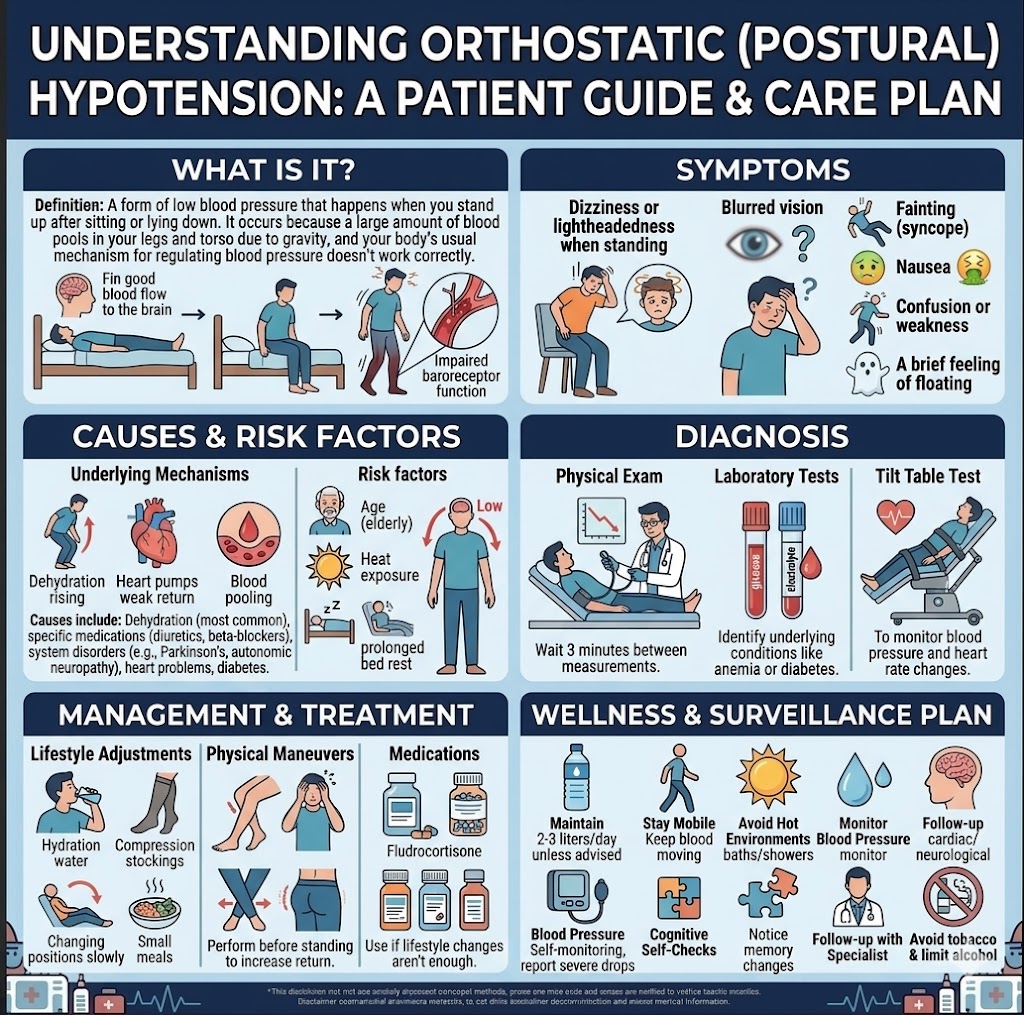
Orthostatic hypotension, also known as postural hypotension, is a common form of low blood pressure that occurs specifically when a person stands up after sitting or lying down. This sudden drop in blood pressure can lead to feelings of dizziness, lightheadedness, and sometimes even fainting. While occasional episodes can be mild and brief, frequent or severe orthostatic hypotension can indicate more serious underlying health issues. It's crucial to consult a healthcare provider if you often feel dizzy or lightheaded when you stand up. The condition happens because when you stand, gravity pulls blood into your legs and belly, temporarily reducing the amount of blood flowing back to your heart and causing your blood pressure to fall.
Understanding the Condition
Orthostatic Hypotension: Dizziness When Standing Up
Understanding the Condition
Common Symptoms
Dizziness or Lightheadedness: Feeling dizzy or like you might faint when changing from a sitting or lying position to standing.
Blurred Vision: Temporary loss of clear sight.
Weakness: Feeling unusually tired or lacking physical strength.
Fainting (Syncope): A brief loss of consciousness, often after standing up quickly.
Confusion: Feeling disoriented or unclear in your thoughts.
Nausea: Feeling sick to your stomach.
Fatigue: Persistent tiredness or lack of energy.
Consultation Guide
Which Specialist to Meet
Before your visit, it's helpful to keep a detailed diary of your symptoms. Note when they occur, how long they last, what you were doing at the time, and any factors that seem to trigger or relieve them. Bring a list of all medications, supplements, and vitamins you are currently taking, along with your complete medical history and a list of any questions you have for your doctor.
Book a doctor visit near me
An ECG records the electrical signals of your heart to check its rhythm and rate. It can detect abnormal heartbeats or signs of heart damage that could be related to your symptoms.
You will typically walk on a treadmill or ride a stationary bike while your heart rate, blood pressure, and breathing are monitored. If you cannot exercise, you may be given medication that mimics the effects of exercise on your heart. The test gradually increases in intensity and continues until you reach a target heart rate or develop symptoms, usually lasting about 15-30 minutes of exercise.
You will lie flat on a special table with straps around your body. After a period of lying still, the table will slowly tilt you upright to a near-standing position, while your heart rate and blood pressure are continuously monitored. You will remain in the tilted position for a set time or until symptoms occur. The test usually lasts for 30-60 minutes.
Wear Compression Stockings: These special stockings help prevent blood from pooling in your legs, which can improve blood flow back to the heart. (Duration: Worn daily or as needed, as long as symptoms persist.)
Stand Up Slowly: Transitioning slowly from lying or sitting to standing gives your body more time to adjust to the change in gravity, reducing sudden blood pressure drops. (Duration: Always, when changing positions.)
Elevate the Head of Your Bed: Sleeping with your head slightly elevated can help reduce the drop in blood pressure when you get out of bed in the morning. (Duration: Ongoing, typically overnight.)
Avoid Triggers: Identify and avoid factors like excessive alcohol, overheating, and prolonged standing that can worsen symptoms. (Duration: Ongoing avoidance.)
Symptom Tracking: Continue to track any symptoms, their frequency, and severity to share with your doctor, aiding in ongoing management.
Home Blood Pressure Monitoring: If advised, regularly check your blood pressure at home while sitting and standing to provide valuable data to your care team.
Consultation Guide
Orthostatic hypotension, also known as postural hypotension, is a common form of low blood pressure that occurs specifically when a person stands up after sitting or lying down. This sudden drop in blood pressure can lead to feelings of dizziness, lightheadedness, and sometimes even fainting. While occasional episodes can be mild and brief, frequent or severe orthostatic hypotension can indicate more serious underlying health issues. It's crucial to consult a healthcare provider if you often feel dizzy or lightheaded when you stand up. The condition happens because when you stand, gravity pulls blood into your legs and belly, temporarily reducing the amount of blood flowing back to your heart and causing your blood pressure to fall.
Initially, you should consult your primary care physician. If the cause of your orthostatic hypotension is unclear or linked to other health problems, your doctor may refer you to a heart specialist (cardiologist) or a nerve specialist (neurologist).
Preparations Before Your Visit
Address Underlying Conditions: If orthostatic hypotension is caused by another health problem (e.g., heart disease, nerve disorders), treating that primary condition can often resolve or significantly improve the blood pressure issues. (Duration: Varies widely depending on the underlying condition.)
Diagnostic Procedures
This routine test measures the pressure of blood in your arteries as your heart pumps. It's essential for diagnosing blood pressure abnormalities, including low blood pressure upon standing.
What to Expect
During the test, a healthcare professional will wrap an inflatable cuff around your arm. The cuff will inflate, briefly squeezing your arm, and then slowly deflate. The device measures your blood pressure at rest, and your doctor may take additional readings after you stand up to check for changes. Some people also monitor their blood pressure at home using an automatic device, which can provide valuable data over time.
An echocardiogram uses sound waves to create moving pictures of your heart. It helps doctors see how blood flows through the heart chambers and valves, and can identify any structural problems or heart conditions that might contribute to low blood pressure.
What to Expect
You will lie on an exam table. A technician will apply a special gel to your chest and then move a small device called a transducer across your skin. The transducer sends out sound waves that bounce off your heart, creating images on a monitor. You might be asked to change positions during the test. It is generally painless and takes about 30-60 minutes.
Electrocardiogram (ECG or EKG)
What to Expect
Small, sticky patches called electrodes will be placed on your chest, arms, and legs. Wires connect these patches to a machine that records your heart's electrical activity. You will lie still for a few minutes while the recording is made. The test is quick, painless, and usually takes about 5-10 minutes.
A stress test, often called an exercise stress test, shows how your heart functions during physical activity. It helps identify issues with blood flow to the heart that might not be apparent at rest.
What to Expect
This test monitors your heart rate and blood pressure as your body position changes, helping to determine if fainting or dizziness is related to how your nervous system controls blood pressure when you stand up.
What to Expect
Treatment Options
Medications
Blood Pressure-Raising Medications: Specific prescription medications can help constrict blood vessels or increase blood volume, thereby raising blood pressure. (Duration: Daily, long-term, or as prescribed by a physician.)
Therapies and Procedures
Review Medications Regularly: Discuss all your medications with your doctor, as some drugs can contribute to low blood pressure as a side effect.
Regular Medical Check-ups: Schedule routine visits with your healthcare provider to monitor your condition and overall health.
Prevention & Long-Term Wellbeing
Lifestyle and Home Remedies
Increase Fluid and Salt Intake: Drinking more water and consuming a moderate amount of salt (under doctor's guidance) can help increase blood volume and prevent blood pressure from dropping too low. (Duration: Ongoing, as advised by your doctor.)
Prevention and Daily Management
Stay Hydrated: Drink plenty of fluids throughout the day, especially water, to maintain adequate blood volume.
Eat Small, Frequent Meals: This can prevent a significant drop in blood pressure that sometimes occurs after large meals.
Incorporate Leg and Foot Exercises: Simple movements like flexing your ankles or squeezing your calf muscles before standing can help pump blood back towards your heart.
Avoid Prolonged Standing: If you must stand for long periods, shift your weight or move your legs to promote blood circulation.
Tags & Topics
Notice an error or need an update?
Help us keep medical information accurate. Report incorrect info or suggest an edit.


