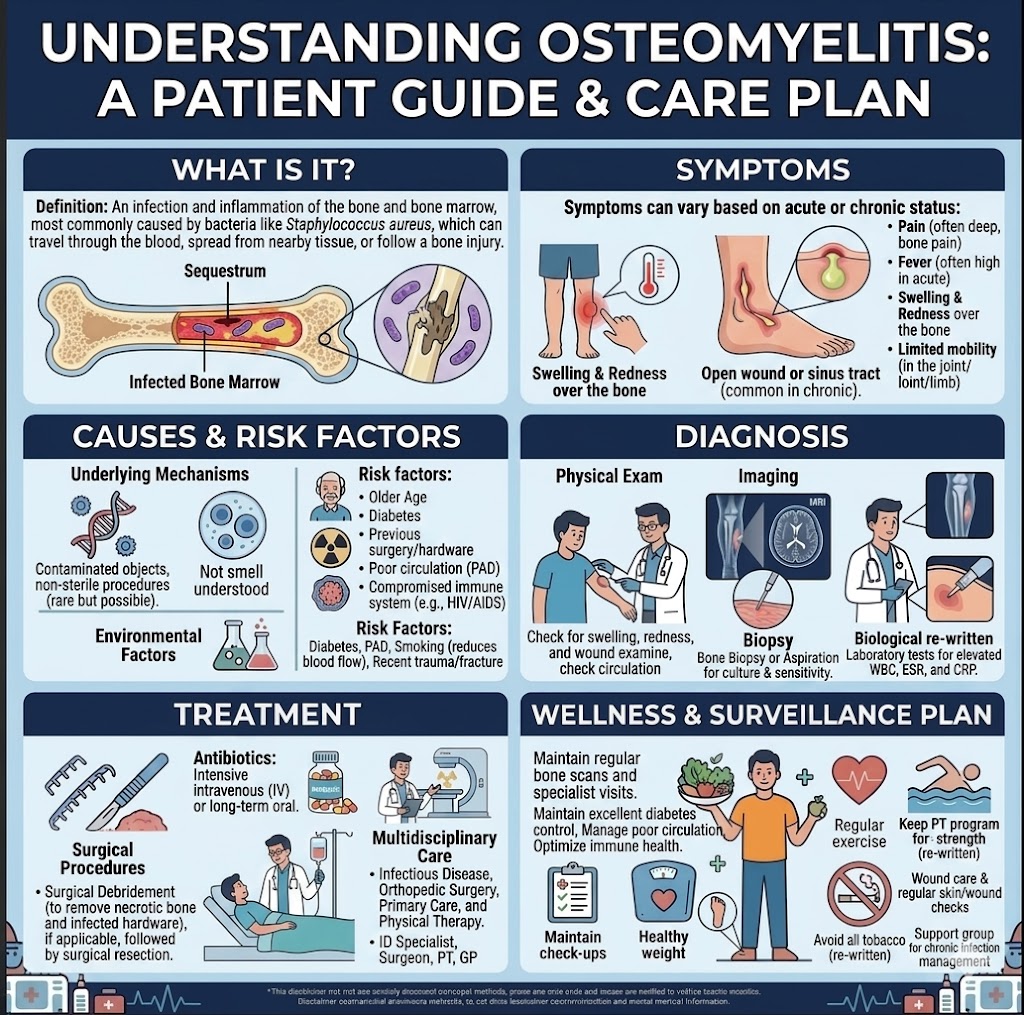
Osteomyelitis is a serious infection that can occur in any bone in your body. This infection can affect one or more parts of a bone and may reach it through the bloodstream from other infections, directly from nearby infected tissue, or if an injury exposes the bone to germs. People who smoke, have chronic conditions like uncontrolled diabetes or kidney failure, or suffer from foot ulcers (common in diabetics) are at a higher risk. Untreated osteomyelitis can lead to severe complications, including bone death (osteonecrosis), spread to nearby joints (septic arthritis), or impaired bone growth in children. Most cases require significant treatment, often involving surgery to remove infected tissue and long courses of powerful antibiotics.
Understanding the Condition
Osteomyelitis: Understanding and Managing Bone Infections
Understanding the Condition
Common Symptoms
Localized Pain: Aching or sharp pain in the bone near the infection that may worsen over time.
Swelling and Tenderness: The area over the infected bone may look swollen, feel warm to the touch, and be painful when pressed.
Fever and Chills: General signs of infection, indicating the body's immune response.
Fatigue: Feeling unusually tired or unwell, often accompanying a systemic infection.
Reduced Movement: Difficulty moving the affected limb or joint due to pain or inflammation.
Subtle or No Symptoms: In some cases, especially in infants, older adults, or those with weakened immune systems, osteomyelitis may present with subtle or no clear symptoms, making diagnosis challenging.
Consultation Guide
Which Specialist to Meet
Before your visit, it's helpful to write down all your symptoms, including when they started and how they have progressed. Prepare a list of all your current medications, any chronic health conditions you have, and recent surgeries or injuries. Note down any questions you have for the doctor to ensure all your concerns are addressed.
Book a doctor visit near me
Adhere to Treatment Plan: Complete the full course of antibiotics, even if symptoms improve, to ensure the infection is fully eradicated and prevent recurrence, which can be challenging to treat.
Regular Follow-ups: Maintain scheduled appointments with your healthcare team to monitor healing, check for any signs of recurring infection, and manage any ongoing symptoms or complications.
Consultation Guide
You will lie on a narrow, motorized table that slides into a large, donut-shaped machine called a gantry. As the table moves, the X-ray tube inside the gantry rotates around you, capturing images. You might hear humming or clicking sounds. It's crucial to remain very still during the scan to ensure clear images. Sometimes, a contrast dye is injected into a vein or given as a drink to highlight certain areas, which might cause a warm sensation or metallic taste. The procedure typically takes 15-30 minutes.
Amputation: In severe cases where the infection is widespread, has caused significant bone destruction, or is not responding to other treatments, amputation of the affected limb may be required to prevent the infection from spreading further and to save the patient's life. (Duration: Initial hospital stay is typically a week or more, followed by extensive physical rehabilitation and adaptation over several months.)
Identify and Manage Risk Factors: Work with your doctor to actively manage underlying conditions that weaken your immune system or impair blood flow, such as uncontrolled diabetes, peripheral artery disease, or kidney failure.
Diagnostic Procedures
An X-ray is a quick, non-invasive imaging test that uses a small amount of radiation to create pictures of the inside of your body, primarily focusing on bones. It can help identify bone damage or changes associated with infection, although early osteomyelitis may not be visible on X-rays, making more advanced imaging necessary.
What to Expect
You will be asked to lie on a table or stand in front of a specialized plate, depending on the body part being examined. A technician will position your body to get the best view and may ask you to hold still or hold your breath briefly. You may need to remove jewelry or certain clothing items that could interfere with the image. The X-ray machine will take images, which is painless and takes only a few seconds per view.
CT scan (Computerized Tomography scan)
A CT scan uses a series of X-rays taken from different angles around your body. A computer then processes these images to create detailed cross-sectional 'slices' of bones, soft tissues, and blood vessels. CT scans provide much more detail than standard X-rays and are very useful for pinpointing the exact location and extent of bone infection, as well as detecting related abscesses or dead bone tissue.
What to Expect
Treatment Options
Osteomyelitis is a serious infection that can occur in any bone in your body. This infection can affect one or more parts of a bone and may reach it through the bloodstream from other infections, directly from nearby infected tissue, or if an injury exposes the bone to germs. People who smoke, have chronic conditions like uncontrolled diabetes or kidney failure, or suffer from foot ulcers (common in diabetics) are at a higher risk. Untreated osteomyelitis can lead to severe complications, including bone death (osteonecrosis), spread to nearby joints (septic arthritis), or impaired bone growth in children. Most cases require significant treatment, often involving surgery to remove infected tissue and long courses of powerful antibiotics.
You should consult with your primary care provider first, who may then refer you to specialists. An **orthopedic surgeon** is often involved, as they specialize in bone and joint conditions, including infections. An **infectious disease specialist** may also be consulted to help manage the antibiotic treatment. If the infection is in the foot, a **podiatrist** (foot specialist) might be part of the care team, especially for individuals with diabetes.
Preparations Before Your Visit
Medications
Antibiotics: Powerful medications used to kill the bacteria causing the infection. Treatment often begins with antibiotics given directly into a vein (intravenously) for several weeks, followed by a course of oral antibiotics. (Duration: Typically 4 to 6 weeks, but can extend for several months, depending on the severity and type of infection, and how well the body responds.)
Surgical Procedures
Debridement: The most common surgical procedure for osteomyelitis, involving the careful removal of all dead (necrotic) or infected bone tissue. Any pus pockets or foreign objects (like plates or screws from a previous surgery) that might be contributing to the infection are also removed. (Duration: The hospital stay and initial recovery may last several days to a week. Full healing and bone remodeling can take many weeks to several months.)
Drainage: If an abscess (pocket of pus) has formed, surgery may be performed to drain the pus to relieve pressure and help the antibiotics reach the infection site more effectively. (Duration: A few days for hospital stay, with ongoing wound care and dressing changes typically lasting for weeks.)
Pain Management: Strategies to control pain, which may include over-the-counter pain relievers, prescription medications, or other non-pharmacological methods to ensure comfort during recovery. (Duration: Ongoing as needed throughout treatment and recovery, tailored to individual pain levels.)
Wound Care: For open wounds or surgical sites, proper cleaning and dressing changes are essential to prevent further infection, promote healing, and protect the affected area. (Duration: Daily or multiple times a day for weeks to months, until the wound has fully closed and healed.)
Physical Therapy: After surgery or prolonged immobility, physical therapy helps restore strength, flexibility, and range of motion in the affected limb, aiding in a full recovery and return to normal activities. (Duration: Weeks to months, depending on the extent of surgery, individual recovery progress, and functional goals.)
Prevention & Long-Term Wellbeing
Bone Graft: If a large section of bone needs to be removed during debridement, a bone graft (using bone from another part of your body or a donor) may be necessary to fill the gap and promote new bone growth, restoring strength and function. (Duration: Recovery can be extensive, often several months for the graft to integrate and for the bone to heal completely.)
Prevention of Infection
Prompt Wound Care: Immediately clean any cuts, scrapes, animal scratches, or bites with soap and water. Apply a clean bandage and monitor the wound closely for signs of infection (redness, swelling, pus, increasing pain). Seek medical attention for deep wounds or any signs of infection.
Manage Chronic Conditions: For individuals with diabetes, strictly control blood sugar levels. Regularly inspect feet for any cuts, sores, or ulcers, and seek prompt medical care for any foot problems to prevent infections from reaching the bone.
Avoid Illicit Drug Use: If using intravenous drugs, ensure sterile needles are always used, and clean the injection site thoroughly to minimize the risk of introducing bacteria into the bloodstream.
Practice Good Hygiene: Regular hand washing helps prevent the spread of bacteria, reducing the overall risk of various infections that could potentially lead to osteomyelitis.
Long-Term Monitoring and Management
Lifestyle Modifications: If smoking, quitting can significantly improve healing and reduce future infection risk by enhancing blood flow and immune function. Maintaining a healthy diet also supports overall immune health.
Foot Care for Diabetics: Meticulous daily foot inspection, wearing appropriate protective footwear, and regular podiatrist visits are crucial to prevent foot ulcers and subsequent bone infections in individuals with diabetes.
Tags & Topics
Notice an error or need an update?
Help us keep medical information accurate. Report incorrect info or suggest an edit.


