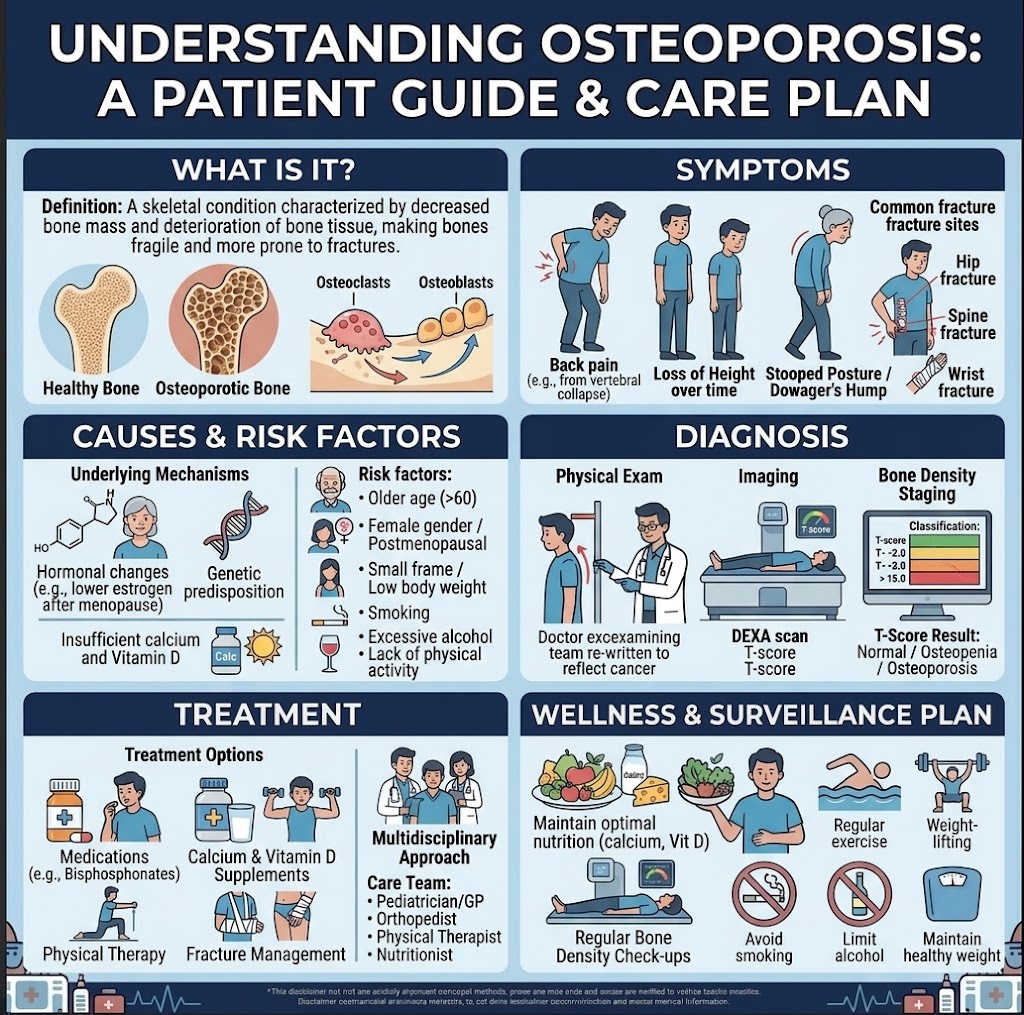
Osteoporosis is a condition that causes bones to become weak and brittle. This fragility means bones can break easily, often from minor stresses like bending, coughing, or a fall. Common fracture sites include the hip, wrist, and spine. Bones are constantly renewed, but with osteoporosis, new bone creation can't keep up with old bone loss. While it affects all people, white or Asian women, especially those past menopause, face the highest risk. Healthy diet, exercise, and certain medicines can help prevent bone loss or strengthen existing weak bones.
Understanding the Condition
Osteoporosis: Understanding and Managing Bone Weakness
Understanding the Condition
Common Symptoms
Early Stages: Often, there are no noticeable symptoms when bone loss first begins.
Consultation Guide
Osteoporosis is a condition that causes bones to become weak and brittle. This fragility means bones can break easily, often from minor stresses like bending, coughing, or a fall. Common fracture sites include the hip, wrist, and spine. Bones are constantly renewed, but with osteoporosis, new bone creation can't keep up with old bone loss. While it affects all people, white or Asian women, especially those past menopause, face the highest risk. Healthy diet, exercise, and certain medicines can help prevent bone loss or strengthen existing weak bones.
Back Pain: Caused by a broken or collapsed bone in the spine.
Height Loss: Gradual reduction in height over time.
Stooped Posture: A noticeable hunching of the back.
Easy Fractures: A bone breaking much more easily than expected, even from a mild impact.
Consultation Guide
Which Specialist to Meet
You should consult with your primary care physician first. Depending on your situation, they may refer you to specialists such as an endocrinologist (hormone specialist), a rheumatologist (specialist in bone and joint diseases), or an orthopedist (bone and joint surgeon).
Preparations Before Your Visit
Hormone-Related Therapies: Some treatments may involve managing hormone levels, such as estrogen therapy for postmenopausal women, to reduce bone loss. (Duration: Varies based on individual needs and risk factors.)
Procedures for Fractures
Vertebroplasty: This procedure involves injecting a specialized bone cement directly into a fractured or collapsed spinal bone (vertebra). The cement hardens quickly, stabilizing the bone and often providing significant pain relief for compression fractures caused by osteoporosis or cancer. (Duration: A single procedure, with pain relief potentially lasting long-term.)
Kyphoplasty: Similar to vertebroplasty, but before injecting cement, a small balloon is inserted into the fractured spinal bone and inflated. This creates space and may help restore some lost height before the balloon is deflated and removed, and cement is injected. (Duration: A single procedure, with pain relief and potential height restoration.)
Regular Physical Activity: Incorporate weight-bearing exercises (walking, hiking, dancing) and strength training into your routine. This stimulates bone growth and maintains bone density. Improve balance to prevent falls, a major cause of fractures.
Diagnostic Procedures
Before your visit, be prepared to discuss your medical history, including any previous fractures, your family history of osteoporosis (especially if a parent had a hip fracture), your diet, exercise habits, and any medications you are taking (including corticosteroids). Mention if you experienced early menopause. Your doctor might also order a bone density test.
Book a doctor visit near me
Bone Density Test (DEXA Scan)
A bone density test, often called a DEXA (Dual-energy X-ray Absorptiometry) scan, is a specialized X-ray that measures the amount of calcium and other bone minerals packed into a segment of your bone. This helps determine if you have osteoporosis or are at risk. The most commonly tested areas are the spine, hip, and sometimes the forearm. The test helps doctors diagnose osteoporosis, predict your future risk of fractures, and monitor the effectiveness of treatments. It differs from a standard bone scan, which detects fractures, infections, or cancer.
What to Expect
You will lie on a padded table while a mechanical arm passes over your body. You may be asked to hold your breath for a few seconds during imaging to ensure clear pictures. The test is non-invasive, painless, and typically takes 10-20 minutes. You won't need any injections. You should wear loose, comfortable clothing and avoid wearing items with zippers, belts, or buttons made of metal.
Treatment Options
Medications
Bone-Protecting Medications: These are often the first choice for treating osteoporosis. They work by slowing down the rate at which old bone is broken down, allowing new bone formation to catch up and helping to increase bone density. (Duration: Typically several years, as directed by your doctor, with periodic reassessment.)
Bone-Building Medications: For more severe cases or individuals who don't respond to other treatments, some medications can actively stimulate new bone growth. (Duration: Usually prescribed for a limited period, often 1-2 years.)
Adherence to Treatment Plan: Consistently follow your doctor's prescribed medication regimen and lifestyle recommendations to maximize bone health benefits and prevent further bone loss or fractures.
Regular Medical Check-ups: Schedule routine appointments with your healthcare provider to monitor your bone density, assess treatment effectiveness, and adjust your care plan as needed.
Prevention & Long-Term Wellbeing
Lifestyle and Dietary Changes
Balanced Nutrition: Focus on a diet rich in calcium and vitamin D, essential for bone health. Good sources of calcium include low-fat dairy, dark leafy greens, canned fish with bones (like salmon/sardines), tofu, and fortified cereals/juices. (Duration: Ongoing, lifelong commitment.)
Regular Exercise: Engage in weight-bearing exercises (walking, jogging, dancing) and muscle-strengthening exercises (lifting weights, using resistance bands) to build and maintain bone density. Exercises that improve balance (tai chi, yoga) can help prevent falls. (Duration: Ongoing, lifelong commitment.)
Avoidance of Harmful Habits: Limit alcohol consumption and avoid smoking, as these can negatively impact bone health. (Duration: Ongoing, lifelong commitment.)
Prevention
Adequate Calcium Intake: Ensure you consume enough calcium daily. Adults aged 18-50 typically need 1,000 mg per day. Women over 50 and men over 70 need 1,200 mg daily. Obtain this from food sources or, if necessary, supplements, after consulting your doctor.
Sufficient Vitamin D: Vitamin D helps your body absorb calcium. Aim for adequate sunlight exposure or consume vitamin D-rich foods (fatty fish, fortified milk). Many people benefit from vitamin D supplements; discuss the right dosage with your healthcare provider.
Healthy Lifestyle Choices: Avoid smoking and excessive alcohol consumption, as these habits can significantly harm bone health and increase fracture risk. Maintain a healthy body weight.
Long-Term Management and Monitoring
Fall Prevention Strategies: Make your home safer by removing trip hazards, ensuring adequate lighting, installing grab bars, and wearing appropriate footwear. Discuss vision and balance issues with your doctor.
Bone-Healthy Diet Maintenance: Continue to prioritize foods rich in calcium and vitamin D, and stay hydrated, as part of an overall balanced diet.
Tags & Topics
Notice an error or need an update?
Help us keep medical information accurate. Report incorrect info or suggest an edit.


