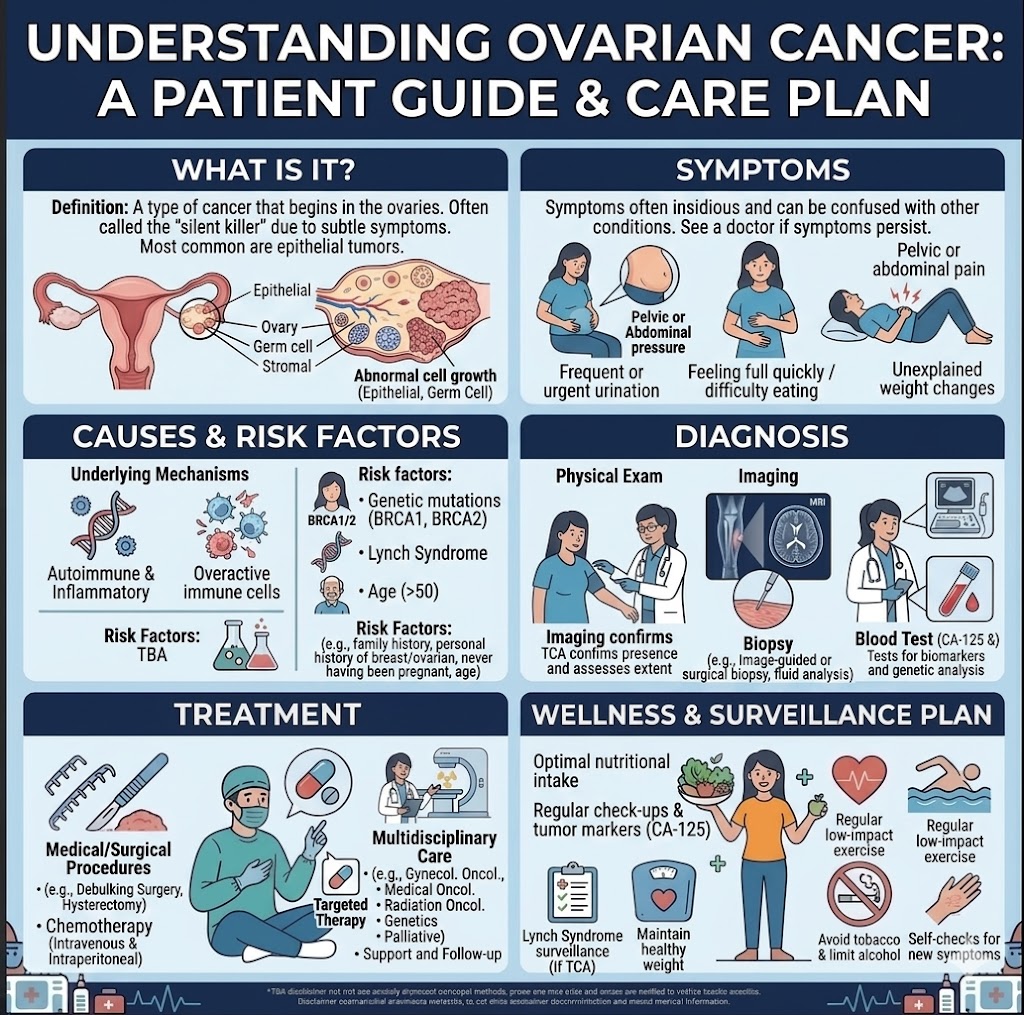
Ovarian cancer begins in the ovaries, fallopian tubes, or the peritoneum. Early symptoms are often vague and mistaken for common ailments, leading to late diagnosis. Recognizing the signs and seeking prompt medical attention are key to early detection and effective treatment.
Understanding the Condition
Ovarian cancer begins in the ovaries, fallopian tubes, or the peritoneum. Early symptoms are often vague and mistaken for common ailments, leading to late diagnosis. Recognizing the signs and seeking prompt medical attention are key to early detection and effective treatment.
Common Symptoms
Bloating: Persistent abdominal fullness or swelling.
Pelvic or Abdominal Pain: Discomfort or pressure in the lower abdomen.
Difficulty Eating or Feeling Full Quickly: Satiety after eating very little.
Frequent or Urgent Urination: Increased need to urinate.
Changes in Bowel Habits: New or worsening constipation.
Fatigue: Persistent tiredness not relieved by rest.
Back Pain: Unexplained lower back discomfort.
Pain During Sex: Discomfort during intercourse.
Menstrual Changes: Irregular periods or abnormal bleeding.
Weight Loss: Unexplained body weight reduction.
Consultation Guide
Which Specialist to Meet
Start with your primary care doctor or gynecologist. If cancer is suspected, you'll be referred to a gynecologic oncologist, a surgeon specializing in female reproductive cancers.
Preparations Before Your Visit
Before your visit, list all symptoms (onset, frequency), medical history, medications, and questions. Consider bringing a trusted friend or family member for support and note-taking.
Book a doctor visit near me
Pain and Symptom Management: Working with your medical team to manage pain, nausea, fatigue, and other side effects of cancer and its treatment through prescribed medications and supportive techniques. (Duration: Throughout treatment and as needed during recovery.)
Symptom Vigilance: Remain aware of your body and promptly report any new or returning symptoms to your healthcare team for timely evaluation.
Consultation Guide
You will lie on an exam table with feet in stirrups. The doctor inserts gloved fingers into your vagina while pressing on your abdomen. It may cause brief pressure or mild discomfort and takes only a few minutes.
Diagnostic Procedures
Ovarian Cancer: Understanding, Diagnosis, and Care
Understanding the Condition
A manual examination where the doctor checks the ovaries, uterus, and surrounding organs for abnormalities in size, shape, or texture.
What to Expect
Imaging Tests (Ultrasound, CT, MRI, PET)
These tests create detailed images of internal organs. Ultrasound uses sound waves. CT scans use X-rays. MRI scans use magnets and radio waves. PET scans use a radioactive sugar tracer to highlight cancer cells.
What to Expect
For ultrasound, a transducer is moved over your abdomen (abdominal) or gently inserted into your vagina (transvaginal). For CT/MRI/PET, you lie on a table that slides into a machine; contrast dye might be used. You must remain still. Procedures range from 15-60+ minutes, with some machines being noisy or enclosed.
Blood Tests (e.g., CA 125)
Measures levels of certain protein markers in the blood. CA 125 can be elevated in ovarian cancer, but also in non-cancerous conditions, so it's not used alone for diagnosis.
What to Expect
A small sample of blood is drawn from a vein in your arm using a needle. This is a quick procedure, typically lasting a few minutes, causing a brief pinch or sting.
Often the definitive diagnostic method. A surgeon removes tissue samples for microscopic examination (biopsy) and assesses the extent of cancer spread (staging) to guide treatment.
What to Expect
Genetic Counseling & Family History: Understand your family history of cancers; genetic testing (e.g., BRCA) for high-risk individuals helps assess inherited risk.
Adhere to Follow-Up Care: Regular appointments, exams, and blood tests (like CA 125) are vital for monitoring health and early detection of any potential recurrence.
Emotional & Psychological Support: Utilize counseling, support groups, or peer connections to manage the emotional challenges associated with a cancer diagnosis and treatment.
Treatment Options
Surgery (Biopsy and Staging)
Surgical Procedures
Lymph Node Dissection: Removal of nearby lymph nodes to check for cancer spread, aiding in accurate staging and treatment planning. (Duration: Performed during the primary surgery, contributing to overall recovery time.)
Debulking Surgery (Cytoreduction): If cancer has spread, the surgeon attempts to remove as much cancerous tissue as possible to enhance subsequent treatments like chemotherapy. (Duration: This is a major surgery requiring significant hospital stay and a longer recovery period, often several weeks to months.)
Systemic Chemotherapy: Powerful drugs administered intravenously or orally to kill rapidly growing cancer cells throughout the body. (Duration: Typically given in cycles over several months, with treatment often lasting 3-6 months, depending on the regimen and response.)
Intraperitoneal Chemotherapy: Chemotherapy drugs delivered directly into the abdominal cavity through a catheter, targeting cancer cells within that area. (Duration: Administered in cycles, often over several months, similar to systemic chemotherapy.)
Therapies
Targeted Drug Therapy: Medications that specifically target weaknesses present within cancer cells, minimizing harm to healthy cells. (Duration: Can be used for extended periods, sometimes ongoing for years, or until progression or intolerable side effects occur.)
Hormone-Blocking Therapy: Medications that block hormones or prevent the body from producing them, slowing the growth of certain ovarian cancers sensitive to hormones. (Duration: Often taken daily for several years, or until progression.)
Immune Checkpoint Inhibitor Therapy: Drugs that help your body's immune system recognize and fight cancer cells by removing natural 'brakes' on immune responses. (Duration: Typically administered intravenously in cycles over several months, and potentially for longer periods in maintenance settings.)
Nutritional Support: Maintaining a balanced diet and adequate hydration can help manage treatment side effects, boost energy, and support overall recovery. (Duration: Ongoing throughout treatment and recovery.)
Gentle Physical Activity: Light exercise, such as walking, as tolerated, can help reduce fatigue, improve mood, and maintain strength during and after treatment. (Duration: As advised by your medical team, integrated into daily life.)
Risk-Reducing Surgery: For specific high-risk genetic mutations (e.g., BRCA), preventative removal of ovaries and fallopian tubes may be an option after childbearing.
Long-Term Monitoring and Support
Post-Treatment Healthy Living: Continue a nutritious diet, gentle exercise (as approved), and adequate rest to support ongoing recovery and overall quality of life.
Prevention & Long-Term Wellbeing
This is a surgical procedure performed under general anesthesia, so you will be unconscious. The surgeon may use a larger incision (laparotomy) or minimally invasive techniques (laparoscopy). Recovery involves a hospital stay and a period of rest, varying by procedure extent.
Oophorectomy and Salpingectomy: Removal of one or both ovaries (oophorectomy) and fallopian tubes (salpingectomy). (Duration: Recovery usually involves several days in the hospital and several weeks of rest at home.)
Hysterectomy: Removal of the uterus, often performed with oophorectomy and salpingectomy if cancer has spread or as a preventative measure. (Duration: Similar to oophorectomy and salpingectomy, requiring hospital stay and weeks of home recovery.)
Supportive Care/Lifestyle Adjustments
Prevention and Risk Reduction
Healthy Lifestyle: Maintain a healthy weight through a balanced diet and regular physical activity to potentially reduce overall cancer risk.
Reproductive Factors: Long-term oral contraceptive use, childbirth, and breastfeeding may influence risk; discuss these factors with your doctor.
Tags & Topics
Notice an error or need an update?
Help us keep medical information accurate. Report incorrect info or suggest an edit.


