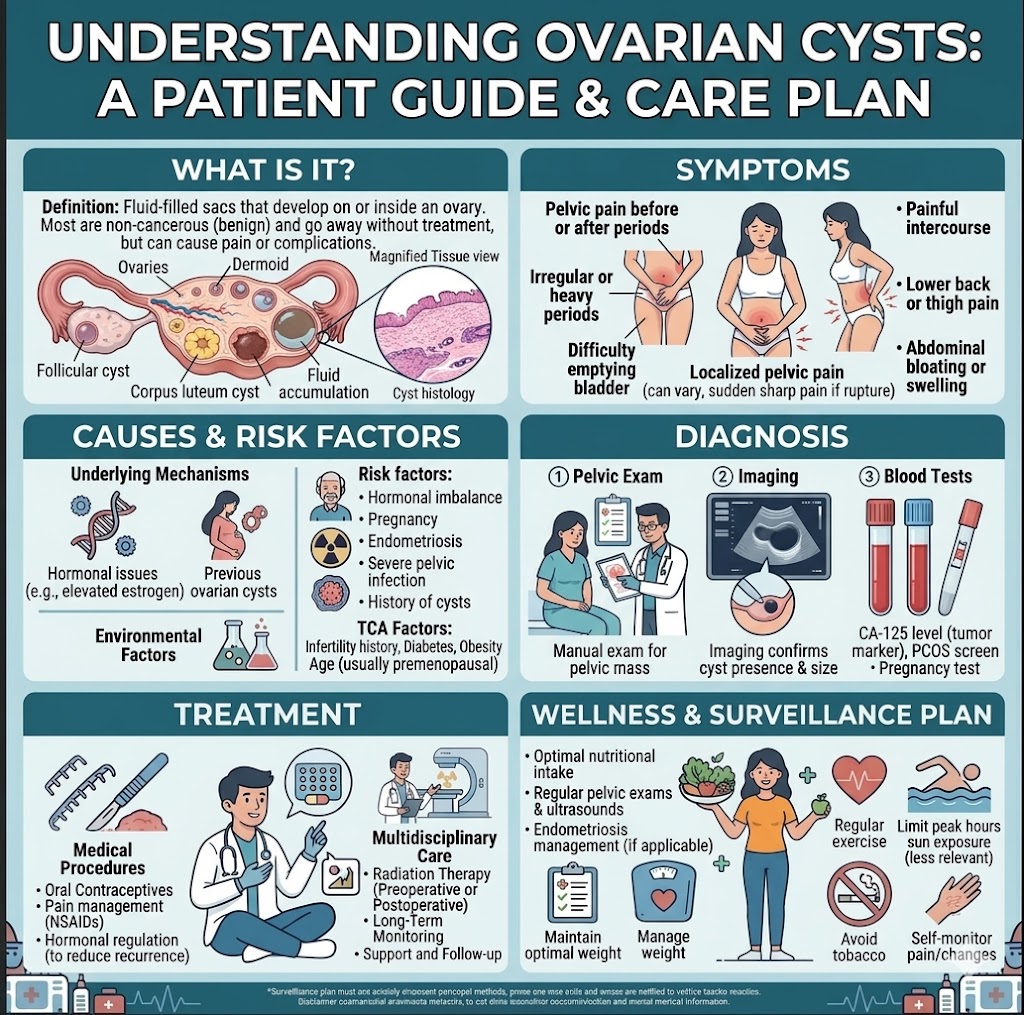
Ovarian cysts are common fluid-filled sacs that can develop in or on an ovary. Females have two ovaries, almond-shaped organs located on each side of the uterus, where eggs develop and are released monthly. Most ovarian cysts are harmless, cause little to no discomfort, and often disappear on their own within a few months. However, some cysts can twist or rupture, leading to serious symptoms that require immediate medical attention. Regular pelvic exams and awareness of symptoms are important for maintaining your health.
Understanding the Condition
Understanding Ovarian Cysts
Understanding the Condition
Ovarian cysts are common fluid-filled sacs that can develop in or on an ovary. Females have two ovaries, almond-shaped organs located on each side of the uterus, where eggs develop and are released monthly. Most ovarian cysts are harmless, cause little to no discomfort, and often disappear on their own within a few months. However, some cysts can twist or rupture, leading to serious symptoms that require immediate medical attention. Regular pelvic exams and awareness of symptoms are important for maintaining your health.
Common Symptoms
Pelvic Pain: Pain in the lower abdomen that may come and go, feeling like a dull ache or a sharp sensation on one side, below the bellybutton.
Abdominal Fullness, Pressure, or Heaviness: A feeling of discomfort or weight in your belly area.
Sudden, Severe Abdominal or Pelvic Pain: Intense, sharp pain in the lower abdomen or pelvis that appears suddenly. This requires immediate medical help.
Pain with Fever or Vomiting: Severe pain accompanied by a raised body temperature or throwing up. Seek immediate medical attention.
Signs of Shock: Symptoms such as cold, clammy skin; unusually fast breathing; feeling lightheaded or very weak. This is a medical emergency.
Consultation Guide
Which Specialist to Meet
You should consult with a primary care provider or a gynecologist (a doctor specializing in female reproductive health).
Preparations Before Your Visit
Before your visit, make a note of any symptoms you're experiencing, including when they started, how often they occur, and their severity. Be prepared to discuss your menstrual cycle history, any medications you are taking, and any questions or concerns you have about your condition.
Book a doctor visit near me
Observation (Watchful Waiting): For most functional cysts that are small and cause no symptoms, a doctor might recommend monitoring the cyst over a few months with follow-up ultrasounds to see if it resolves on its own. (Duration: Typically 2 to 3 menstrual cycles (2-3 months))
Pain Relievers: Over-the-counter pain medications can help manage any discomfort caused by cysts. (Duration: As needed for symptoms)
Cystectomy (Cyst Removal): Surgery to remove only the cyst while preserving the ovary. This is often performed if a cyst is large, persistent, causing significant symptoms, or appears suspicious. (Duration: Recovery typically takes a few weeks, depending on the surgical method (laparoscopic vs. open surgery))
Know Your Body and Menstrual Cycle: Be attentive to any unusual menstrual symptoms or changes in your cycle, especially if they persist for more than a few months, and discuss them with your healthcare provider.
Hormonal Contraception (if appropriate): If recommended by your doctor, using hormonal birth control can help prevent the formation of new functional ovarian cysts.
Recognize Urgent Symptoms: Stay alert for signs that might indicate a serious problem, such as sudden severe pain, pain with fever/vomiting, or signs of shock, and seek immediate medical help if they occur.
Consultation Guide
You will lie on an examination table with your feet in stirrups. The doctor will first examine your external genital area. Then, they will insert two gloved fingers into your vagina while pressing on your abdomen with their other hand to feel your uterus and ovaries. This part may cause some pressure but should not be painful. A Pap test, which screens for cervical cancer, is often done at the same time.
Ultrasound (Sonography)
Follow-Up with Your Doctor: If you've had ovarian cysts before or have risk factors, regular follow-up appointments can help monitor for recurrence or other issues.
Diagnostic Procedures
A physical examination to check the health of your reproductive organs, including the vulva, vagina, cervix, uterus, and ovaries. It can help detect signs of ovarian cysts or other abnormalities.
What to Expect
An imaging test that uses sound waves to create pictures of your internal organs. It helps visualize the ovaries and identify the presence, size, and characteristics of any cysts.
What to Expect
This can be done in two ways. For an abdominal ultrasound, a gel is applied to your lower belly, and a handheld device (transducer) is moved over your skin. For a transvaginal ultrasound, a thin, lubricated wand is gently inserted into your vagina. Both methods are generally painless and allow the doctor to see detailed images of your ovaries on a screen.
A blood test that measures the level of a protein called cancer antigen 125. While it can be elevated in ovarian cancer, it can also be raised by many non-cancerous conditions (like menstruation or fibroids), so it's not a standalone screening test for ovarian cancer. It may be used to monitor certain cancers during and after treatment or in individuals with a very high risk of ovarian cancer.
What to Expect
A healthcare professional will draw a small sample of blood, usually from a vein in your arm. This is a standard blood draw procedure and typically takes only a few minutes.
Treatment Options
Home Remedies and Watchful Waiting
Medications
Hormonal Birth Control: Pills containing hormones (estrogen and progestin, or progestin only) can prevent new cysts from forming by stopping ovulation. They do not shrink existing cysts. (Duration: Typically prescribed for several months or longer, depending on your doctor's recommendation)
Surgical Procedures
Prevention & Long-Term Wellbeing
Oophorectomy (Ovary Removal): Surgical removal of one or both ovaries, sometimes along with the fallopian tubes. This may be necessary for very large cysts, cysts that have twisted (ovarian torsion), cysts that recur, or if there's a concern about cancer. (Duration: Recovery typically takes a few weeks, depending on the surgical method and extent of removal)
Prevention
Regular Pelvic Exams: Schedule routine check-ups with your doctor to allow for early detection of any changes in your ovaries or reproductive health.
Tags & Topics
Notice an error or need an update?
Help us keep medical information accurate. Report incorrect info or suggest an edit.


