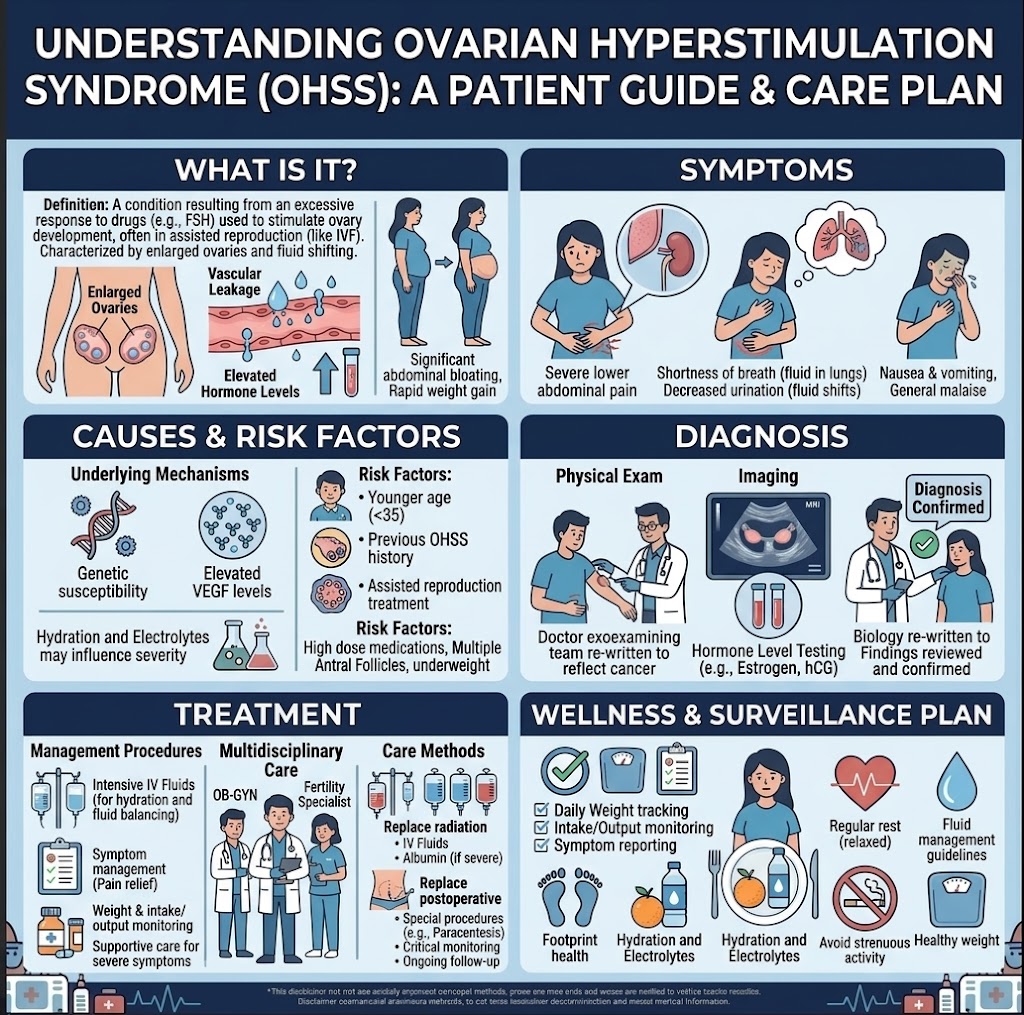
Ovarian Hyperstimulation Syndrome (OHSS) is an overreaction to high levels of fertility hormones, which stimulate egg growth in the ovaries. This causes the ovaries to swell, become painful, and often leads to fluid buildup in the body. OHSS commonly occurs during in vitro fertilization (IVF) or with injectable ovulation-stimulating medications. While mild cases typically resolve on their own, severe OHSS requires immediate medical attention, potentially needing hospitalization.
Understanding the Condition
Ovarian Hyperstimulation Syndrome (OHSS)
Understanding the Condition
Common Symptoms
Mild to Moderate OHSS: Symptoms usually appear within one to two weeks after starting injectable fertility medications. These include mild to moderate abdominal pain, bloating/fullness, nausea, vomiting, diarrhea, and ovarian tenderness. If pregnancy occurs, symptoms may worsen and persist for weeks.
Severe OHSS: Severe OHSS is a medical emergency. Watch for rapid weight gain (over 2.2 lbs or 1 kg in 24 hours), severe abdominal pain, persistent severe nausea/vomiting, decreased urination, shortness of breath, a tight/enlarged abdomen, or signs of blood clots (e.g., leg pain/swelling).
Consultation Guide
Which Specialist to Meet
Consult your fertility specialist (reproductive endocrinologist) or gynecologist immediately if OHSS symptoms arise during fertility treatment.
Preparations Before Your Visit
Before your visit, list all current symptoms (onset, changes) and medications (fertility drugs, supplements, OTC). Note daily weight and fluid intake/output. Prepare questions for your doctor.
Book a doctor visit near me
Your doctor will examine your abdomen for tenderness, swelling, and fluid, and review your symptoms and medical history.
Consultation Guide
Ovarian Hyperstimulation Syndrome (OHSS) is an overreaction to high levels of fertility hormones, which stimulate egg growth in the ovaries. This causes the ovaries to swell, become painful, and often leads to fluid buildup in the body. OHSS commonly occurs during in vitro fertilization (IVF) or with injectable ovulation-stimulating medications. While mild cases typically resolve on their own, severe OHSS requires immediate medical attention, potentially needing hospitalization.
Personalized Treatment: Discuss your risk factors with your doctor for a tailored plan, optimizing hormone dosing and trigger shot selection.
Preventative Strategies: Understand 'coasting' and freezing embryos for later transfer; these significantly reduce OHSS risk.
Diagnostic Procedures
What to Expect
The doctor will gently check your abdomen and discuss your history. Quick, generally painless.
Uses sound waves to image ovaries/uterus, assessing ovary size, fluid buildup, and follicle count.
What to Expect
A lubricated probe is used externally or internally. You may feel pressure. Takes 15-30 minutes, generally not painful.
Evaluates hormone levels (estradiol), electrolytes, kidney function, and blood count to assess OHSS severity.
What to Expect
A small blood sample is drawn from your arm. Quick procedure, takes minutes.
You'll track fluid intake and urine output to assess fluid balance and kidney function for moderate to severe OHSS.
What to Expect
Accurately measure fluids consumed and urine produced. Done at home or in hospital.
Treatment Options
Home Care (for Mild OHSS)
Rest & Activity Modification: Rest and avoid strenuous activity, heavy lifting, or movements that worsen discomfort. (Duration: Days to a week or until resolution.)
Pain Management: Use doctor-approved over-the-counter pain relievers for abdominal pain. (Duration: As needed.)
Prescription Medications: May include stronger pain relievers, anti-nausea drugs, or blood clot preventatives. (Duration: As prescribed.)
IV Fluids & Albumin: For severe cases, IV fluids ensure hydration; albumin may reduce fluid accumulation. (Duration: During hospitalization.)
Fluid Drainage: If significant fluid builds up in the abdomen or chest, a thin needle can drain it, relieving discomfort. (Duration: One session, possibly repeated.)
Fertility Treatment Adjustments (Prevention/Management during IVF)
Trigger Shot Adjustment: The egg maturation 'trigger shot' may be delayed, cancelled, or a different type used if OHSS risk is high. (Duration: One-time decision per cycle.)
'Coasting': Stopping stimulating hormones for 1-2 days before the trigger shot to lower hormone levels. (Duration: 1-2 days within IVF cycle.)
Embryo Freezing: All embryos may be frozen for transfer in a later cycle, avoiding immediate pregnancy (which can worsen OHSS). (Duration: Postpones transfer for 1-2 months+.)
Prevention During Fertility Treatment
Close Monitoring: Specialists track hormone levels and perform ultrasounds to detect OHSS risk early, allowing medication adjustments.
Emotional Support: Fertility treatments and OHSS are stressful. Seek support from loved ones, groups, or professionals.
Follow-up Care: Attend regular follow-ups to monitor recovery, discuss future treatment, and ensure ovarian health.
Prevention & Long-Term Wellbeing
Hydration: Drink electrolyte-rich fluids (e.g., sports drinks, broths); avoid excessive plain water. (Duration: Throughout recovery.)
Medical Monitoring & Support (for Moderate to Severe OHSS)
Close Clinical Monitoring: Regular check-ups monitoring weight, abdominal circumference, blood pressure, and urine output. (Duration: Daily, for days to weeks.)
Long-Term Wellbeing & Recovery
Gradual Activity Return: Slowly resume physical activities. Avoid overexertion until fully recovered, which may take weeks.
Nutritional Support: Maintain a balanced diet and adequate hydration during recovery for healing.
Tags & Topics
Notice an error or need an update?
Help us keep medical information accurate. Report incorrect info or suggest an edit.


