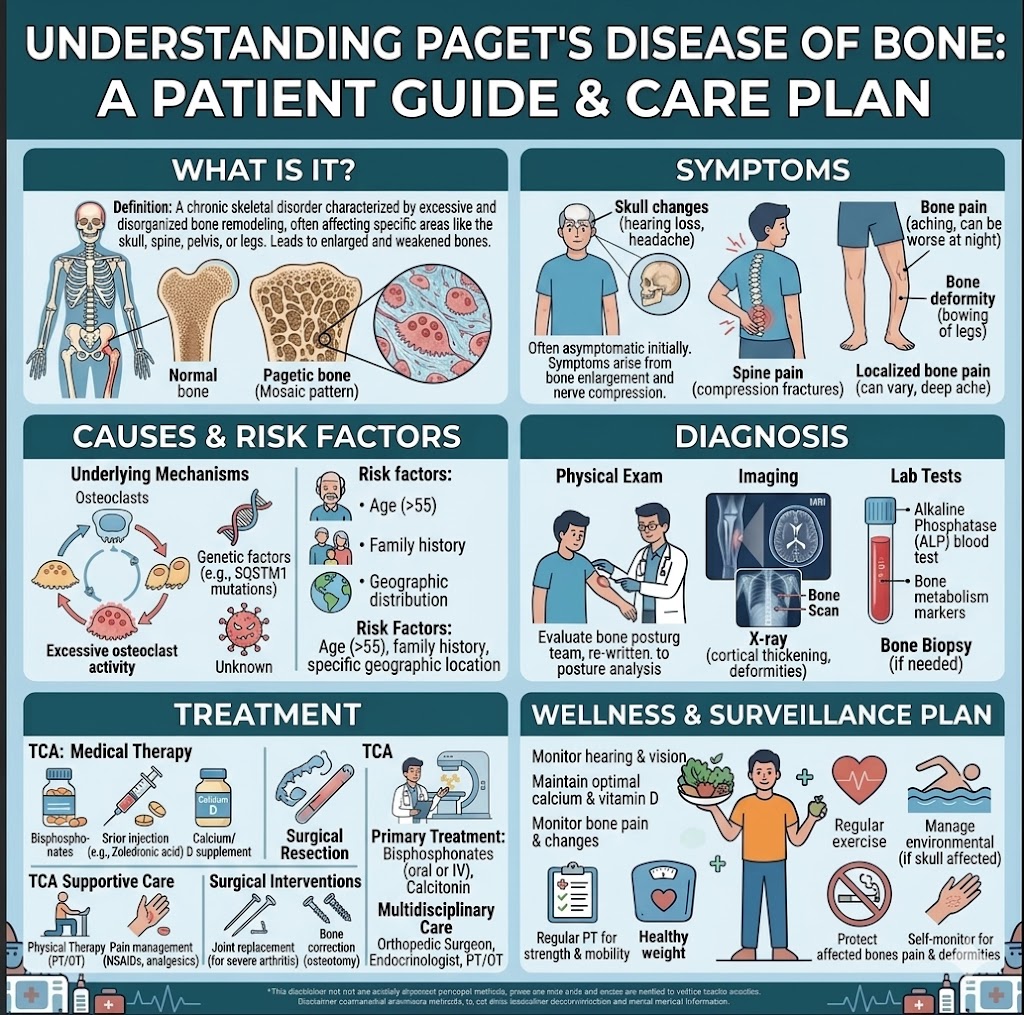
Paget's disease of bone is a condition that disrupts your body's natural process of bone renewal. Normally, old bone tissue is gradually replaced by new, healthy bone. In Paget's disease, this process speeds up, leading to the rapid creation of new bone that is less organized, weaker, and more fragile than normal bone. Over time, bones can become misshapen and prone to breaking. While it can affect any bone, it most commonly impacts the pelvis, skull, spine, and legs. The risk of developing Paget's disease generally increases with age and if close family members have the condition. However, for unknown reasons, the disease has become less common and less severe in recent years. Many individuals with Paget's disease experience no symptoms, but when they do, bone pain is the most frequent complaint. Complications can include broken bones, hearing loss, and pinched nerves.
Understanding the Condition
Understanding Paget's Disease of Bone
Understanding the Condition
Paget's disease of bone is a condition that disrupts your body's natural process of bone renewal. Normally, old bone tissue is gradually replaced by new, healthy bone. In Paget's disease, this process speeds up, leading to the rapid creation of new bone that is less organized, weaker, and more fragile than normal bone. Over time, bones can become misshapen and prone to breaking. While it can affect any bone, it most commonly impacts the pelvis, skull, spine, and legs. The risk of developing Paget's disease generally increases with age and if close family members have the condition. However, for unknown reasons, the disease has become less common and less severe in recent years. Many individuals with Paget's disease experience no symptoms, but when they do, bone pain is the most frequent complaint. Complications can include broken bones, hearing loss, and pinched nerves.
Common Symptoms
Bone Pain: The most common symptom, occurring due to the rapid, disorganized bone remodeling that creates weaker bone tissue.
Enlarged Head: Overgrowth of bone in the skull can lead to an enlarged head, headaches, or hearing loss.
Bending of a Limb: Leg bones can bow or become bent, which may lead to osteoarthritis in nearby joints like the knee or hip.
Back Pain and Numbness: If the spine is affected, abnormal bone growth can press on nerves, causing back pain, numbness, or tingling in a limb.
Consultation Guide
Which Specialist to Meet
For Paget's disease of bone, you might consult with several specialists. An endocrinologist specializes in hormone-related conditions, including bone metabolism. An orthopedic surgeon focuses on bone and joint conditions, especially if you experience fractures, deformities, or need surgery. A rheumatologist specializes in diseases affecting joints, bones, and muscles, and can help manage symptoms like pain and inflammation. Depending on your specific symptoms, you might also see a neurologist for nerve compression or an audiologist for hearing loss.
Preparations Before Your Visit
Before your doctor's visit, it's helpful to write down any symptoms you're experiencing, including when they started and how severe they are. List all medications, vitamins, and supplements you currently take. Prepare a list of questions for your doctor, and be ready to discuss your family medical history, particularly any bone conditions. It's also a good idea to bring a family member or friend to help remember information and ask questions.
Book a doctor visit near me
Surgery for Nerve Compression: If abnormal bone growth compresses nerves in the spine or other areas, surgical intervention may be needed to relieve pressure on the nerves and alleviate symptoms like pain, numbness, or weakness. (Duration: A single procedure, followed by a recovery period that can last weeks to months.)
Therapies and Support
Physical Therapy: A physical therapist can design exercises to help maintain joint flexibility, improve strength, and support mobility, especially if bone changes have affected movement. (Duration: Typically ongoing, as needed, or in structured courses for recovery after surgery or to manage specific symptoms.)
Assistive Devices: Using a cane, walker, or custom shoe inserts can help reduce stress on affected bones, improve balance, and prevent falls. (Duration: Used as needed, often long-term, to support mobility and safety.)
Regular Medical Check-ups: Consistent visits with your doctor are crucial for monitoring disease progression, adjusting treatment, and addressing any new symptoms or complications early.
Consultation Guide
Hearing Aids: If Paget's disease affects the skull and causes hearing loss, hearing aids can help improve auditory function. (Duration: Long-term use, as needed, for managing hearing impairment.)
Diagnostic Procedures
Alkaline Phosphatase (ALP) Blood Test
This is a simple blood test that measures the level of alkaline phosphatase, an enzyme mostly produced in the liver and bones. Higher levels in the blood can indicate increased bone turnover, which is characteristic of Paget's disease. It's often included as part of a general health check or a liver function panel.
What to Expect
A healthcare professional will draw a small sample of blood, usually from a vein in your arm. You might feel a brief pinch or sting. The procedure typically takes only a few minutes, and you can usually resume your normal activities immediately afterward. No special preparation, like fasting, is usually required unless other blood tests are being performed concurrently.
X-rays use small amounts of radiation to create images of the structures inside your body, especially bones. For Paget's disease, X-rays can reveal characteristic changes in bone size, shape, and density, such as thickened bone, bone deformities, or areas where the bone appears less dense.
What to Expect
You will be asked to lie down or stand in various positions, depending on the area being imaged. A technician will position the X-ray machine and ensure the target area is correctly aligned. You will need to remain still for a few seconds while the image is taken. The procedure is quick, painless, and involves minimal radiation exposure. You may be asked to remove jewelry or clothing with metal fasteners in the area being X-rayed.
A bone scan is a nuclear imaging test that helps diagnose and track various bone diseases. It uses a small amount of a radioactive tracer, which is injected into your bloodstream. The tracer travels to your bones and is absorbed more in areas where bone is rapidly changing or healing, or where there are bone abnormalities like those seen in Paget's disease. A special camera detects the radioactivity, creating detailed images of your skeleton.
What to Expect
First, a small amount of radioactive tracer will be injected into a vein, typically in your arm. You'll then wait for 2-3 hours for the tracer to be absorbed by your bones. During this waiting period, you might be encouraged to drink fluids to help flush out any unabsorbed tracer. After the waiting period, you'll lie on a table while a special camera moves slowly over your body, taking images of your bones. The scan itself is painless and can take 30 minutes to an hour. You will be advised on how to safely dispose of any remaining tracer after the scan.
Bone-Strengthening Medications: These medications work by slowing down the excessive bone turnover and can help normalize the bone recycling process, making bones stronger and reducing pain. They are the primary treatment for Paget's disease. (Duration: Typically, these are taken for several months or years, with treatment duration depending on individual response and disease activity. Periodic monitoring of blood tests is common.)
Follow-up Blood Tests and Imaging: Periodic alkaline phosphatase blood tests and bone scans or X-rays will help track how well treatments are working and detect any new areas of affected bone.
Treatment Options
Medications
Pain Relievers: Over-the-counter pain medications can help manage bone pain. Stronger prescribed pain relievers may be used for more severe pain. (Duration: Used as needed for pain relief, either short-term or long-term under medical supervision.)
Surgical Procedures
Corrective Surgery for Fractures and Deformities: If bones break or become severely deformed, surgery may be necessary to repair fractures, realign bones, or replace severely damaged joints. (Duration: A single procedure, followed by a recovery period that can last weeks to months with physical rehabilitation.)
Calcium and Vitamin D Intake: Ensuring adequate intake of calcium and vitamin D, through diet or supplements, is important for overall bone health, especially during treatment for Paget's disease.
Prevention & Long-Term Wellbeing
Long-Term Management and Monitoring
Lifestyle and Prevention of Complications
Safe Exercise: Engage in regular, low-impact exercise as recommended by your doctor or physical therapist. This helps maintain bone strength, joint flexibility, and muscle strength, while minimizing the risk of injury to fragile bones.
Fall Prevention: Take steps to reduce your risk of falls, such as removing tripping hazards from your home, installing handrails, wearing supportive shoes, and ensuring good lighting. This is particularly important with fragile bones.
Healthy Weight: Maintaining a healthy weight reduces stress on weight-bearing bones and joints, which can be particularly beneficial if your legs or spine are affected by Paget's disease.
Tags & Topics
Notice an error or need an update?
Help us keep medical information accurate. Report incorrect info or suggest an edit.


