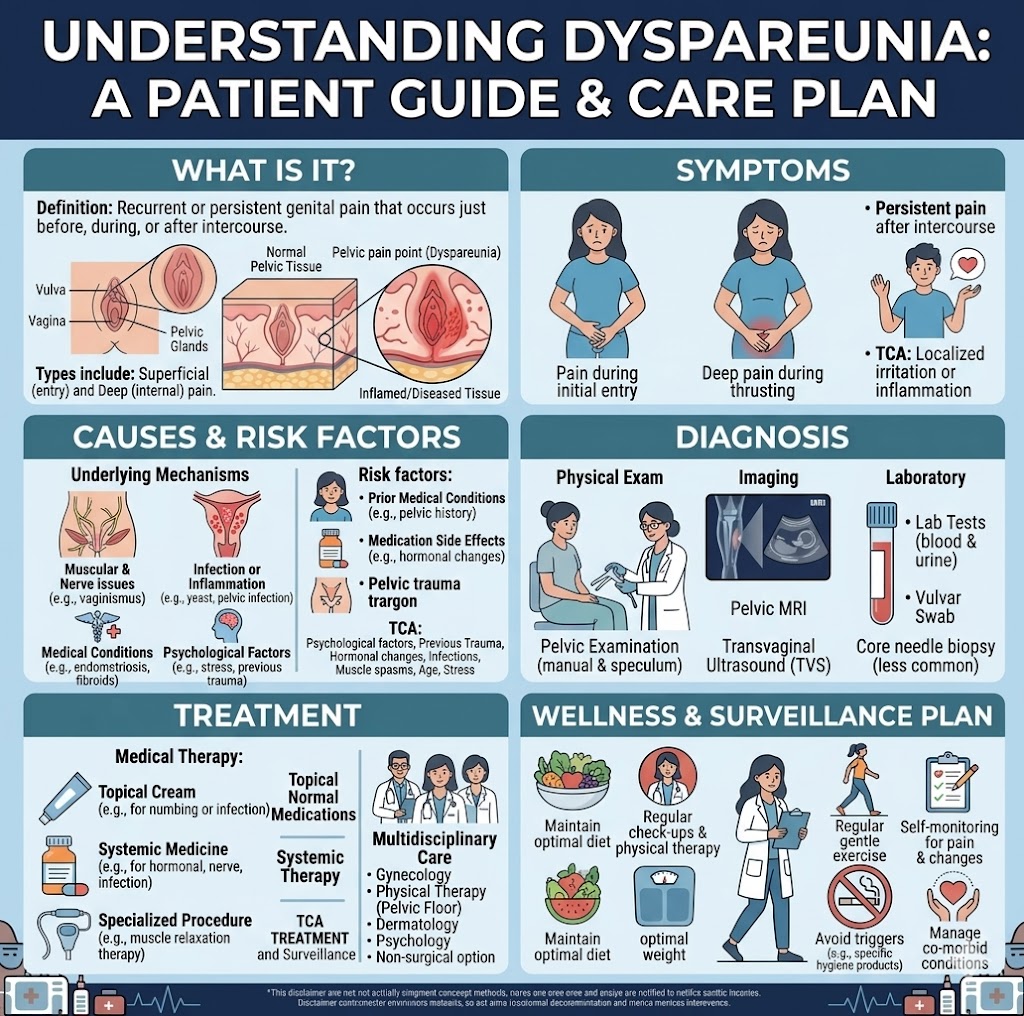
Painful intercourse, medically known as dyspareunia (dis-puh-ROO-nee-uh), is persistent or recurring genital pain experienced just before, during, or after sexual activity. This common issue affects many individuals, stemming from diverse causes ranging from physical problems to emotional factors. Addressing this pain with a healthcare professional is crucial, as effective treatments focusing on the underlying cause can bring relief.
Understanding the Condition
Understanding Painful Intercourse (Dyspareunia)
Understanding the Condition
Common Symptoms
Pain at Entry: Discomfort felt only when something enters the vagina, such as during sex or when inserting a tampon.
Consistent Penetration Pain: Pain experienced with any type of vaginal penetration, including tampon insertion.
Deep Pain During Thrusting: Pain felt deeper inside the pelvis during sexual thrusting, which might worsen in certain positions.
Burning or Aching Sensation: A feeling of burning or persistent ache in the genital area.
Post-Sex Throbbing: A throbbing sensation that continues for several hours after sexual activity.
Consultation Guide
Which Specialist to Meet
Before your visit, track your symptoms (when pain occurs, intensity, triggers). Prepare questions, list all medications you take, and be ready to discuss your medical and sexual history openly for an accurate diagnosis.
Book a doctor visit near me
Monitor Symptoms: Pay attention to any changes in pain or new symptoms and report them to your doctor. Early intervention can prevent worsening conditions.
Consultation Guide
Painful intercourse, medically known as dyspareunia (dis-puh-ROO-nee-uh), is persistent or recurring genital pain experienced just before, during, or after sexual activity. This common issue affects many individuals, stemming from diverse causes ranging from physical problems to emotional factors. Addressing this pain with a healthcare professional is crucial, as effective treatments focusing on the underlying cause can bring relief.
Treating Infections: If pain is caused by a genital area or urinary tract infection, specific medication to clear the infection will be prescribed. (Duration: Typically 7-14 days)
Pelvic Floor Physical Therapy: A specialized physical therapist can help release tight pelvic floor muscles, improve muscle control, and teach relaxation techniques for conditions like vaginismus or muscle spasms. (Duration: Weeks to months, depending on severity)
Counseling or Sex Therapy: For psychological factors, anxiety, depression, or relationship issues contributing to pain, talking with a therapist can provide coping strategies and improve emotional intimacy. (Duration: Varies; short-term to ongoing)
Gentle Hygiene: Avoid harsh soaps, douches, or scented products in the genital area that can cause irritation.
Regular Doctor Visits: Maintain regular check-ups with your healthcare provider, especially if you have chronic conditions that could impact sexual health.
Adhere to Treatment Plans: Follow your prescribed treatment plan, whether it's medication, physical therapy, or counseling, to manage the underlying causes effectively.
Diagnostic Procedures
Begin with your primary care doctor (family physician) or a gynecologist. Depending on the diagnosis, you might be referred to a pelvic floor physical therapist, pain specialist, or a psychologist/sex therapist for emotional support.
Preparations Before Your Visit
A pelvic exam checks the health of your female reproductive organs (vulva, vagina, cervix, uterus, ovaries). It helps identify issues like infections, cysts, growths, or other abnormalities that might be causing pain.
What to Expect
You will be asked to change into a gown and lie on an examination table with your feet in stirrups. The doctor will first gently examine your external genital area. Then, a speculum – a smooth instrument – is gently inserted into the vagina to allow a view of the cervix (a Pap test for cervical cancer screening may be done at this time). After the speculum is removed, the doctor will insert gloved fingers into the vagina while gently pressing on your abdomen to feel your internal organs, checking for any tenderness, lumps, or unusual size/shape. The entire exam typically lasts a few minutes.
Ultrasound (Sonography)
Ultrasound uses high-frequency sound waves to create live images of structures inside your body, such as the uterus, ovaries, and bladder. It's a safe and non-invasive way to visualize conditions like fibroids, ovarian cysts, or endometriosis that could be contributing to deep pelvic pain.
What to Expect
For external ultrasound, you will lie on an examination table, and a clear gel will be applied to your skin over the area to be examined (e.g., lower abdomen). A small handheld device called a transducer is then pressed against your skin and moved around, sending sound waves and capturing their reflections to create images. For a closer view, a smaller, lubricated transducer might be gently inserted into the vagina (transvaginal ultrasound). This procedure is generally painless, though you might feel some pressure. You may need a full bladder for some abdominal ultrasounds. Wear loose, comfortable clothing, and avoid wearing jewelry.
Treatment Options
Medications
Topical Estrogen Therapy: For pain related to decreased estrogen (e.g., after menopause, childbirth, or during breastfeeding), low-dose estrogen creams, rings, or tablets inserted into the vagina can restore tissue health and moisture. (Duration: Long-term, as directed by a doctor)
Pain Relievers & Anti-Inflammatories: Over-the-counter pain medications can help manage mild discomfort. For specific conditions, prescription medications to reduce inflammation or nerve pain may be prescribed. (Duration: As needed or short-term course)
Muscle Relaxants: For conditions like vaginismus (involuntary muscle spasms), specific medications or creams may be prescribed to help relax vaginal muscles. (Duration: Short-term or as needed)
Addressing Structural Abnormalities: Surgery can correct physical issues present from birth, such as an imperforate hymen (a membrane blocking the vaginal opening) or other structural problems. (Duration: One-time procedure, followed by recovery)
Procedures for Specific Conditions: For conditions like endometriosis, uterine fibroids, or severe scarring from previous surgeries, surgical interventions may be performed to remove problematic tissue or correct the underlying issue. (Duration: One-time procedure, followed by recovery)
Address Underlying Health Issues: Promptly seek treatment for infections, hormonal imbalances, or chronic conditions that could lead to painful intercourse.
Prevention & Long-Term Wellbeing
Home Remedies & Lifestyle Adjustments
Adequate Lubrication: Use over-the-counter water-based or silicone-based lubricants during sexual activity. Ensure sufficient foreplay to naturally increase arousal and lubrication. (Duration: Ongoing)
Warm Baths & Relaxation Techniques: Taking a warm bath before sex can help relax muscles. Practicing relaxation techniques like deep breathing or mindfulness can reduce overall tension and anxiety related to pain. (Duration: As needed)
Open Communication: Discuss your pain and concerns openly with your partner to foster understanding and find comfortable positions or activities. (Duration: Ongoing)
Prevention
Prioritize Foreplay & Lubrication: Allow ample time for sexual arousal; use personal lubricants to prevent friction and dryness.
Communicate Openly: Talk with your partner about what feels good and what doesn't. Experiment with different positions and activities to find comfort.
Manage Stress & Anxiety: Stress can increase muscle tension and pain perception. Incorporate stress-reducing activities like meditation, yoga, or hobbies into your routine.
Tags & Topics
Notice an error or need an update?
Help us keep medical information accurate. Report incorrect info or suggest an edit.


