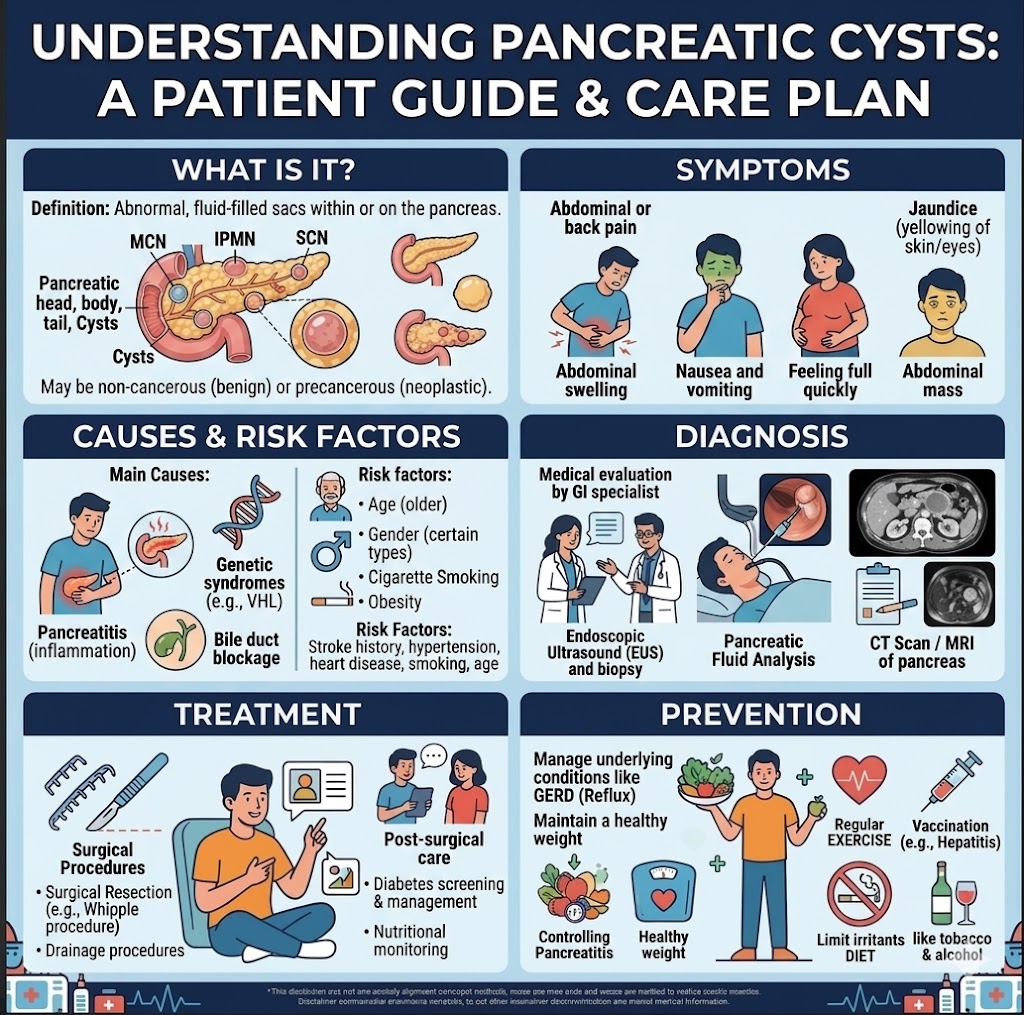
Pancreatic cysts are fluid-filled sacs found on or within the pancreas. The pancreas is a vital organ located behind the stomach, responsible for producing hormones and digestive enzymes. These cysts are often discovered incidentally during imaging tests performed for unrelated health issues. Pancreatic cysts fall into two main categories: non-cancerous (nonneoplastic) and potentially cancerous (neoplastic). While most are harmless and many don't cause symptoms, some can develop into cancer. Understanding the specific type of cyst is crucial. Some cysts, called pseudocysts, can form after severe pancreatitis (inflammation of the pancreas) or an abdominal injury.
Understanding the Condition
Pancreatic Cysts: A Guide for Non-Medical Individuals
Understanding the Condition
Pancreatic cysts are fluid-filled sacs found on or within the pancreas. The pancreas is a vital organ located behind the stomach, responsible for producing hormones and digestive enzymes. These cysts are often discovered incidentally during imaging tests performed for unrelated health issues. Pancreatic cysts fall into two main categories: non-cancerous (nonneoplastic) and potentially cancerous (neoplastic). While most are harmless and many don't cause symptoms, some can develop into cancer. Understanding the specific type of cyst is crucial. Some cysts, called pseudocysts, can form after severe pancreatitis (inflammation of the pancreas) or an abdominal injury.
Common Symptoms
Upper Abdominal Pain: Discomfort or pain in the upper abdomen.
Back Pain: Pain extending from the abdomen to the back.
Early Fullness: Feeling full quickly after eating small amounts.
Nausea and Vomiting: Feeling sick and throwing up.
Unexplained Weight Loss: Losing weight without trying.
Fever and Persistent Belly Pain: Though rare, these can indicate an infected cyst, requiring immediate medical attention.
Sudden Severe Abdominal Pain: A rare but serious sign of a ruptured cyst, a medical emergency that can lead to peritonitis (abdominal infection).
Consultation Guide
Which Specialist to Meet
Your initial consultation may be with your primary care provider. If a pancreatic cyst is suspected or found, you'll likely be referred to a gastroenterologist (digestive system specialist) or a pancreatic surgeon. If cancer is a concern, an oncologist (cancer specialist) will also be involved. A radiologist interprets imaging results.
Preparations Before Your Visit
Before your appointment, write down all symptoms (when they started, frequency), list medications, medical history, and questions for your doctor. Discuss diet and lifestyle. Bring any previous medical records or imaging reports.
Book a doctor visit near me
Watchful Waiting: For small, non-symptomatic, and non-suspicious cysts, regular follow-up imaging (CT, MRI, or EUS) monitors for changes in size or characteristics. (Duration: Ongoing, often for several years or indefinitely, depending on cyst type and stability.)
Pain Management: Over-the-counter or prescription medications manage abdominal pain or discomfort. (Duration: As needed for symptom relief.)
Antibiotics: For infected cysts, a course of antibiotics eliminates bacterial infection. (Duration: Typically 7-14 days, as directed.)
Endoscopic Drainage: For large pseudocysts or symptomatic fluid-filled cysts, an endoscope drains fluid, often placing a stent into the digestive tract. (Duration: Procedure is brief; stent may remain for weeks to months.)
Cyst Removal Surgery: Surgery is for cancerous, highly suspicious, or severely symptomatic cysts. Type depends on location and size, from cyst removal to partial pancreas removal. (Duration: Single procedure, followed by a recovery of weeks to months.)
Report New or Worsening Symptoms: Promptly inform your healthcare provider of any new or worsening symptoms, indicating a possible change in the cyst.
Consultation Guide
Limit Alcohol Intake: Excessive alcohol causes pancreatitis, which can lead to pseudocysts. Reducing alcohol lowers this risk.
Diagnostic Procedures
CT Scan (Computerized Tomography Scan)
A CT scan uses specialized X-ray equipment and computer processing to create detailed cross-sectional images ("slices") of the body. It provides more detailed views of bones, blood vessels, and soft tissues, including the pancreas, than standard X-rays. Doctors use it to detect cysts, measure their size, and look for suspicious features.
What to Expect
You lie on a motorized table that slides into a large, donut-shaped machine. You may receive a contrast dye, orally or via IV, to highlight areas. You'll need to lie still, and might hear humming or clicking. The scan is quick, usually lasting a few minutes.
Endoscopic Ultrasound (EUS)
EUS uses an endoscope (a thin, flexible tube with a camera and ultrasound device) to create detailed images of the digestive tract and nearby organs, like the pancreas. The endoscope is guided down your throat into your esophagus, stomach, and small intestine. The ultrasound emits sound waves for clear images of the pancreas, liver, gallbladder, and lymph nodes.
What to Expect
You'll likely receive sedation to relax or sleep. Your throat may be numbed. The endoscope is carefully inserted through your mouth. Images are taken as it moves. A tiny needle on the endoscope might collect fluid or tissue samples (biopsy) from a cyst for lab analysis (EUS-guided fine-needle aspiration). The procedure usually takes 30-90 minutes; you'll need a ride home due to sedation.
Adhere to Follow-up Schedule: For an observed pancreatic cyst, strictly follow recommended imaging tests (CT, MRI, EUS) to detect early changes.
Treatment Options
Monitoring and Observation
Medications
Prevention & Long-Term Wellbeing
Prevention
Maintain a Healthy Diet: A balanced, low-fat diet supports pancreatic health and reduces pancreatitis risk.
Address Underlying Conditions: If you have polycystic kidney disease or von Hippel-Lindau disease, regular medical follow-up is vital for pancreatic health.
Long-Term Monitoring
Healthy Lifestyle Choices: Regular physical activity and avoiding smoking contribute to overall well-being and support pancreatic health.
Tags & Topics
Notice an error or need an update?
Help us keep medical information accurate. Report incorrect info or suggest an edit.


