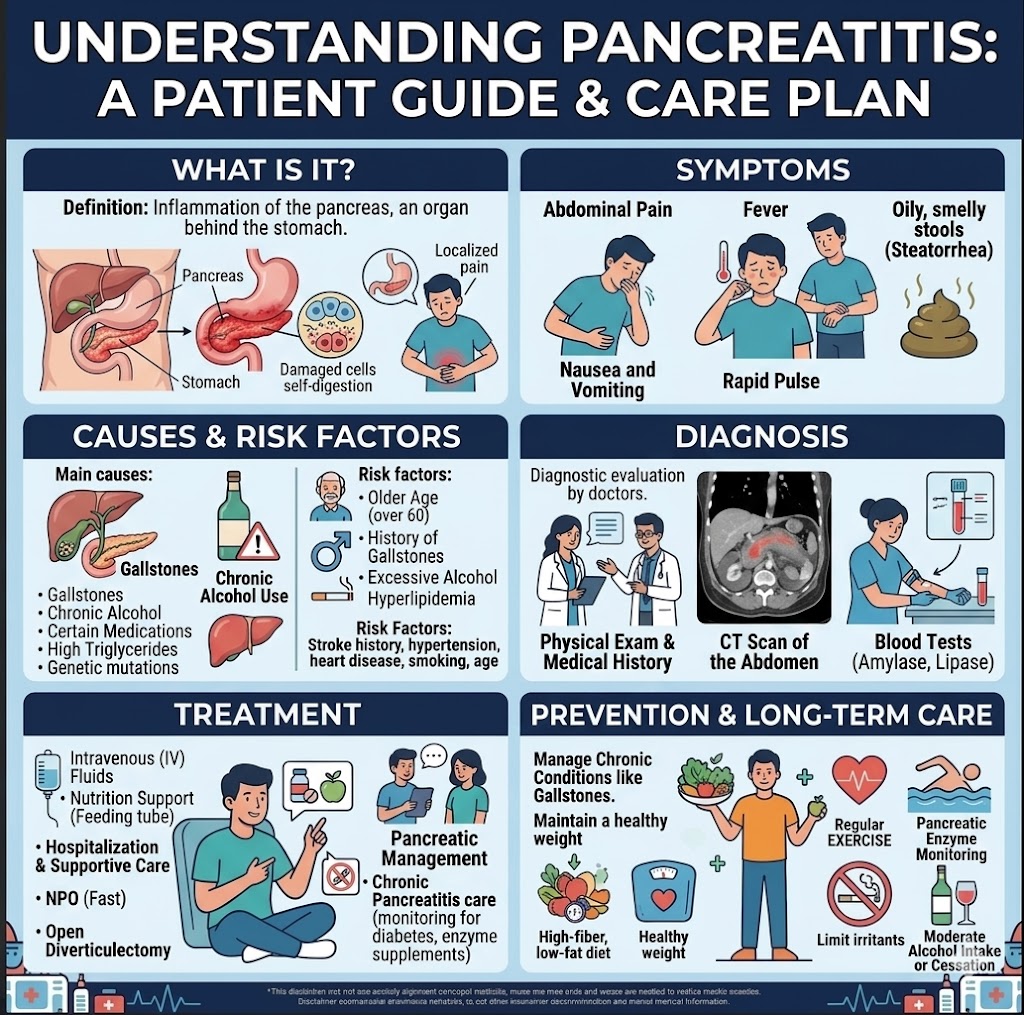
Pancreatitis is the inflammation of the pancreas, a flat, long gland located deep in the upper abdomen behind the stomach. The pancreas plays two critical roles: it produces insulin to regulate blood sugar and secretes digestive enzymes to break down food. When these digestive enzymes become active while still inside the pancreas rather than in the small intestine, they irritate and damage the pancreatic cells, causing swelling, pain, and tissue injury. Pancreatitis can occur as a sudden, temporary attack (acute pancreatitis) or as a progressive, long-lasting condition that leads to permanent scarring (chronic pancreatitis).
Understanding the Condition
Understanding Pancreatitis: A Guide to Symptoms, Causes, and Treatments
Understanding the Condition
Common Symptoms
Acute Upper Abdominal Pain: Severe pain in the upper belly that often worsens after eating and may radiate directly through to the back or shoulders.
Abdominal Tenderness: The belly feels highly sensitive, sore, or painful when touched or lightly pressed.
Systemic Distress Signs: A rapid heart rate (tachycardia), sudden shortness of breath, and a general feeling of illness.
Nausea and Vomiting: Frequent, severe bouts of nausea accompanied by vomiting, triggered by digestive dysfunction.
Malabsorption Signs (Chronic): Unexplained, unintentional weight loss and stools that appear oily, greasy, pale, and have an unusually foul smell.
Secondary Diabetes Symptoms: Excessive thirst, constant hunger, and frequent urination, occurring when chronic inflammation destroys insulin-producing cells.
Consultation Guide
Which Specialist to Meet
You should consult a gastroenterologist, a medical specialist focused on the digestive system and its associated organs, including the pancreas, liver, and gallbladder.
Preparations Before Your Visit
Before your appointment, fast for at least 8 to 12 hours if diagnostic imaging is scheduled. Bring a detailed log of your symptoms (timing, severity, and relation to food), a complete list of all medications and supplements you take, and information regarding any family history of pancreatitis, diabetes, or gallstones.
Book a doctor visit near me
Consultation Guide
Fat-Soluble Vitamin Monitoring: Routine blood testing and supplementation for vitamins A, D, E, and K to combat malnutrition caused by poor fat digestion.
Diagnostic Procedures
Pancreatitis is the inflammation of the pancreas, a flat, long gland located deep in the upper abdomen behind the stomach. The pancreas plays two critical roles: it produces insulin to regulate blood sugar and secretes digestive enzymes to break down food. When these digestive enzymes become active while still inside the pancreas rather than in the small intestine, they irritate and damage the pancreatic cells, causing swelling, pain, and tissue injury. Pancreatitis can occur as a sudden, temporary attack (acute pancreatitis) or as a progressive, long-lasting condition that leads to permanent scarring (chronic pancreatitis).
An imaging test that uses high-frequency sound waves to create live pictures of the organs, blood vessels, and structures inside your abdomen, specifically looking for gallstones or fluid accumulation.
What to Expect
You will lie on your back on an exam table. A technician will apply a warm, water-based gel to your upper belly and gently press a handheld wand called a transducer against your skin, moving it back and forth. The test is completely painless and takes about 20 to 30 minutes.
Computerized Tomography (CT) Scan
An advanced X-ray technique that captures multiple cross-sectional images of the abdomen to assess the extent of pancreatic inflammation, tissue damage, or fluid collections.
What to Expect
You may be asked to drink a contrast liquid or receive it through an intravenous (IV) line to make your organs show up clearly. You will lie flat on a table that slowly slides into a large, doughnut-shaped machine. You must lie very still for 10 to 15 minutes while the scanner takes pictures.
Endoscopic Ultrasound (EUS)
A highly detailed procedure combining endoscopy and ultrasound to view the pancreas and nearby ducts from inside the digestive tract, allowing for tissue samples if needed.
What to Expect
You will receive intravenous sedation to keep you asleep and pain-free. The doctor will insert a thin, flexible, lighted tube (endoscope) down your throat, through your stomach, and into the first part of the small intestine. An ultrasound probe on the tip of the tube takes close-up pictures. The procedure takes 30 to 60 minutes, and you will need someone to drive you home.
Treatment Options
Intravenous Fluid Hydration: Delivery of fluids and electrolytes directly into a vein to support organ function, improve blood flow, and assist pancreatic healing. (Duration: Typically administered for the first 24 to 72 hours of hospital admission.)
Medications and Therapies
Intravenous Pain Management: Using strong, non-opioid or opioid pain relief medications delivered via IV to control severe abdominal pain. (Duration: Used continuously during the acute phase, typically 3 to 7 days.)
Pancreatic Enzyme Replacement Therapy (PERT): Prescription digestive enzymes taken orally immediately before meals to help digest proteins, fats, and carbohydrates when the pancreas can no longer make them. (Duration: Lifelong treatment for patients with chronic pancreatitis.)
Surgical and Interventional Procedures
Gallbladder Removal (Cholecystectomy): Surgical removal of the gallbladder, often done laparoscopically through small belly incisions, to prevent future gallstone-induced attacks. (Duration: A 1-to-2-hour surgery; full recovery takes 1 to 4 weeks.)
Prevention & Long-Term Wellbeing
Temporary Bowel Rest: Withholding food and fluids by mouth to stop the pancreas from producing digestive enzymes, allowing the organ to rest. (Duration: Usually lasts 24 to 48 hours, followed by a gradual transition to a low-fat diet.)
Endoscopic Duct Clearance (ERCP): A specialized procedure to remove gallstones blocking the bile or pancreatic ducts using a camera-guided tube passed down the throat. (Duration: The procedure takes 1 to 2 hours; recovery occurs within 24 to 48 hours.)
Pseudocyst Drainage: Draining painful fluid-filled pockets (pseudocysts) using needles or tubes placed endoscopically or through the skin. (Duration: The procedure takes about 1 hour; external drainage tubes may stay in place for several weeks until healing is complete.)
Dietary and Lifestyle Changes
Strict Alcohol Avoidance: Completely eliminating alcohol consumption to prevent toxic irritation and recurrent flare-ups of the pancreatic tissue.
Smoking Cessation: Stopping all tobacco use, as smoking significantly accelerates the progression of chronic pancreatitis and increases the risk of pancreatic cancer.
Low-Fat, Nutrient-Dense Diet: Eating small, frequent meals focusing on lean proteins, fruits, vegetables, and whole grains while avoiding fried or greasy foods to reduce digestive strain.
Consistent Hydration: Drinking plenty of water throughout the day to support overall metabolic and digestive health.
Long-Term Health Monitoring
Blood Glucose Tracking: Regularly monitoring blood sugar levels to detect and manage diabetes early if the pancreas's insulin-producing cells become damaged.
Tags & Topics
Notice an error or need an update?
Help us keep medical information accurate. Report incorrect info or suggest an edit.


