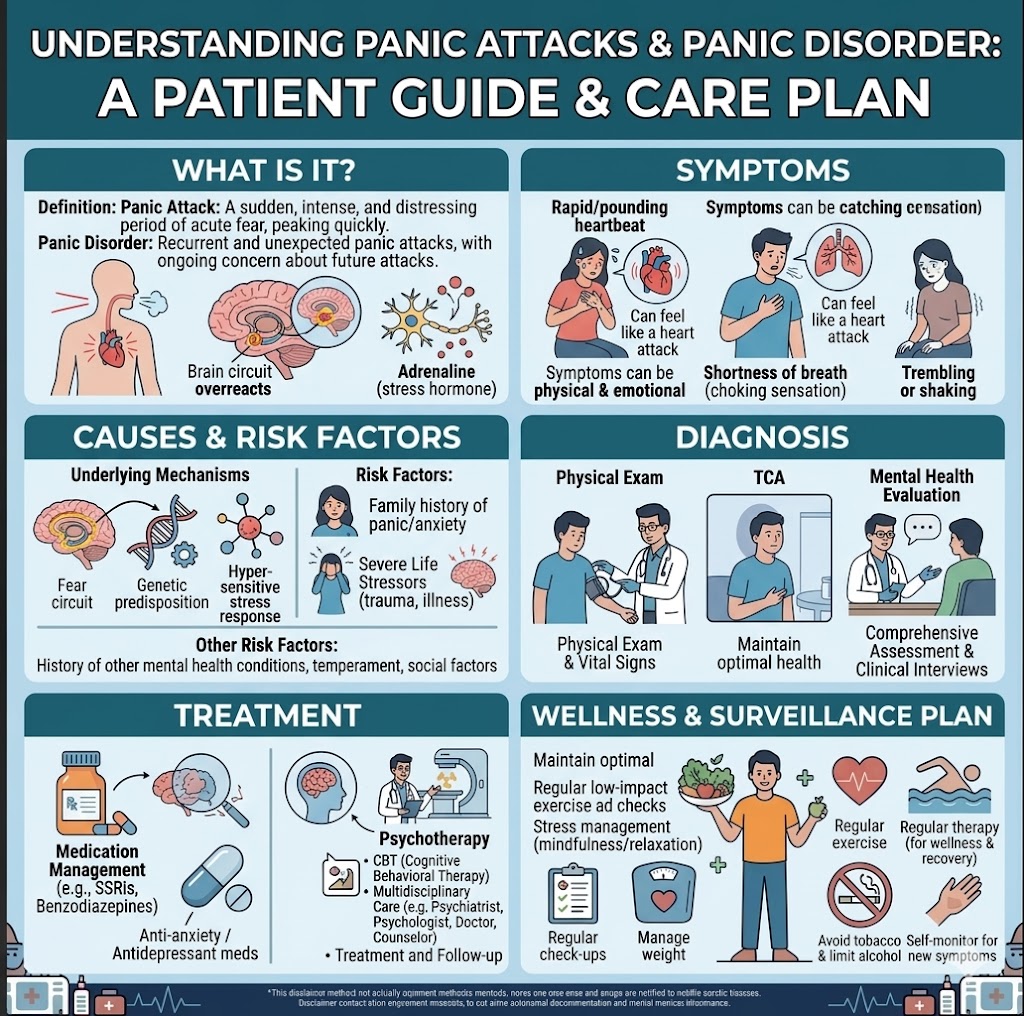
Panic attacks are sudden, intense episodes of fear that trigger severe physical reactions, even when there's no real danger. They can be very frightening, making you feel like you're losing control, having a heart attack, or even dying. Many people experience just one or two attacks in their lifetime, often during stressful periods. However, if you have recurrent, unexpected panic attacks and live in constant fear of another, you may have a condition called panic disorder. The exact causes are not fully understood, but factors like major stress, a sensitive temperament, and certain changes in brain function may play a role. Your body's natural 'fight-or-flight' response, normally reserved for real danger, appears to be mistakenly triggered during an attack. While not life-threatening, panic attacks and panic disorder can significantly affect your quality of life, but effective treatments are available.
Understanding the Condition
Panic Attacks and Panic Disorder: A Guide for Non-Medical Persons
Understanding the Condition
Common Symptoms
Sudden Onset and Intensity: Panic attacks typically begin suddenly, without warning, and can occur anywhere—while driving, at a store, even during sleep (nighttime panic attacks). Symptoms usually peak within minutes, leaving you feeling fatigued afterward.
Feeling of Doom or Loss of Control: A strong sense of impending danger or doom, and an intense fear of losing control or dying.
Rapid Heartbeat: Your heart may pound rapidly or feel like it's racing.
Trembling or Shaking: Uncontrollable trembling or shaking of your body.
Shortness of Breath or Throat Tightness: Difficulty breathing, feeling like you can't get enough air, or a sensation of tightness in your throat.
Hot Flashes or Chills: Sudden sensations of intense heat or cold.
Abdominal Cramping: Discomfort or pain in your stomach area.
Dizziness or Lightheadedness: Feeling unsteady, lightheaded, or like you might faint.
Numbness or Tingling: Sensations of numbness or pins and needles, often in the extremities.
Feeling of Unreality or Detachment: A sense that things around you aren't real, or that you are detached from your body or surroundings.
Consultation Guide
Which Specialist to Meet
You should start by consulting your primary care doctor. They can conduct an initial evaluation to rule out any underlying physical health conditions that might mimic panic symptoms. If a physical cause is ruled out, they can refer you to a mental health professional, such as a psychiatrist (a medical doctor who can diagnose and prescribe medication) or a psychologist (who provides therapy and counseling).
Preparations Before Your Visit
Before your appointment, prepare a list of your symptoms, including when they started, how often they occur, and how long they last. Note any major life stresses, recent changes, or family history of mental health conditions. Write down any questions you have for the doctor. This information will help your healthcare provider make an accurate diagnosis and develop a personalized treatment plan.
Book a doctor visit near me
Your doctor will perform a general physical exam and discuss your medical history and symptoms. This is crucial to rule out other medical conditions, such as heart problems, thyroid issues, or asthma, which can sometimes present with symptoms similar to a panic attack.
An ECG is a quick, non-invasive test that records the electrical signals in your heart. It helps your healthcare team check how fast or slow your heart is beating and detect any irregular heart rhythms or signs of a heart attack, distinguishing them from panic attack symptoms.
Cognitive Behavioral Therapy (CBT): CBT is a type of talk therapy that helps you identify and change unhelpful thinking patterns and behaviors that contribute to panic attacks. You learn to recognize and challenge your fears, understand how panic symptoms are not dangerous, and develop healthier coping mechanisms. It often involves 'homework' to practice new skills. (Duration: Typically involves fewer sessions than other therapies, often weeks to several months.)
Psychotherapy (Talk Therapy): A broader term for treating mental health issues by talking with a mental health provider. It helps you understand your specific issues, how your thoughts and emotions affect your moods, and learn healthy coping skills. Various approaches may be used depending on your individual needs. (Duration: Can be short-term (e.g., 6-12 sessions) or ongoing for long-term support, depending on the individual and the severity of the condition.)
Anti-Anxiety Medications: These medications can provide rapid relief for acute panic symptoms by slowing down the central nervous system. They are typically used for short periods or as needed due to potential for dependence. (Duration: Used short-term or on an as-needed basis, typically for weeks to a few months, strictly as prescribed by a doctor.)
Stress Management Techniques: Practices like deep breathing exercises, meditation, yoga, or mindfulness can help manage stress levels and promote relaxation, which can be beneficial in preventing or reducing panic symptoms. (Duration: As advised)
Avoid Stimulants: Limiting or avoiding excessive caffeine intake, nicotine (smoking), and alcohol can help reduce the likelihood of triggering panic attacks, as these substances can heighten anxiety. (Duration: As advised)
Healthy Sleep Habits: Ensuring adequate and consistent sleep can improve overall mental well-being and may help reduce the incidence of panic attacks, especially nocturnal ones. (Duration: As advised)
Consultation Guide
Panic attacks are sudden, intense episodes of fear that trigger severe physical reactions, even when there's no real danger. They can be very frightening, making you feel like you're losing control, having a heart attack, or even dying. Many people experience just one or two attacks in their lifetime, often during stressful periods. However, if you have recurrent, unexpected panic attacks and live in constant fear of another, you may have a condition called panic disorder. The exact causes are not fully understood, but factors like major stress, a sensitive temperament, and certain changes in brain function may play a role. Your body's natural 'fight-or-flight' response, normally reserved for real danger, appears to be mistakenly triggered during an attack. While not life-threatening, panic attacks and panic disorder can significantly affect your quality of life, but effective treatments are available.
Diagnostic Procedures
What to Expect
What to Expect
For an ECG, you will lie down, and small, sticky patches called electrodes will be placed on your chest, and sometimes on your arms and legs. These patches are connected by wires to an ECG machine, which records your heart’s electrical activity. The test is painless, takes only a few minutes, and requires no special preparation. You simply need to lie still during the recording.
Treatment Options
During a medical evaluation, your doctor will listen to your heart and lungs, check your vital signs (blood pressure, heart rate), and ask detailed questions about your health, lifestyle, and any medications you are taking. There are no special preparations needed for this general exam.
Electrocardiogram (ECG or EKG)
Therapies
Medications
Antidepressants: Certain types of antidepressant medications, specifically selective serotonin reuptake inhibitors (SSRIs) and serotonin-norepinephrine reuptake inhibitors (SNRIs), are effective in reducing the frequency and severity of panic attacks and treating underlying anxiety or depression. They work by affecting brain chemicals. (Duration: Usually taken daily for several months or longer, under medical supervision, with effects often seen after a few weeks.)
Seek Early Treatment: Addressing panic attacks as soon as possible can prevent them from worsening, becoming more frequent, or leading to panic disorder. Early intervention is key to better outcomes.
Adhere to Treatment Plan: Consistently following your prescribed therapy sessions and medication regimen (if applicable) is vital. This helps prevent relapses and ensures the long-term effectiveness of your treatment.
Identify and Manage Triggers: Learning what situations, thoughts, or substances trigger your panic attacks can help you develop strategies to cope with or avoid them, reducing future episodes.
Build a Support System: Connecting with trusted friends, family, or support groups can provide emotional support and understanding, reducing feelings of isolation and improving coping skills.
Prevention & Long-Term Wellbeing
Lifestyle and Self-Care
Regular Physical Activity: Engaging in regular exercise can help reduce stress and anxiety, potentially lessening the severity and frequency of panic attacks. Aim for moderate activity most days of the week. (Duration: As advised)
Prevention and Management
Practice Self-Compassion: Be kind to yourself during challenging times. Recognize that panic attacks are a medical condition, not a sign of weakness, and recovery is a process.
Tags & Topics
Notice an error or need an update?
Help us keep medical information accurate. Report incorrect info or suggest an edit.


