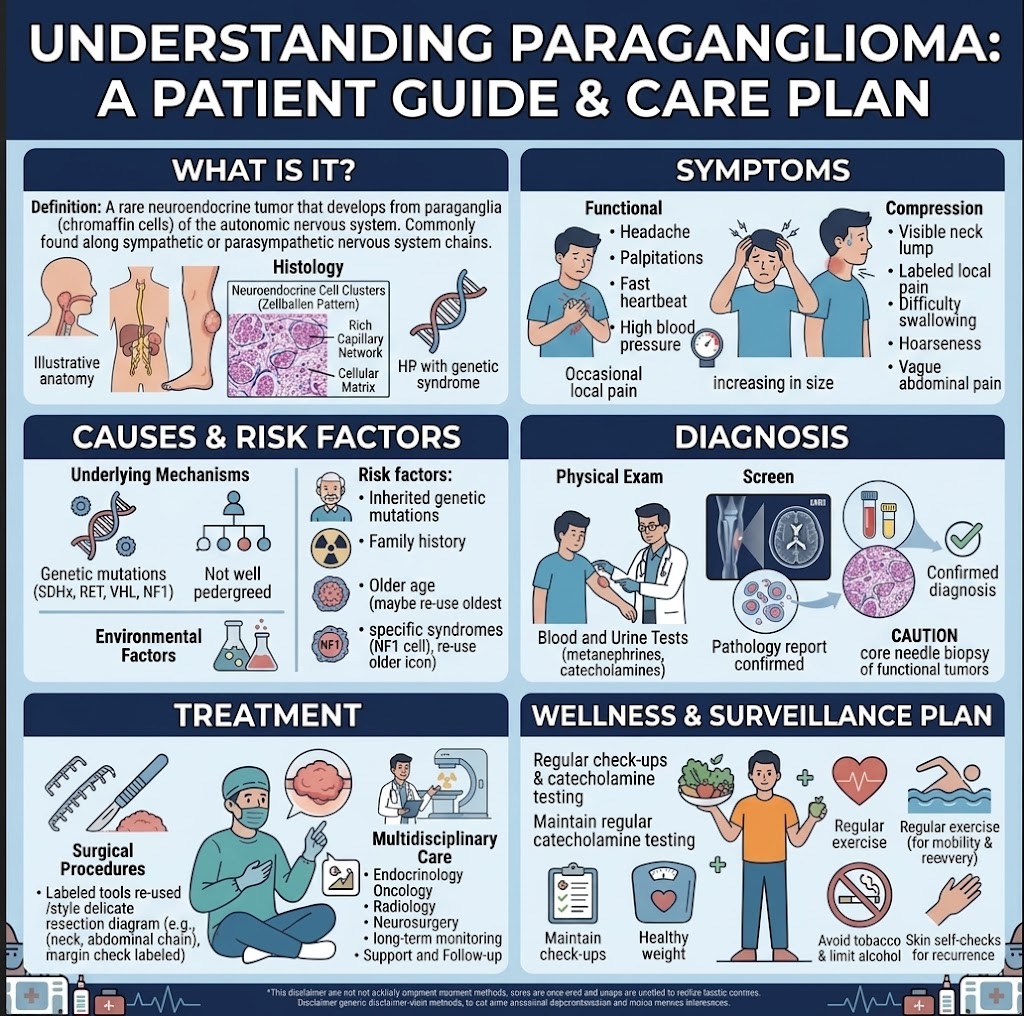
A paraganglioma is a rare type of tumor developing from specialized nerve cells, commonly found in the head, neck, chest, or abdomen. While often non-cancerous (benign), these tumors can produce excessive amounts of hormones called catecholamines, leading to various symptoms. In some cases, paragangliomas can be cancerous (malignant) and spread to other parts of the body. They are closely related to pheochromocytomas, which are paragangliomas located within the adrenal glands.
Understanding the Condition
Paraganglioma: Understanding a Rare Tumor
Understanding the Condition
A paraganglioma is a rare type of tumor developing from specialized nerve cells, commonly found in the head, neck, chest, or abdomen. While often non-cancerous (benign), these tumors can produce excessive amounts of hormones called catecholamines, leading to various symptoms. In some cases, paragangliomas can be cancerous (malignant) and spread to other parts of the body. They are closely related to pheochromocytomas, which are paragangliomas located within the adrenal glands.
Common Symptoms
High Blood Pressure: Often severe and difficult to control, can be constant or come in sudden episodes.
Headaches: Can be severe, throbbing, and recurrent.
Excessive Sweating: Profuse sweating that may not be related to heat or physical activity.
Rapid Heart Rate (Palpitations): A sensation of a racing, pounding, or fluttering heart.
Tremors: Involuntary shaking or trembling.
Pale Skin: Noticeable paleness, especially during symptom episodes.
Before your visit, gather all medical records, including any previous test results, a list of current medications, and a detailed account of your symptoms (when they started, how often they occur, what makes them better or worse). Be prepared to discuss your family medical history, as paragangliomas can be hereditary.
Book a doctor visit near me
Stress Management: Chronic illness and the potential for recurrent symptoms can be stressful. Incorporate stress-reducing activities like meditation, yoga, deep breathing exercises, or joining a support group to improve your emotional well-being.
Symptom Awareness: Be vigilant for any return of previous symptoms or new concerning signs. Promptly report any changes to your healthcare provider for early evaluation.
Consultation Guide
Anxiety or Panic Attacks: Feelings of intense fear or apprehension without a clear cause.
Dizziness or Fainting: Especially when standing up quickly.
Nausea and Vomiting: Feelings of sickness and throwing up.
Weight Loss: Unexplained decrease in body weight.
Vision Problems: Blurred vision or changes in eyesight, particularly with head and neck tumors.
Voice Changes or Difficulty Swallowing: If the tumor presses on nerves in the neck or throat.
Consultation Guide
Which Specialist to Meet
You should consult with an endocrinologist (a doctor specializing in hormone-related conditions), a genetic counselor (to assess inherited risk), and potentially a surgeon specializing in the affected body area (e.g., neurosurgeon, head and neck surgeon, general surgeon). An oncologist may be involved if the tumor is malignant.
Preparations Before Your Visit
For a CT scan, you'll lie on a table that slides into a large, donut-shaped machine. For an MRI, you'll lie on a table that slides into a long, narrow tube, which is noisier. You must lie very still during both. Sometimes, a special dye (contrast material) is injected, which might cause a brief warm flush.
Nuclear Medicine Scans (MIBG Scintigraphy, PET Scan)
These specialized scans use a small amount of a radioactive tracer injected into your bloodstream. The tracer is absorbed by certain types of cells, including paraganglioma cells, allowing them to be detected by a special camera. These scans help pinpoint tumors, especially those that might be harder to find or have spread.
Diagnostic Procedures
24-Hour Urine and Blood Tests
These tests measure the levels of catecholamines (like adrenaline and noradrenaline) and their breakdown products in your urine over a full day or in a single blood sample. High levels can indicate a hormone-producing tumor.
What to Expect
For the urine test, you'll collect all your urine in a special container over a 24-hour period. For the blood test, a healthcare professional will draw a blood sample from a vein in your arm. You may be asked to avoid certain foods, drinks, or medications before these tests.
Imaging Scans (CT, MRI)
These advanced imaging techniques create detailed pictures of your internal organs and tissues. A CT (computed tomography) scan uses X-rays, while an MRI (magnetic resonance imaging) uses strong magnets and radio waves. They are used to locate the tumor and determine its size and exact position.
What to Expect
What to Expect
Since many paragangliomas are linked to inherited genetic conditions, genetic testing involves analyzing a blood sample to identify specific gene mutations associated with these tumors. This can help confirm a diagnosis, guide treatment, and inform family members of their risk.
What to Expect
A healthcare professional will draw a blood sample from a vein, typically in your arm. This is a standard blood draw. The sample is then sent to a lab for genetic analysis. Counseling will be provided before and after testing to discuss the implications of the results.
Regular Follow-Up Appointments: Lifelong follow-up with your medical team, including regular blood and urine tests, and periodic imaging scans, is crucial to monitor for tumor recurrence or the development of new tumors, especially if there's a genetic predisposition.
Genetic Counseling and Testing: If your paraganglioma is linked to an inherited genetic mutation, genetic counseling can help you understand the risks for family members and guide testing decisions. This allows for early detection and intervention for those at risk.
Treatment Options
Medications
Blood Pressure and Heart Rate Control Medications: Before surgery, these medications are crucial to block the effects of excess hormones and stabilize blood pressure and heart rate, reducing surgical risks. These usually include alpha-blockers, followed by beta-blockers. Medications may also be used long-term to manage blood pressure if surgery isn't possible or completely successful. (Duration: Typically taken for 1-2 weeks before surgery and may continue long-term if needed.)
Surgical Procedures
Tumor Removal Surgery: The primary treatment for most paragangliomas involves surgically removing the tumor. The type of surgery depends on the tumor's location (e.g., open surgery, laparoscopic surgery for abdominal tumors, or specialized head and neck surgery). The goal is complete removal while preserving surrounding healthy tissue. (Duration: A single procedure, but recovery time varies from several weeks to months.)
Therapies
Radiation Therapy (External Beam or Proton Therapy): High-energy beams are precisely directed at the tumor to destroy cancer cells or shrink benign tumors that cannot be surgically removed. It may be used for tumors in difficult-to-reach locations, recurrent tumors, or those that have spread. (Duration: Typically administered daily over several weeks.)
Targeted Therapy (Molecularly Targeted Agents): These medications specifically target certain molecules involved in the growth and spread of cancer cells, with fewer side effects on healthy cells than traditional chemotherapy. Used for malignant or metastatic paragangliomas. (Duration: Ongoing, often for months or years, depending on response and side effects.)
Chemotherapy (Systemic Chemotherapy): Chemotherapy drugs are used to kill rapidly dividing cells throughout the body, including cancer cells. It is typically reserved for malignant paragangliomas that have spread or are highly aggressive. (Duration: Administered in cycles over several months to a year, or longer, depending on the treatment plan.)
Radioactive Isotope Therapy (High-Dose MIBG Therapy): This specialized treatment involves injecting a high dose of radioactive MIBG, which is taken up by certain paraganglioma cells, delivering targeted radiation directly to the tumor. It's used for advanced or metastatic tumors that absorb MIBG. (Duration: Usually one or more treatments administered weeks or months apart.)
Blood Pressure Management: Even after tumor removal, carefully monitor your blood pressure and follow your doctor's recommendations for managing it through healthy lifestyle choices (diet, exercise) and prescribed medications, if necessary.
Prevention & Long-Term Wellbeing
After tracer injection, you'll wait for a few hours (or even a day for MIBG) for it to circulate. During the scan, you'll lie on a table that moves slowly through a large scanning machine, which detects the radiation. You'll need to remain still. Preparation might include dietary restrictions.
Long-Term Monitoring
Prevention / Risk Management
Healthy Lifestyle: Maintain a balanced diet rich in fruits, vegetables, and whole grains, and engage in regular, moderate physical activity as advised by your doctor to support overall health and recovery.
Tags & Topics
Notice an error or need an update?
Help us keep medical information accurate. Report incorrect info or suggest an edit.


