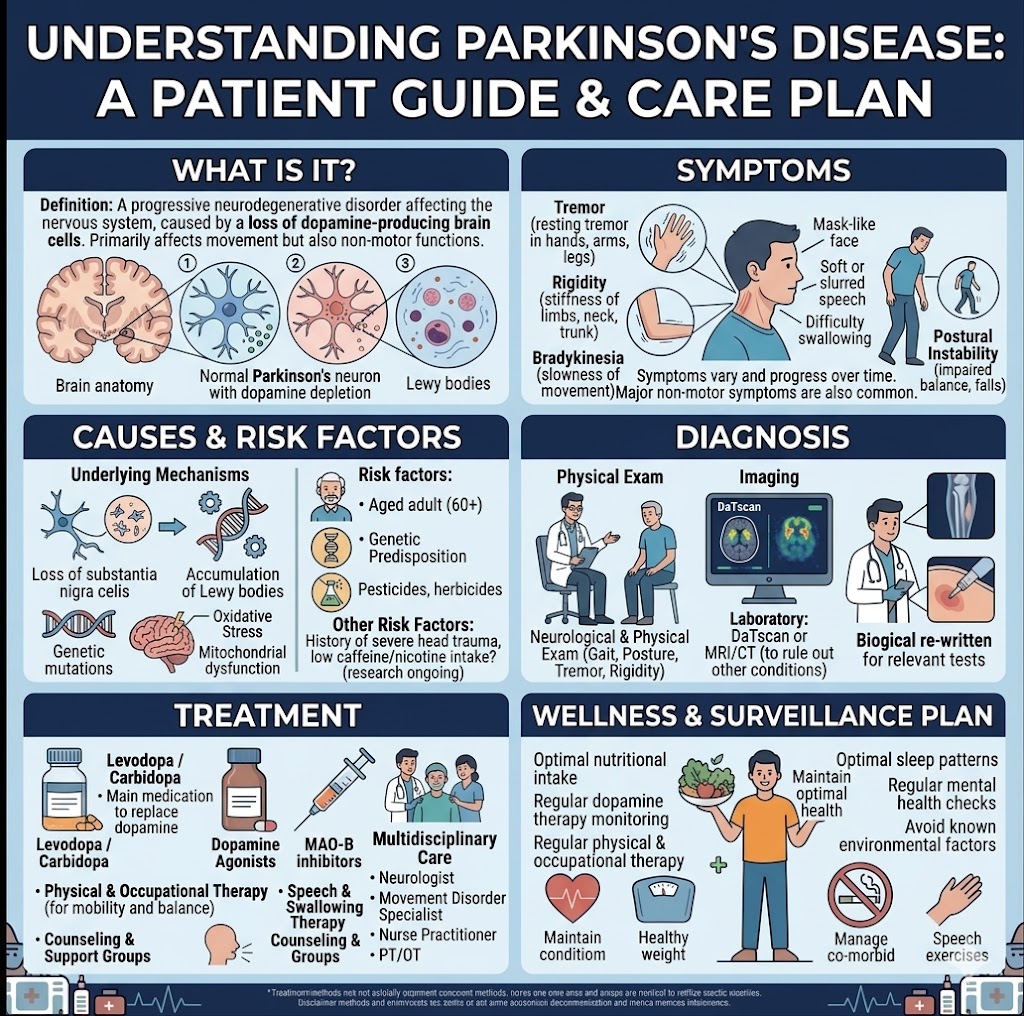
Parkinson's disease is a progressive disorder of the nervous system primarily affecting movement. It results from the gradual breakdown of nerve cells in the brain that produce dopamine, a crucial chemical messenger for smooth, coordinated body movements. Symptoms, which typically worsen over time, often begin subtly, such as a tremor in one hand, and can expand to include stiffness, slowed movement, and balance difficulties. While there is currently no cure, various treatments are available to manage symptoms and improve quality of life.
Understanding the Condition
Parkinson's Disease: Understanding the Condition
Understanding the Condition
Parkinson's disease is a progressive disorder of the nervous system primarily affecting movement. It results from the gradual breakdown of nerve cells in the brain that produce dopamine, a crucial chemical messenger for smooth, coordinated body movements. Symptoms, which typically worsen over time, often begin subtly, such as a tremor in one hand, and can expand to include stiffness, slowed movement, and balance difficulties. While there is currently no cure, various treatments are available to manage symptoms and improve quality of life.
Common Symptoms
Tremor: Often the first sign, this rhythmic shaking usually begins in a hand, fingers, foot, or jaw, even at rest. A 'pill-rolling' tremor (thumb and forefinger rubbing) is common.
Slowed Movement (Bradykinesia): Movement slows, making daily tasks like getting out of a chair, showering, or dressing difficult. Facial expressions may reduce, and blinking can become hard.
Rigid Muscles: Stiff muscles can occur anywhere, causing pain, tension, and limiting movement. Arm movements may be short and jerky.
Poor Posture and Balance: Individuals may develop a stooped posture and experience problems with balance, increasing the risk of falls.
Loss of Automatic Movements: This involves a reduced ability to perform unconscious movements, such as blinking, smiling, or swinging arms naturally while walking.
Speech Changes: Speech may become soft, quick, slurred, or hesitant. It might also lose its natural rhythm and become monotone.
Writing Changes: Writing can become difficult, often appearing cramped and smaller than before.
Non-Motor Symptoms: Non-motor issues include depression, anxiety, constipation, sleep problems (like acting out dreams), frequent urination, loss of smell, memory/thinking difficulties, and fatigue.
Consultation Guide
Which Specialist to Meet
Before your visit, make a detailed list of all your symptoms, including when they started and how they affect your daily life. Note any medications, supplements, or over-the-counter drugs you're taking. Prepare a list of questions for your doctor, and if possible, bring a family member or friend to help recall information.
Book a doctor visit near me
An assessment by a doctor (often a neurologist) to evaluate your nervous system (brain, spinal cord, nerves, muscles). It helps identify conditions causing symptoms like tremors, balance issues, weakness, or sensation changes.
This research test detects alpha-synuclein protein clumps in spinal fluid, a marker found in Lewy bodies associated with Parkinson's. Not yet routine, it shows promise for early or pre-symptomatic identification.
Symptom-Managing Medications: Medications help control symptoms by adjusting brain chemical levels (e.g., dopamine). They aim to improve movement, reduce tremor/stiffness, and manage non-motor issues like depression or sleep. (Duration: Ongoing, adjusted as needed by a doctor.)
Meditation: Mind-body practice training focus, often on breath. Helps manage stress, anxiety, depression, improving mental well-being and potentially alleviating non-motor symptoms. (Duration: Regular practice for sustained benefits, can be daily for short periods.)
Regular Exercise: Consistent aerobic exercise may lower Parkinson's risk and helps manage symptoms and improve mobility for those diagnosed. Walking, swimming, or cycling are beneficial.
Caffeine Intake: Caffeinated beverages (coffee, green tea) are linked by some research to a potentially reduced risk, but this is not a proven preventive measure.
Balanced Diet: A diet rich in fruits, vegetables, and whole grains supports brain health and helps manage non-motor symptoms like constipation. Hydration is key.
Mind-Body Practices: Practices like meditation, yoga, or Tai Chi reduce stress, improve balance, and enhance mental well-being, aiding quality of life.
Long-Term Monitoring and Symptom Management
Regular Medical Check-ups: Regular neurologist visits are vital to monitor symptom progression, adjust medications, and proactively address new complications, including motor and non-motor symptoms.
Diagnostic Procedures
Initially, you might consult your primary care doctor. For diagnosis and ongoing management, a neurologist, especially one specializing in movement disorders, is crucial. Other specialists may include physical therapists, occupational therapists, speech therapists, dietitians, and mental health professionals (psychiatrists or psychologists).
Preparations Before Your Visit
Neurological Examination (Neuro Exam)
What to Expect
It takes minutes to over an hour. The doctor assesses mental status, cranial nerves, motor system (strength, coordination), sensory system, and balance/gait. You may walk, touch your nose, or follow a light. Further tests like MRI might follow if needed.
Alpha-Synuclein Seed Amplification Assay (Parkinson's Test)
What to Expect
To obtain spinal fluid, a lumbar puncture (spinal tap) is performed. You'll typically lie on your side or sit, curving your back. After numbing, a thin needle is inserted into your lower back to collect a fluid sample. The procedure takes about 30-45 minutes, with rest advised afterward. Mild headache or site discomfort can occur.
Treatment Options
Medications
Deep Brain Stimulation (DBS): Electrodes are surgically implanted in the brain, connected to a chest device sending electrical impulses. DBS regulates brain activity, significantly reducing tremors, stiffness, and slowed movement when medications are insufficient. (Duration: Electrodes are permanent; device battery typically lasts several years and is replaceable.)
Therapies
Physical Therapy: Improves balance, gait, flexibility, and strength to maintain mobility and prevent falls. (Duration: Ongoing as needed, with regular sessions and home exercises.)
Occupational Therapy: Adapts daily tasks and environments to maintain independence (dressing, eating, hygiene) using adaptive tools or strategies. (Duration: Ongoing as needed, with regular sessions and home modifications.)
Speech-Language Therapy: Addresses speech and swallowing difficulties, focusing on vocal clarity and safe swallowing. (Duration: Ongoing as needed, with regular sessions and home exercises.)
Acupuncture: Thin needles into body points. Used for associated pain, stress, and well-being, potentially by stimulating natural pain relievers, though direct Parkinson's effect isn't fully established. (Duration: Variable, typically multiple sessions over weeks or months, as determined by a practitioner.)
Massage Therapy: Rubbing and kneading soft tissues (muscles, ligaments). Reduces stiffness, pain, tension, improves circulation, and promotes relaxation for discomfort. (Duration: As needed, typically in regular sessions for ongoing benefit.)
Mental Health Support: Addressing emotional changes, depression, and anxiety is crucial. This may involve counseling, support groups, or prescribed medications.
Sleep Hygiene: Good sleep habits (consistent schedule, comfortable environment) help manage sleep problems. Medications may be prescribed for specific sleep disorders.
Prevention & Long-Term Wellbeing
Healthy Lifestyle and Potential Prevention Strategies
Fall Prevention: Therapists help with home safety, assistive devices, and balance strategies to significantly reduce fall risk.
Nutritional Management: A dietitian can address swallowing difficulties and ensure adequate nutrition (e.g., texture-modified foods) to prevent weight loss and deficiencies.
Tags & Topics
Notice an error or need an update?
Help us keep medical information accurate. Report incorrect info or suggest an edit.


